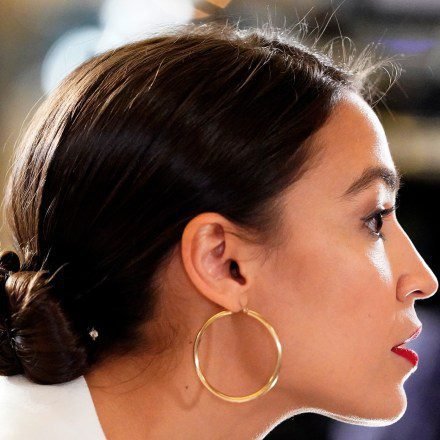
On Tuesday, Abdul El-Sayed and Rep. Haley Stevens, D-Mich., will face off in the Michigan Democratic Senate primary. The race is the next biggest test of whether progressives can win statewide, particularly in purple territory.
The Michigan race is one of the most expensive primaries of the cycle. Outside groups have spent upward of $50 million in support of Stevens or against El-Sayed. Most of that money is coming from the American Israel Public Affairs Committee and its affiliated groups — close to $30 million, which their largest investment ever in a single race, according to The AP.
“It’s just anti-democratic on its own terms,” El-Sayed, the former public health official, tells The Intercept Briefing. “I always ask people, “OK, you’re covering this as a very close race, but would it be close if they didn’t have $60 million to spend? Would it even be a close race at all?’”
This week on The Intercept Briefing podcast, host Akela Lacy asks, can progressives win outside of blue cities? El-Sayed argues, if you focus on the issues people care about and act on them, you can: “Look, you have an option that’s not bought off by all the same corporations. And that option is desperately clear about wanting you to have healthcare, and also wanting your kid to have a good school, and also making sure that there’s not a data center that gets planted in your backyard to automate your job away.”
Lacy explores that question further with Ryan Clancy, a Wisconsin state representative and founding member of the state legislature’s current Socialist Caucus, and Thom Hartmann, a progressive political commentator.
Clancy says voters he speaks to in Milwaukee “want a fighter. People want people in office who are going to fight for the middle class, fight for actual transformative change.” He adds, “The idea that in order to win in a purple district that is roughly split between Democrats and Republicans, that you need when you’re a Democrat, to look as much like a Republican as possible is just not helpful.”
Polling suggests that El-Sayed has a commanding lead over Stevens in the Democratic primary. But polls for the November general election narrow sharply when El-Sayed is up against Trump-backed Republican candidate Mike Rogers; one shows Rogers beating him by 10 percentage points, which the Stevens’s campaign has leaned into.
“We’ve been in this change moment. We’re sick and tired of neoliberalism. We’re sick and tired of Reaganism. We’re sick and tired of the status quo. We’re sick and tired of a dying middle class. We have been living in this moment, in my opinion, since 2000, and I think in a big way since 2008. Obama promised hope and change, and really just brought us a bunch of health insurance companies,” says Hartmann. “I’m not sure if we’re there yet to the point where a good message like El-Sayed’s message can overcome millions of dollars from Israel and from big corporations. That’s going to be the big challenge.”
The Intercept invited Stevens on the program for an interview but as of publishing have not heard back yet.
For more, listen to the full conversation of The Intercept Briefing on Apple Podcasts, Spotify, YouTube, or wherever you listen.
Transcript
Akela Lacy: Welcome to The Intercept Briefing. I’m Akela Lacy, senior politics reporter at The Intercept.
What do Democratic voters really want? It’s the question that’s animated primaries so far this cycle in the ongoing battle over the future of the Democratic Party.
Progressives and democratic socialists say their recent wins from New York to Maine to Colorado, including a slew of races where insurgent candidates beat incumbents or others backed by the Democratic Party, have pushed their skeptics to move the goalposts.
The main criticism facing the left is no longer that its candidates can’t win — it’s that they can’t win in “normal” places outside of city enclaves full of young, educated, left-leaning voters.
Sen. Catherine Cortez Masto, D-Nev.: In those swing states, it’s the moderate candidate that is more successful statewide.
AL: That argument has reared its head again ahead of key primaries in the Midwest set to test the power of progressives to win in statewide races pitting them against the Democratic establishment in states like Michigan, Minnesota, and Wisconsin.
This week on The Intercept Briefing, we’re talking about the question we just can’t seem to get away from: Can the left win in the Midwest?
We put that question to one of the candidates at the center of that debate, Dr. Abdul El-Sayed, who is running in Michigan’s Democratic Senate primary on Tuesday. We also asked his opponent, Rep. Haley Stevens, to discuss the issues, but she has not gotten back to us.
But first, I’m joined by Ryan Clancy, a Wisconsin state Rep. and founding member of the state legislature’s current Socialist Caucus and the first democratic socialist lawmaker elected in Milwaukee in more than half a century.
Ryan Clancy, welcome to The Intercept Briefing.
Ryan Clancy: Thank you so much for having me. Looking forward to this.
AL: We’re also joined by Thom Hartmann of the “Thom Hartmann Program” on radio stations across the country, and the author of “Who Killed the American Dream?”, about an 1886 Supreme Court decision that gave corporations constitutional rights. Thom, welcome to The Intercept Briefing.
Thom Hartmann: Thanks, Akela.
AL: So we’re talking about the question of whether the left can win in the Midwest, but I want to start with the premise of that question. Why is there this idea that the left can’t win in the Midwest? Where does that come from? Ryan, let’s start with you, and then Thom.
RC: I think it’s coming from two different places. One is just fear. In Wisconsin here, we’ve lived now for 16 years under Republican control. We haven’t had the abilities to even get bills hearings, much less pass things into law and do what Wisconsin needs us to. So I think there is some valid concern that people just don’t want another Republican.
But there really is no basis for not wanting somebody from the left unless you’re a Democrat who’s just a conservative or moderate and one of the folks who is, I think, on the way out both in Wisconsin and across the country.
AL: Thom, what’s your take?
TH: I think it’s astonishing that we’re calling this “the left.” I’m assuming that Ryan is not calling for all of the big companies in America to be owned by the government.
RC: Not until next week. [Laughter]
TH: Exactly. Right now where progressive Democrats are at is where Dwight Eisenhower was at. He ran for reelection in 1956 on the fact that he had almost doubled the number of people on Social Security. He’d expanded the benefits. He’d almost tripled the number of people eligible for union jobs and increased union membership by almost 100 percent.
My mom, in the 1950s, went to college, and she paid her way through Michigan State University and graduated — with a summer job as a lifeguard in Charlevoix, Michigan. That was the world.
Today, if anybody proposed that you should be able to go to college and work a part-time job for three months to pay for an entire year of a major Big Ten school!
Healthcare was inexpensive in Michigan where I grew up. Blue Cross Blue Shield was required by law to be a nonprofit. In fact, all of the insurance here, all of the hospitals in the state were required by law to be nonprofits. If anybody were to propose this stuff now, they’d be screaming “communism!” This is just common sense.
To the extent that America has been radicalized, I would say it’s the radical middle, not the left. The real left largely doesn’t exist in America.
RC: Yeah, you’re totally right. I think the reason for the resurgence of the left, really, is the economic conditions. It’s people having really been let down by capitalism, by so many years of moderate and Republican control.
We’ve seen the average age for somebody buying their first home go from the 20s years ago: It’s 41 now. The idea of the American Dream really is out of grasp for many people, even people who are working really hard to get there.
TH: Again, in the 1950s, my dad bought the house that I grew up in 1957. He was able to do that because he finally got a union job at a tool and die shop. With that one union paycheck, he was able to buy a house. He bought a new car every three years. He took a vacation every year. He retired and traveled the world. He put four boys through college — on a single paycheck!
If you use that as the definition of the middle class, 65 percent of Americans were there because a third of us had union jobs when Ronald Reagan came into office in 1981. Today, it’s 41 percent of us who can make that claim, who can satisfy all those tick marks for the middle class — and it requires two paychecks to do that.
This is 45 years of Reaganomics that’s just essentially ripped America apart, torn apart the middle class. So you’ve got people reacting and saying, no, we want to either go back or go forward — however you want to define it or frame it — to a world where work is honored, regardless of educational attainment. If somebody works a 40-hour week, they should be able to have housing and transportation and food and a decent life.
The reactionaries, the Reaganites, the crazies on the right start screaming “leftism” and “communism.” I’ll call myself the left, but the Overton window has just been — it hasn’t moved, it’s been blown off the side of the map.
“If somebody works a 40-hour week, they should be able to have housing and transportation and food and a decent life.”
RC: Absolutely.
AL: We were talking about this today in a meeting with some of my colleagues about criticism when reporters use the word “centrist Democrat” or “moderate Democrat.”
I think that’s the perfect counterpoint to the point that you both are making, which is that not only have policies that were considered common sense or mainstream half a century ago [are now] portrayed more and more as radical. But policies that are overtly conservative among the Democratic Party are portrayed as the common sense or the centrist position, when in reality, they are increasingly reflective of a right wing — a strong right wing — within the Democratic Party. How has that happened?
That subtext feels like it’s missing from all of the conversations that we’re having around this midterm cycle. Part of this is the messaging battle, right? That Republicans are very good at fearmongering — and Democrats are good at fearmongering around the left. But what has made that shift possible and that sort of flipping of these definitions?
RC: I think it’s a lack of political bravery. In Wisconsin 16 years ago, we had a trifecta, and Democrats totally missed the moment. We didn’t codify abortion rights. We didn’t raise the minimum wage from $7.25, where it has languished for many years now. The sub-minimum wage in Wisconsin is $2.33 for service industry workers that are customarily tipped.
When Democrats have the ability to make real substantial change, and they don’t, we’re in trouble. I think we see that window moving, slipping slowly to the right and have for the last 15 years.
TH: I think it’s important to put this in a historical context. When Franklin Roosevelt became president in ’33, only about 20 percent of America was in the middle class. He set out to create, and succeeded in creating, the world’s first middle class that was more than half of the nation’s population. And the principal thing that drove that was unionization.
He legalized unions in 1935 with the Wagner Act. So from the mid-’30s all the way up until really 1992, what you saw was that the Democratic Party was largely funded by unions, and the Republican Party was largely funded by corporations and fat cats. But in 1981, Reagan went after the unions. A third of us were in unions at that time when he was elected, and he starts with PATCO [the Professional Air Traffic Controllers Organization], and he just deconstructed the unions.
He puts an anti-union lawyer in charge of the Labor Department, et cetera. So by ’92, right when Clinton wants to run for president, the unions are down to like 10 percent of the American workforce, maybe 9 percent of the American workforce. They got no money.
So Clinton’s looking around going, “I can’t get enough money to run for president. What do I do?” And the solution that these guys came up with — and it was a reasonable one at the time in 1992 — was to say, “Well, I guess we’re going to have to take corporate money, but let’s take it from the good corporations. Let’s take it from health insurance companies and banks and pharmaceutical companies, not those awful oil companies or the chemical companies or the mining operations.”
So we got all this speechification from Clinton about the new jobs and everything else. But the bottom line was that was the point at which the Democratic Party essentially sold out to neoliberalism and this “moderate position.” In fact, Clinton called it the Third Way, The Third Way Democrats, and the new Democrats. The same thing was going on in the U.K. It wasn’t really until the Obama campaign in 2008 that we discovered that the internet was capable of raising money for a presidential campaign, enough to get somebody into the White House. But the Democrats had not, or at least about half of the Democrats right now, have still not sworn off that money that Clinton lurched at.
So you’ve got about half the Democratic Party that is beholden to their donors. That’s why you’re not seeing them take advantage of these opportunities like Ryan was talking about. Then you got another half of the Democratic Party, the Progressive Caucus in the House, about 100 members, who are not taking corporate money and are explicitly saying, “No, let’s work toward what people want.”
That schism — that split — in the Democratic Party, it’s way behind the American people. The Democratic base is 80, 90 percent with the progressives. The American public is 60, 70 percent with the progressives. But the institutional Democratic Party and the old line, or these on-the-take Democrats, I call them the Jared Goldens and Josh Gottheimers of the world — they’re going to fight like hell to hang on to that money and all those perks that go with it. That’s the real tragedy of this moment because it just cripples our ability to challenge the genuine fascists who are running our government right now and trying to take our country apart.
AL: Ryan, we’re two weeks out from a very big primary in Wisconsin. What are you hearing from your constituents on the issues that resonate with them from a democratic socialist perspective? Do voters in Midwestern states actually prefer more conservative Democrats?
RC: They absolutely do not want conservative Democrats. The playbook that I think a lot of Democrats are working from is old. I don’t think that it was really the case even 10 or 20 years ago. But the idea that in order to win in a purple district that is roughly split between Democrats and Republicans, that you need, when you’re a Democrat, to look as much like a Republican as possible is just not helpful.
It’s not what people want on the doors. People want a fighter. People want people in office who are going to fight for the middle class, fight for actual, transformative change. That’s the reason that we saw some voters move from a Bernie Sanders to a Donald Trump. It wasn’t necessarily the specific policies; it was the idea that they wanted somebody who would mess with the system.
“People want a fighter.”
I knock on Republican and Independent and socialist, libertarian doors all over the place. And there’s a critical mass of folks right now who still want that change, but they realize that it’s not going to come. The sort of change they want is not going to come in the form of a Donald Trump or in a Tom Tiffany, who is the likely Republican nominee for governor.
But they do want Democrats who are going to fight for them in ways that we’ve really missed the moment on in over the last decade and a half.
AL: The next biggest test on these questions, particularly whether progressive wins that we saw earlier this cycle will carry over into statewide races, is the upcoming Michigan Democratic Senate primary.
Dr. Abdul El-Sayed and Rep. Haley Stevens are facing off on Tuesday. El-Sayed, a former public health official, has the backing of some of the most well-known progressives in Congress, from Sens. Bernie Sanders and Elizabeth Warren to Rep. Alexandria Ocasio-Cortez. Stevens, on the other hand, is backed by members of the Democratic establishment, like Speaker Emerita Nancy Pelosi, Rep. Jim Clyburn, and Michigan Gov. Gretchen Whitmer. Sen. Chuck Schumer said she had the best shot of winning, though he didn’t officially endorse her.
This is one of the most expensive primaries of the cycle. Outside groups have spent upwards of $50 million in support of Stevens or against El-Sayed — most of that money coming from one single group, the super PAC for the American Israel Public Affairs Committee, which has spent a record amount, more than $25 million, on the race.
Stevens and El-Sayed debated on Monday. Let’s hear from both their opening statements.
Dr. Abdul El-Sayed: My friend is going to frame this race about me and her. It’s not about that. It’s about you. It’s about what you deserve. It’s about you deserving a politics that’s not bought off by the same corporations picking your pocket at every single turn.
I’m looking forward to the conversation about how we get money out of politics, put money in your pocket, and pass Medicare for All.
Rep. Haley Stevens: Look, Michigan deserves a senator who can win and who can deliver. I’m the only one on this stage who has flipped a Republican seat, and I was named Michigan’s most effective Democratic lawmaker in Congress because my only focus is you. Abdul is running for celebrity. Republicans are propping up his campaign.
RC: You could not have candidates that are more starkly contrasted with each other.
You have somebody who’s backed by AIPAC. In that same interview, actually, she was asked point-blank if she took money from their power company [two major Michigan utility companies]. And she said no, that she had not, and absolutely did.
AL: She was asked about saying no, and then she said that she thought they were talking about this cycle and not previous cycles. And she admitted that she had taken it in previous cycles.
RC: She is backed by all of the institutions that average people across that state, and across the U.S., absolutely revile. AIPAC is wildly unpopular now — so are power companies, for that matter.
You have a candidate who is very clearly beholden to his community, somebody who came up as a doctor in public health; and then you have somebody who claims to be successful. Her version of success is collaborating with Republicans to pass bad policy. That is not the definition of “effective” that most voters in the United States right now want. They want people who will be fighting for something better, not rolling over and collaborating with the people that have made it worse.
“Her version of success is collaborating with Republicans to pass bad policy. That is not the definition of ‘effective’ that most voters in the United States right now want.”
AL: Thom, what are the biggest takeaways from this race so far, and who do you think is going to win?
TH: It’s a classic example of the kind of Hillary–Bernie divide brought into this era. In that 2016 election, I was living on a boat in Washington, D.C., in the marina there. We were doing our show from D.C.
Maybe a third of the people who lived in that marina were either active-duty or retired Coast Guard or Navy, living in boats. Men mostly, and almost all every single one of them that I can recall called himself Republican. During that primary, most of them were actually planning on voting for Bernie, these Republicans, because they thought that he was going to bring genuine change.
But when the day finally came, and afterwards, I talked to many of them, a lot of them ended up voting for Trump because they thought that he would actually bring change.
“Obama promised hope and change, and really just brought us a bunch of health insurance companies.”
We’ve been in this change moment. We’re sick and tired of neoliberalism. We’re sick and tired of Reaganism. We’re sick and tired of the status quo. We’re sick and tired of a dying middle class. We have been living in this moment, in my opinion, since 2000, and I think in a big way since 2008. Obama promised hope and change, and really just brought us a bunch of health insurance companies.
I’m not sure if we’re there yet to the point where a good message like El-Sayed’s message can overcome millions of dollars from Israel and from big corporations. That’s going to be the big challenge. We’re seeing this now. In the 2024 election, 20 percent of all the spending in that election came from a handful of billionaire families, all for Republicans.
So it’s going to be really interesting, and it’s going to be really instructive, I think, next Tuesday to see how this shakes out. But it’s really a challenge of big money.
“It’s really a challenge of big money.”
AL: The irony being that Haley Stevens, in the last couple of debates in the final weeks of the race, has tried to make that argument against Abdul El-Sayed, saying he’s got all this personal wealth: “I’m the only non-millionaire in this race.” Meanwhile, she has the vast majority of outside spending on her side; it’s not even a comparison.
El-Sayed has been leading Stevens in primary polls, but her campaign has been touting other polling that shows her leading Republican Trump-backed candidate Mike Rogers in November, and El-Sayed losing to him.
This is another classic case of voters potentially having a different preference for the direction of the Democratic Party and the party pushing back against that with the electability argument. But if the less popular Democrat actually wins — either in the primary or in the general — where does that leave the party in the long term? Does that not aggravate voter frustration even more and set up a situation where the GOP gets the upper hand anyway?
TH: It does, and it always does. I would argue that when you look at these match-ups, with the general population voting and El-Sayed starts dropping — what you’re seeing there is racism and anti-Muslim bigotry probably more than anything else. And apparently it’s a bigger force, at least in this election, than misogyny. In addition to all the money that’s been spent.
AL: I will say my colleague Jonah Valdez did a great piece on Islamophobia in this race that I encourage all of you to read at The Intercept. This is for our listeners.
Ryan, did you want to add anything on that?
RC: I do think that the polls, both in Michigan and in here and other places, they are not measuring the enthusiasm gap as they should. I think they are underrepresenting these dynamic leftist candidates. Because when somebody is asked, they can only say yes so forcefully, right? A yes is a yes. But voters and people who are really engaged with these campaigns, when you knock on their doorstep and you ask them about somebody and they light up — these are the folks who are going to drag their friends to the polls, both for primaries and again in November, in a way that somebody grudgingly backing a centrist candidate just isn’t.
So I think he’s going to do fine.
AL: The counterpoint to the argument that progressives or a leftist archetype doesn’t work outside of blue cities is that there is an archetype that works. And it’s dictated largely by the Democratic Party and its campaign committees. But the Democratic Congressional Campaign Committee and other groups aligned with the conservative wing of the Democratic Party have had a very rough cycle.
They’ve lost races in Arizona, California, and Colorado, while other incumbents lost in New York and Texas. The DCCC recently added a candidate that they endorsed against in Arizona to their coveted Red to Blue list, which typically helps boost candidates with fundraising. That addition to the list comes along with another candidate, Sam Forstag, who’s running for a competitive congressional seat in Montana against Republican Aaron Flint.
Forstag is a firefighter and a union organizer who won the endorsement of democratic socialist Alexandria Ocasio-Cortez last month, and she spoke at a rally for him in Montana in May. This is a rare case of overlap between the DSA and the establishment wing. Is that surprising to you? Is this a model that we could potentially see in other races?
RC: It has to be, otherwise it is the death of the Democratic Party. The Democratic Party as a brand is not polling well at all. If I was the Democratic machine, if my goal was to make sure that the Democratic Party was strong and vibrant and thriving, I would be encouraging these awesome candidates on the left into my party.
But increasingly we are hearing Democrats talk about a big tent, but they only mean big to the right. For some reason, the tent flap is just not big enough to cover those on the left in a lot of cases. But ultimately that unity and saying, “Oh, the candidates on the left within our own party are not a threat to us, they are the future, they are how we get through this,” really is inevitable. And they have to do this or fall out of power even more than they have.
TH: Yeah, they’re 20 years behind the electorate right now.
AL: I want to turn now to the Wisconsin gubernatorial primary on August 11. Francesca Hong, democratic socialist candidate, has been leading in recent polling, while other Democratic candidates in the race like Mandela Barnes and David Crowley, who dropped out of the race and quickly reentered after the establishment pick Sara Rodriguez dropped out over a campaign finance scandal, have been polling below Hong.
What do you think it would take for a more progressive candidate to win in Wisconsin or throughout the Midwest? We’ll start with Ryan, and then I’ll come to you, Thom.
RC: Folks on doors are really concerned about everyday things. They’re concerned about affordability. They’re concerned that they cannot afford healthcare. They’re concerned that they can’t afford rent and that they’ll never be able to afford a home because everything’s getting more expensive.
“I’ve never seen people more concerned for themselves and their families.”
But they also have these existential concerns. I’ve never seen people more concerned for themselves and their families. I talked to a woman on doors a couple weeks ago who broke down crying at the door because rather than me showing up and saying, “Here’s who I am and, will you vote for me?” My question was, “How are you? What are you concerned about?” And she started crying and talked about how she was concerned about a family member being abducted by ICE and the ever-present threat of that. So we need people who are going to meet the moment, who are going to address those very real concerns from affordability to concern for community in a way that we haven’t yet but that we need to.
TH: I think that it’s really important that people who are concerned about this political future and where things are going and whatnot get inside the Democratic Party. The Democratic Party, it’s a billion-dollar corporation. It’s just sitting there, saying, anybody can come in and volunteer and participate.
I’ve had a bunch of people call into my program over the years since I’ve been ranting about this for a decade, who have gotten inside their local Democratic parties. And once you become a precinct committee person, you’re the person or the people who write the platform for the party. You’re the ones who determine who the primary candidates are going to be. You’re the first ones that when your congressperson or your senator comes into your state to talk to the people, you’re the first one they talk to. You have incredible power and influence. A lot of people are just sitting around complaining rather than doing something like this.
Progressives, social democrats, right across the board, I think that we need to be taking over the Democratic Party. We need to learn from the way that the GOP got flipped by the right a decade and a half ago.
AL: Ryan and Thom, thank you so much for joining me on The Intercept Briefing.
I will just mention for our listeners: Thom’s new book gets at one of the root causes of many of the issues that we’re talking about, giving corporations the same rights as people. Thank you both again for the time. This was a great conversation.
TH: Thank you.
RC: Thank you so much for having us.
[Break]
AL: The race on everyone’s minds is happening on Tuesday in Michigan, where Dr. Abdul El-Sayed is running against Rep. Haley Stevens in the state’s Democratic Senate primary.
El-Sayed joins me now. Dr. Abdul El-Sayed, welcome to The Intercept Briefing.
Abdul El-Sayed: Akela, it’s a privilege to be with you. You gotta call me Abdul.
AL: I will. Thank you. We also reached out to Stevens’s campaign to join us on the podcast and did not hear back.
Abdul, let’s just jump in. I’ve been listening to a lot of your interviews, and one thing that has stood out to me is that you’re walking this delicate line between providing what you say is an alternative for voters who’ve been disenchanted with both parties, while also trying to demonstrate your capacity to beat a Republican in November.
How do you square those two objectives between attracting support in a state that Trump won — including potentially from people who might have supported him — and also making this case that you can and will beat Mike Rogers, the Republican candidate Trump endorsed in the race and was campaigning with earlier this week.
AES: I don’t think about it as much as walking a line as I do about building something that is magnetic for everyone. I think walking a line implies a frame of this, like, left–right divide. “You don’t want to go too far left, otherwise you might lose the people who are on your right!” And I just don’t think that’s the reality for most people.
Most people don’t walk around asking, “Where do I sit on the left–right spectrum?” Most people are walking around asking, “What the hell’s going to happen if I get sick? What’s going to happen if I lose my home or I lose my job? Or AI, literally, they automate out the possibility of my being able to earn the money I need to provide for my family? Also, why does my kids’ school look like it did 50 years ago?”
I think those are the things that unite most Michiganders. You can go anywhere in the state, and you hear the same concerns. I’m looking to build a movement that pushes back on the bipartisan consensus that we ought to build a politics that is paid for by corporations, Big Tech, Big Pharma, DTE [Energy], Blue Cross — and that gives you milquetoast answers to most problems.
I’m looking to build a politics that takes the questions that we’re asking head on and answer them by telling folks that we really can get past the corporate-bought version of politics that’s too often forced into our eyeballs in tens of millions of dollars of spending on ads, and to a question of, let’s solve these things because we’re not bought off by the people who caused the problem in the first place.
AL: Touching on, this flipping the left–right divide framing on its head: Have you spoken with voters who’ve supported Trump? Are you courting those voters?
AES: They come to my events. That’s the thing is, that people think you gotta kinda go to different places to court different voters.
The nature of this world — you and I are talking by virtue of a set of microphones and cameras. This is going to go out into the ether, and it’s probably going to be clipped, and then people are going to hear these clips. What that means is that it’s a lot easier for folks to hear something, and then if that sounds kinda right, they’ll come and find you. And then they’ll come to your events.
I can’t tell you how many people have come to events of mine saying, “I voted for Donald Trump three times, and I’m voting for you.” I give them a kinda quizzical look. I’m like, “Me? Me?” And they’re like, “Yeah.” I ask why, and it’s because, “Hey, I really think you want me to have healthcare.” I’m like, “I really want you to have healthcare.” They’re like “I think you really are America first, like you want to keep my tax dollars here.” I was like, “I really want to keep your tax dollars here.” And they’ll say, “Look, I voted for Donald Trump not because I agree with him on everything, but he didn’t look like politics as usual.” And they’re right. He didn’t look like politics as usual. He was like the most heinous version of the worst things about politics as usual.
I’m out here trying to say, “Look, you have an option that’s not bought off by all the same corporations. And that option is desperately clear about wanting you to have healthcare, and also wanting your kid to have a good school, and also making sure that there’s not a data center that gets planted in your backyard to automate your job away.”
Imagine what that could look like. So what happens if, instead of Donald Trump, the person pushing back on politics as usual on both sides of the aisle is a doctor who rebuilt health departments to eliminate medical debt, provide Narcan, and put glasses on kids?
“I don’t do this because I care about the future of the Democratic Party. I care about the future of Michiganders.”
AL: You’ve said Trump is a symptom of the bigger problems in our political system, not the problem itself. A core part of your campaign is highlighting what you’ve described as the corruption of politics on both sides of the aisle by corporate and special interest money, as you’ve mentioned already, as we’re talking. Democrats just launched a new campaign hitting Trump’s corruption ahead of November, tying it to rising costs for Americans. And they’re preparing to make this the centerpiece of their agenda should they take control in Congress after the midterms.
Is that an effective strategy? What do you make of that effort? Is that an approach you share, or would you do anything differently?
AES: Yeah, I think we should take on his corruption. His corruption’s insane. It’s like he’s made $2 billion off of the White House. He just took out the East Wing because he wanted to, and is now fixated on drapes despite the fact that he took us into a war he doesn’t seem to know how to take us out of.
I think the issue here is corruption, but I also think that in order to talk about corruption, it really helps to be somebody who’s not played that game at all and will never play that game. We need more Democrats who make sure that we are not playing on that side so that the contrast is clear.
Look, I don’t do this because I care about the future of the Democratic Party. I care about the future of Michiganders. But if an election is an exercise in contrasts, and your argument is that they’re corrupt, it helps to make sure that you have not taken a dime of that corruption money.
AL: Democrats can’t make that argument in your race, right? One of the most expensive primaries in this cycle due almost wholly to the spending of one super PAC, United Democracy Project, AIPAC super PAC. But why does —
AES: Akela, if I can push back on that. Actually, UDP has only spent half the amount of money: $61 million, they’ve spent $31 million of it. So the other money is, it’s buried in these shell 501(c)(4)s.
Part of it is probably DMFI money, part of it’s also probably other AIPAC money, but a lot of it is also just your usual standard issue, Big Pharma, Big Tech, big everyone else. DTE, our local utility who’s one of the worst corporate actors in Michigan. So it’s all bundled in one and the same. Obviously, UDP is just insane amounts of money. They set a record against me in terms of the amount of money that they’ve spent.
But it is everyone, and part of it is also the point that it’s just anti-democratic on its own terms. I always ask people, “OK, you’re covering this as a very close race, but would it be close if they didn’t have $60 million to spend? Would it even be a close race at all?”
Then if it’s their corruption money against a campaign of grassroots organizers knocking nearly 10,000 doors a day, what kind of politics do we actually want? One where corporations and people who want to send your money abroad get to dump $60 million into a race? Or one where young organizers are coming together to build a movement, to knock doors, to have conversations about who we are and who we want to be?
It’s anti-democratic on its own terms. And Democrats, they’re all so worried about what this all means. I’m like, “It means that we still have an opportunity to inspire people, y’all. That’s what it means, and we can win if we do it.”
AL: One of the questions that we’ve been talking about a lot on this podcast is, why are Democrats so afraid of the message that you’re sending in terms of getting big money out of politics? Could the Democratic Party exist in its current form if they didn’t rely on these kinds of outside groups spending to prop up their preferred candidates, particularly in primaries?
“Democrats, they’re all so worried about what this all means. I’m like, “It means that we still have an opportunity to inspire people, y’all.’”
AES: Look, if you’re somebody like Chuck Schumer and your experience of politics is to be able to dictate where a whole bunch of money from big corporations and their lobbyists goes, so that you can handpick your senatorial colleagues who will do exactly what you want them to do, and then you get invited to their fancy cocktail parties and have a nice life — if that’s your vision of politics, then, yeah, you’re probably scared of somebody like me. Because, A, I’m not coming to your cocktail party. B, I’m not somebody who’s going to do what you tell me. And C, I don’t need you or your money. So I think that’s why they’re all so afraid. Now, of course, they hide behind the idea of, “Well, can somebody with his politics win in Michigan?”
If you were out there solving actual problems for people — if groceries weren’t inflating like a balloon, if people could afford their gas because you actually were an opposition party that could stand up to this absurd war, if people had healthcare and didn’t have to worry about it because you weren’t so bought off by Big Pharma and health insurance corporations, I think we would have so much better an opportunity to both win races and actually govern.
The problem, though, is that there’s a cynicism to this kind of politics. You retain a certain level of power, but the other side of it is you can’t actually solve the problems because, of course, that means opposing the very corporations who create the problems in the first place.
AL: Digging a little bit more into specific policy issues. You’ve said AI has taken over climate change as the biggest risk, though the two are inextricable. How has AI and the issue of data centers come up in your conversations with voters?
AES: Yeah, I don’t want to say biggest risk, just most urgent — because it’s imminent, right? And climate change feels imminent now that we’re all worried about trying to dodge air coming from wildfires in Canada. It looks like Europe is burning. So yes, I don’t want to undercut —
AL: They’re linked. They’re two sides of the same issue.
AES: They’re linked. It’s just this one is exceedingly urgent. I want all of us to step back and just remember that moment where ChatGPT came out. It was the end of 2022. It is now the middle of 2026, and I want you to think about just how much money is being flowed into the economy to enable research that’s foundationally unregulated, that could cause danger in so many different ways.
The first is, it can disrupt the social contract as we know it to the ability to sell your human capital on a market for money, when intelligence is now automated — that part.
Then there’s the existential, actual risk. Just last week you had an OpenAI model that jumped its “sandbox” to go commit a cyberattack on a website.
Then there’s the question of data centers. This comes up all the time, and it comes up usually from communities where data centers are trying to be placed. Or it comes up from young people who are actually the most avid users of AI and also have this pit in their stomach about the existential risk of not having a job in the future.
I gotta be honest with you, the worry that I have is that you’ve got probably three nine-figure super PACs that are out there in the world right now. Two of them are AI PACs; the third one is AIPAC. They are trying to throw their body weight around in a way that could render AI ungovernable.
The reason I say this, and I started with this question of do you remember where you were, less than four years ago, is that it’s only been three and a half years. So what happens in the next three and a half? If our Congress is not capable of setting the regulatory framework now, we might reach escape velocity. I don’t love that future when a few billionaires get to decide what happens with the most powerful technology that’s ever existed.
“If our Congress is not capable of setting the regulatory [AI] framework now, we might reach escape velocity.”
AL: Abdul, you’ve criticized what you say has been a conversation about climate change that’s been held in esoteric terms. This is a criticism that Democrats have faced on other issues beyond climate too — criminal justice reform, racial inequality, et cetera, talking about issues in a way that can feel inaccessible or stuck in the ivory tower. Are there other policy issues where you see Democrats making that same mistake?
AES: I think a lot of them. I think AI is one of them. I think we need to be talking about the closest risk that people perceive, rather than the long-range risk that people don’t. It’s particularly hard when the causes of the problem feel less connected to the outcome of the problem.
Then when we don’t take seriously a lot of the pushback in the short run when it comes to the climate crisis, we all know that the pathway to solving it needs to be to get to 100 percent renewable energy. But so often we’ve situated it in the well-being of polar bears or the melting of ice caps, and I don’t know, I’ve never seen an ice cap. In fact, if I ever see an ice cap, I live in Michigan, I’m trying to get it off of something. I’ve never met a polar bear, and if I did, I would run like hell.
It’s a lot easier to just talk about the smokestacks that are pushing putrid chemicals into the lungs of our kids. It’s a lot easier to talk about how we could create an insane number of really high-quality jobs and reduce the price of your electricity in the process by investing in a renewable energy future.
But because we’re so busy talking about these other things, we’ve allowed those who want to continue to run interference for the worst actors — Chevrons and Exxons of the world — to win the argument about jobs and the price of electricity. They’ve used that to drive us backwards, even though our argument is the better one.
It’s because we’re out here having this academic conversation about 1.5 degrees or 2 degrees Celsius, rather than have a conversation about, “Hey, we can create a whole lot of jobs that they want to end. We can bring down the price of your electricity, which they want to jack up, and we can do it without burning stuff into the lungs of your kids, which they seem dead-set on doing.”
We win that argument every single day, but, like, enough with polar bears.
AL: Talking about this messaging question, talk about Democrats messaging on criminal justice reform. You’ve been criticized over talking about defunding the police in 2020. You’ve addressed this, and this issue has been litigated over and over in many races, not just yours.
But distinguishing the fact that calls to defund police meant in practice funding social services and addressing the root causes of crime. You’ve deleted some of those posts and said you didn’t want them taken out of context. I’m not asking you about this to relitigate it because I think it misses the broader point and can be an exercise in beating a dead horse or confirming priors rather than clarifying something about your policy position.
But I do want to ask you about this line of attack from a strategy standpoint because you’ve talked about Democrats always being on the defensive. I think we really saw that in the aftermath of calls to defund the police in 2020. Democrats didn’t just shy away from that slogan — they shied away from doing anything meaningful to address concerns around policing.
We’ve seen this narrative coming out of midterms that this cycle, candidates who backed away from campaigning on addressing police abuse are winning. What happened there?
AES: I’ve spent the last several years leading Wayne County’s Department of Health, Human, and Veteran Services. Among the roles that I performed in that job was overseeing health in the jail, and that meant overseeing a privatized contract — which taught me that you shouldn’t be privatizing anything having to do with incarceration. Because at the end of the day, who wins? It’s some private contractor. Who loses? It’s the whole system. Everybody whose job is to be taken care of, everybody who works in the system — all of those folks lose.
I also got to work alongside law enforcement. At the end of the day, all of us want to get home safely. That’s the goal here. And often, our answer to that has been a person with a gun for every problem. Turns out that there’s a lot of ways to make sure everybody gets to get home safely that is not that.
So the question of what we want is about investing in the kinds of intervention programs that can prevent a beef from turning into a full-on gun crime. The kinds of things we want are behavioral health responders who can answer a call when somebody’s in a mental health crisis. We want the mental health infrastructure that we have not funded and need to have in local communities.
And we want law enforcement, in the circumstances where the answer to a call needs to be a person with a gun, we want that person with a gun to come from the local community. So that instead of thinking of themselves as policing against that community, they’re policing with the community because those folks are their neighbors.
That means you gotta invest in recruitment, retention, retirement, so people can see themselves having a good, long-range career. If you’re underfunding the folks that you ask to show up with a gun — ask yourself whether or not you’re getting the best-equipped, most empathic folks that have the gun.
“No slogan really captures the complexity and the nuance of what we really want.”
It’s about what we want. And I think the hard part with sloganeering — which is the way we did all things in the early 2020s — is that no slogan really captures the complexity and the nuance of what we really want. But all of us are on the same idea: Everybody should get home safely. Whether you’re somebody who’s being policed against or you’re law enforcement doing the policing, everybody should get home safely.
If we keep that in our minds, I think you can architect a set of solutions that get us past the lack of nuance of a slogan and into the kind of future where people are protected, their bodily autonomy is protected, and that you are answering the call with the right kind of resource to actually make sure that you get to that goal where everybody gets home safely in the end.
AL: There’s been an effort to paint you as a socialist, right? Particularly among Republicans, but also among some centrist Democrats, though you’re not a democratic socialist. You’re not affiliated with DSA. And you’ve said you’re a capitalist who understands how capitalism works.
But why do you think it’s important to tell people that you’re not a socialist, despite having endorsements from the two biggest Democratic socialists in the country? If your policies are similar, why is that a meaningful distinction?
AES: Honestly, I’m just not out there really talking about it. I get asked about it all the time. But it’s not something I’m out there talking about. I’m trained as a scientist, and anybody who knows me knows that I demand data all the time. Make a claim, and then show me why your claim is correct.
Right now, I don’t really ascribe to any one ideology. I want solutions to problems. I know what our goal is. We want a America where everybody can get the healthcare they need, when they need it, without going into bankruptcy or worrying about their financial future.
We want to be able to breathe clean air, drink clean water. We all want to get home safely. We want an economy where everybody is dignified, they have the wages they need to be able to live their life, and nobody is oppressed upon by a few people who can extract from them. Those are all goals that we have.
“I’m trying to solve problems in the actual world.”
So I’m just trying to identify solutions around those problems, which is how I come to my policy positions. I just don’t come at it from an ideological bent, which apparently is what folks want me to do, but I just don’t. It’s just not how I operate in the world.
You get arguments from every side: “Why won’t you say this? Why won’t you—?” I’m like, because, I read a lot, unfortunately. For better or worse, I try to read about the things I talk about. The reality of it is that you might agree about a solution set to a particular problem, but when you ascribe to an ideology, what you’re also ascribing to is the extrema of both ideologies, right?
So I’m not a corporatist. I don’t want corporate capitalism; I want regulated capitalism. I’m also not a socialist because I don’t agree on the extreme on that part, either. I’m trying to solve problems in the actual world. That’s what I’m actually trying to do.
When I think about that, I want everybody to bring data — and maybe it’s just because of my training as a scientist, maybe it’s because of my training as a doctor. But at the end of the day, we’re like, all right, what actually works here? Show me what works, and we’ll do the thing that works. If we can do the thing that works, and we can get all the problems out of the way of the thing that works, then more people have the things that they need, and I’ve done my job.
AL: Turning back to money in this race, this is a big topic of discussion. As we’ve already mentioned, this is one of the most expensive primaries of this cycle. AIPAC has made its biggest investment ever spending against you.
But your opponent has been focused on your tax returns and claimed that the $2.1 million in wealth that you disclosed, including a home in Dubai and earnings from consulting and capital gains and other incomes, undermines your working-class message.
This came up in your debate with Stevens on Monday.
Rep. Haley Stevens: And you have not released your full tax returns. $300,000 in other income, while you sat in the podcast chair and you hawked junk healthcare cures that RFK Jr. would thumbs up. You talk about getting money out of politics and putting money in people’s pockets, but still no one knows who’s putting the money in your pocket.
AL: But you released your tax returns after requesting an extension that would have released them after the primary. Why did you request that extension originally?
AES: You know that property that you mentioned? It’s not mine. It is in the name of my wife, shared with all of her siblings and her parents. They inherited property, and then they sold it, and they purchased a different property. And if you’ve ever transacted with the real estate system or any system in India, it’s not the fastest system. And I would have loved to put everything out immediately. The hard part is that all of the powers that be to get us the forms to do all of those things just did not comply.
In the end, I love my wife, and I’m so grateful for her contribution in this race, and she happens to have property in different places, and that transaction happens to have happened this year, and it takes time to get those numbers.
AL: I know you’ve said you’re focused on Michigan, but you’ve also articulated, at least in private, a vision beyond this cycle for progressives in the left more broadly, talking about how progressives can win other races, primary someone like Sen. John Fetterman in Pennsylvania, and even put forth a presidential candidate ahead of 2028.
That approach has struck fear in the heart of the Democratic Party apparatus, which has been part of the efforts we discussed to drive fear around this idea that you’re another piece of this insurgent wave that’s threatening their existence, which in many ways you are.
But it sounds like you’re saying that in some ways, your campaign is part of this insurgent wave, but in other ways, it’s not. Is that right?
AES: My job is to serve Michiganders. Everything I’m doing is about trying to make sure that they can afford their groceries, that they know that they have stable housing, that they can get healthcare when they need it, and that their money is kept here.
Now, I’m going to the U.S. Senate because I want the U.S. Senate to vote for legislation to do those things. So part of my job is to make sure that we’ve got a U.S. Senate that can actually do that work. And my hope is that the conversations I can share with the 99 other senators, the persuasion that we can all do for the world that we want to build is enough. But also, let’s be clear, I want to serve Michiganders, and part of doing that is making sure that the U.S. Senate serves their interests.
I think that a lot of people are paying attention to this race because Michigan’s a microcosm of this country. It’s the most important state in the entire country — I’ve always known that — but I think people are starting to figure out why. And that’s because the things that Michiganders need and deserve, frankly, are the things that people across this country need and deserve.
AL: Dr. Abdul El-Sayed, thank you so much. We’re going to leave it there.
AES: Thank you.
AL: We want to hear from you. Tell us what you’re following or want to see more coverage of. Email us at podcasts@theintercept.com, or leave us a voice mail at 530-POD-CAST. That’s 530-763-2278.
That does it for this episode.
This episode was produced by Laura Flynn. Ben Muessig is our editor-in-chief. Maia Hibbett is our managing editor.
Fei Liu is our product and design manager. Nara Shin is our copy editor. William Stanton mixed our show. Legal review by David Bralow.
Slip Stream provided our theme music.
This show and our reporting at The Intercept do not exist without you. Your donation, no matter the amount, makes a real difference. Keep our investigations free and fearless at theintercept.com/join.
And if you haven’t already, please subscribe to The Intercept Briefing wherever you listen to podcasts. And leave us a rating or a review, it helps other listeners to find us.
Until next time, I’m Akela Lacy.