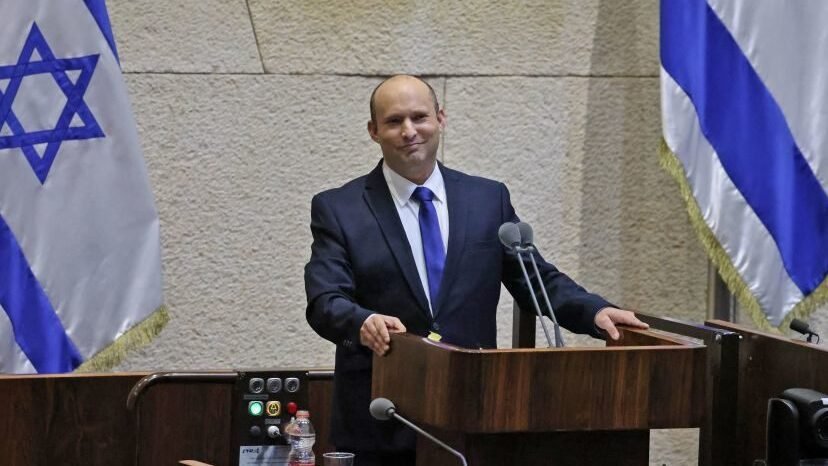
A new government can take office without 61 affirmative votes, while a separate parliamentary majority could elect the Knesset speaker and advance legislation before coalition negotiations conclude
In Israeli politics, 61 seats are the magic number. But a new government can take office with fewer than 61 votes, and parties unable to agree on a prime minister can still join forces to control parliament.
Thursday’s completed vote count from Israel’s October 27 election gave Prime Minister Benjamin Netanyahu’s right-wing and religious bloc 53 seats, the main non-Arab opposition parties 48, and the two Arab-led parties 19. Ra’am won eight seats and the Joint List 11. The results remain subject to final verification, with official publication expected November 4.
That leaves the Arab-led parties positioned to influence not only whom President Isaac Herzog asks to form a government, but also whether a proposed Cabinet wins the Knesset’s confidence and which political camp controls the parliamentary agenda.
Understanding those possibilities requires distinguishing between a government, a coalition and outside parliamentary support.
The government is Israel’s executive branch, comprising the prime minister and ministers. Ministers need not be members of the Knesset, although the prime minister must hold a parliamentary seat.
A coalition, by contrast, is a partnership of parliamentary factions that agree to sustain the government, generally through agreements covering policy, legislation and political appointments. Joining the coalition does not necessarily mean receiving a Cabinet position.
Ra’am demonstrated that distinction in 2021 when it joined the coalition supporting the government led by Naftali Bennett and Yair Lapid without taking any ministerial posts.
“There is a difference between the majority that supports the government and which parties signed the coalition agreement,” Prof. Yael Shomer of Tel Aviv University’s School of Political Science, Government and International Affairs told The Media Line.
There is a difference between the majority that supports the government and which parties signed the coalition agreement
A party can also remain outside the coalition while helping a government take office or survive. It might recommend a candidate during presidential consultations, vote in favor of the proposed Cabinet or abstain from the confidence vote. Later, it could support some government measures while opposing others.
The initial confidence vote is where the distinction becomes decisive.
Under Basic Law: The Government, a new Cabinet must receive the Knesset’s confidence before taking office. But the vote does not necessarily require 61 affirmative votes. Under the Knesset’s general voting rule, abstentions are excluded from the tally, and a simple majority of votes cast is sufficient.
The election results provide a hypothetical example.
If the 48 lawmakers from the main non-Arab opposition parties and Ra’am’s eight representatives voted for a proposed government, they would produce 56 affirmative votes. If Netanyahu’s 53 lawmakers opposed it while the Joint List’s 11 representatives abstained, the government would win its confidence vote 56-53.
Ra’am could thus help install a government without joining either the Cabinet or the coalition. The governing coalition itself would hold only 48 seats, making it a minority government.
The arithmetic is straightforward. The politics are considerably more difficult.
Yisrael Beitenu leader Avigdor Liberman has explicitly rejected supporting a minority government, even temporarily, while Bennett has also opposed relying on Arab-party votes or abstentions. Such a government is legally possible, but forming one would require political compromises that opposition leaders have so far resisted.
Israel has limited experience with governments that begin their terms without a parliamentary majority. Elsewhere, the arrangement is considerably more common.
“Comparatively, we know that one-third of all governments in parliamentary systems around the world are minority governments,” Shomer said. They are, she added, “not as unstable as one would envision.”
Minority governments can survive through different forms of outside support.
Under a written confidence-and-supply agreement, an outside party commits to backing the government on votes essential to its survival, particularly confidence and budget votes. A less formal arrangement leaves the government negotiating support for individual measures.
Attorney Tomer Naor, vice president for legal affairs and strategy at the Movement for Quality Government in Israel, described the position of an outside supporter this way: “We don’t even want to be part of your coalition, but we support you. We let you live.”
We don’t even want to be part of your coalition, but we support you. We let you live.
That support does not necessarily give a minority government reliable control of parliament. An outside party might help install a Cabinet but subsequently oppose its legislation or budget. Most ordinary legislation requires only a majority of votes cast, but repeated parliamentary defeats could severely limit the government’s ability to carry out its program. Failure to approve the state budget by the applicable legal deadline can also trigger the Knesset’s dissolution.
Removing an incumbent government is more difficult than installing a new one after an election.
Israel uses a constructive no-confidence procedure, meaning lawmakers cannot simply vote a sitting government out of office. They must agree on a replacement. At least 61 Knesset members must support an alternative government, including its proposed prime minister, ministers and policy guidelines.
Consequently, a minority government could lose legislative votes without necessarily falling. Its opponents would have to agree not only on removing the incumbent, but also on who should replace it.
Before any new government reaches that point, Herzog must decide who gets the first opportunity to form one.
Official election results must be published within eight days of Election Day. Within seven days of their publication, the president must assign the task of forming a government to a consenting member of the Knesset after consulting representatives of the parliamentary factions.
Those consultations allow parties to recommend candidates or decline to endorse anyone. Their recommendations help establish which lawmaker has a plausible path to forming a government, but they do not automatically determine the president’s choice.
There is no legal requirement that Herzog select the leader of the largest party or the candidate receiving the most recommendations. He can choose whichever consenting lawmaker he believes has the best chance of forming a government.
The first candidate receives 28 days, with a possible extension of up to 14 days.
If that effort fails, the president has three days to give another lawmaker a nonextendable 28-day mandate or notify the Knesset speaker that he sees no prospect of forming a government.
A further 21-day period then allows at least 61 lawmakers to request that the president assign the task to a specific Knesset member. That candidate receives 14 days to form a government. If no candidate receives the required backing, or the final attempt fails, the Knesset is dissolved, and another election must take place within 90 days.
Throughout the negotiations, Netanyahu and his outgoing ministers remain in office in a caretaker capacity. But the new Knesset does not have to wait for a government to be formed before beginning its work.
The newly elected parliament is expected to convene November 10. Its members can elect a speaker, establish committees and begin advancing legislation while coalition negotiations continue.
Until a successor is elected, the outgoing Knesset speaker, currently Likud’s Amir Ohana, continues in the position if he has retained his parliamentary seat.
The new Knesset also establishes an Arrangements Committee, which organizes parliamentary work during the transition and helps determine the composition of temporary committees. These committees, along with any additional committees established as necessary, can allow legislation to advance before a new government takes office.
Crucially, cooperation over parliamentary leadership and legislation does not have to extend to government formation.
Parties unwilling to share a Cabinet could still vote together to elect a speaker, establish committees or advance particular bills. With 48 seats held by the main non-Arab opposition parties and 19 by the Arab-led parties, those factions would command 67 seats if they acted together.
During this period, the bloc that commands a majority on the Knesset floor can advance a lot of things and can block a lot of things from progressing
“During this period, the bloc that commands a majority on the Knesset floor can advance a lot of things and can block a lot of things from progressing,” Shomer said.
The Knesset speaker is especially important because the position carries substantial procedural authority. Working with the deputy speakers in the Knesset Presidium, the speaker helps manage the parliamentary agenda and determine when legislative initiatives reach the plenum.
The speaker cannot pass laws unilaterally. Legislation must go through the applicable parliamentary procedures, including committee consideration and voting. Nevertheless, control of the chamber’s leadership can give one political camp significant influence even while another controls the executive branch.
A speaker elected with opposition and Arab-party support could therefore remain in office even if Netanyahu subsequently succeeded in forming a government.
Removing a sitting speaker merely because the political balance has shifted is not straightforward. Under the Knesset Law, dismissal for conduct deemed incompatible with the office requires an Ethics Committee finding, a complaint supported by at least 61 lawmakers, approval by three-quarters of the Knesset Committee and a final vote of at least 90 members of the full Knesset.
The consequences could extend beyond control of the parliamentary agenda.
Naor said an anti-Netanyahu parliamentary majority could use the period before government formation to pursue legislation requiring a state commission of inquiry into the Hamas-led attack of October 7, 2023.
Lawmakers could also consider legislation prohibiting someone under criminal indictment from serving as prime minister, although Naor cautioned that applying such a restriction to Netanyahu could invite a High Court challenge on the grounds that it constituted personal legislation.
Even before we have a government, the parliament can start working and pass laws
“Even before we have a government, the parliament can start working and pass laws,” Naor said.
Whether the parties opposed to Netanyahu could muster the votes for such measures remains uncertain. Their shared interest in replacing him does not necessarily translate into agreement on legislation, parliamentary leadership or the composition of an alternative government.
But Israel’s post-election stalemate is not solely a contest over who can assemble a governing coalition. It is also a struggle over who controls the Knesset while that contest unfolds.
The next consequential victory may not be the formation of a government at all. It may be the election of a speaker whose parliamentary majority looks very different from the coalition that eventually takes office.