Imagine starting a space company in October 2019 with the aim of changing the world. Then, a few months later, a global pandemic shuts the world down.
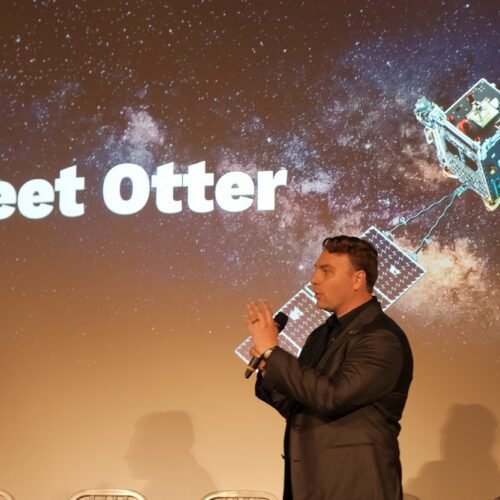
“Little did we know what the world had in store for us,” said Trevor Bennett, an engineer who co-founded Starfish Space after a few years at Blue Origin. “But that’s kind of become part of our story, showing some resilience along the way.”
At Blue Origin, he saw, up close, the ambitions of billionaires to build big rockets and put massive numbers of satellites into orbit. Bennett and his co-founder, another engineer from Blue Origin named Austin Link, began to think about the implications. How would humanity deal with that increased volume of satellites in orbit? Could low-Earth orbit be preserved?
Ideas like asteroid mining or building infrastructure on the Moon seemed a little too far out at the time, but improving the ability to move around in space, deorbiting threats, and extending the life of assets there seemed more plausible. An obvious business case was extending the life of large satellites in geostationary orbit, but just as important, Bennet and Link felt like managing these ever-growing constellations in low-Earth orbit would become vital.
“So we had two business cases that we thought were meaningful,” Bennett said. “What we needed was a vehicle to go match that, and that was Otter.”
Otter, at last
Seven years after Starfish’s founding, the first Otter will finally go to space this fall. With a spacecraft bus about the size of a large washing machine and a mass of approximately 350 kg, an Otter will fly on a Falcon 9 Transporter mission next month.
This will largely be a demonstration mission for NASA. Named SSPICY—for Small Spacecraft Propulsion and Inspection Capability—the mission will see Otter fly up to multiple older spacecraft and get close to them. Otter will inspect multiple US-owned, defunct satellites, approaching within hundreds of meters to gather information about spin rates, current conditions, and more. This is the first time NASA has funded a commercial debris inspection mission, and the agency is paying Starfish $15 million.
“All of these will be inspections to start,” Bennett said of the SSPICY mission. “But then there will be an opportunity for us to use the remaining life of Otter to do something more.”
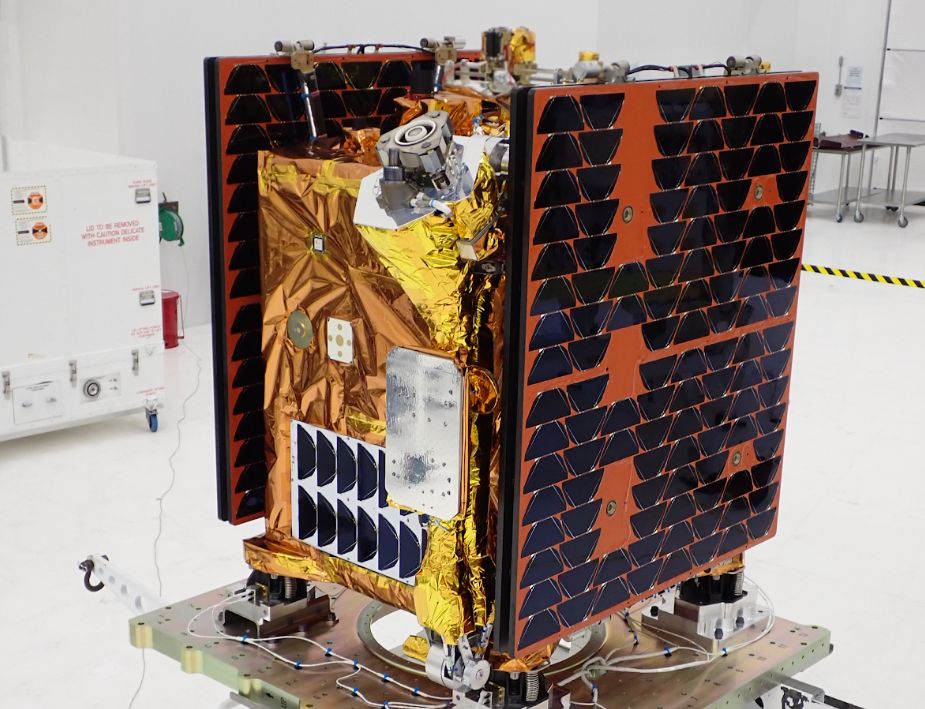
The initial missions will not refuel the Otter spacecraft, but that’s the long-term goal. The company chose water propellant precisely because it is an abundant fuel source across the Solar System.
Over Starsfish Space’s seven years of existence, Bennett and Link have kept the company fairly small. It has about 120 employees and has raised about $150 million to date. It has chosen to procure its spacecraft bus from Astro Digital and focus on developing software and maneuvering technologies to enable precise rendezvous and docking and the ability to maintain a long life on orbit to service multiple vehicles.
A long and winding road
There have been several demonstrations over the years. The first mission, Otter Pup 1, launched in 2023. But the external orbital transfer vehicle suffered a failure, and it ejected the Otter Pup 1 spacecraft prematurely at a spin rate of 330 degrees per second. Over a few weeks, the Starsfish team recovered the spacecraft, but one of its thrusters eventually failed.
It has had more success with two later demo missions, including Otter Pup 2, which launched in 2025 and has been flying in close proximity to a target spacecraft in low-Earth orbit. It has gotten to within 1 km so far, and if all goes well, a docking will occur in the coming months.
Starfish also partnered with Impulse Space last summer and used its software to fly the Mira spacecraft after that vehicle had completed its primary mission. Starfish sought to demonstrate that a single lightweight camera system, along with its closed-loop guidance, navigation, and control software, could autonomously rendezvous with another spacecraft. It worked.
Now comes the big test, however: flying a full-fledged Otter for NASA. Starfish has five more Otters in production for additional missions to showcase docking, de-orbit, and life extension capabilities. But you only get one chance to make a first impression, and Bennett said he is both nervous and excited.
“There is always a tension that comes with seeing the first of anything fly, right?” he said. “The other part of this is huge amounts of excitement. I think the excitement comes because this is a new kind of capability that’s finding its way to orbit. The pride part is the amount of effort that it took to get here from ourselves, from the team members, from people working with us, from the customers believing in that this can happen and helping us walk that path.”
“This is a moment to celebrate getting here and affording us this opportunity to go do something big,” he said.