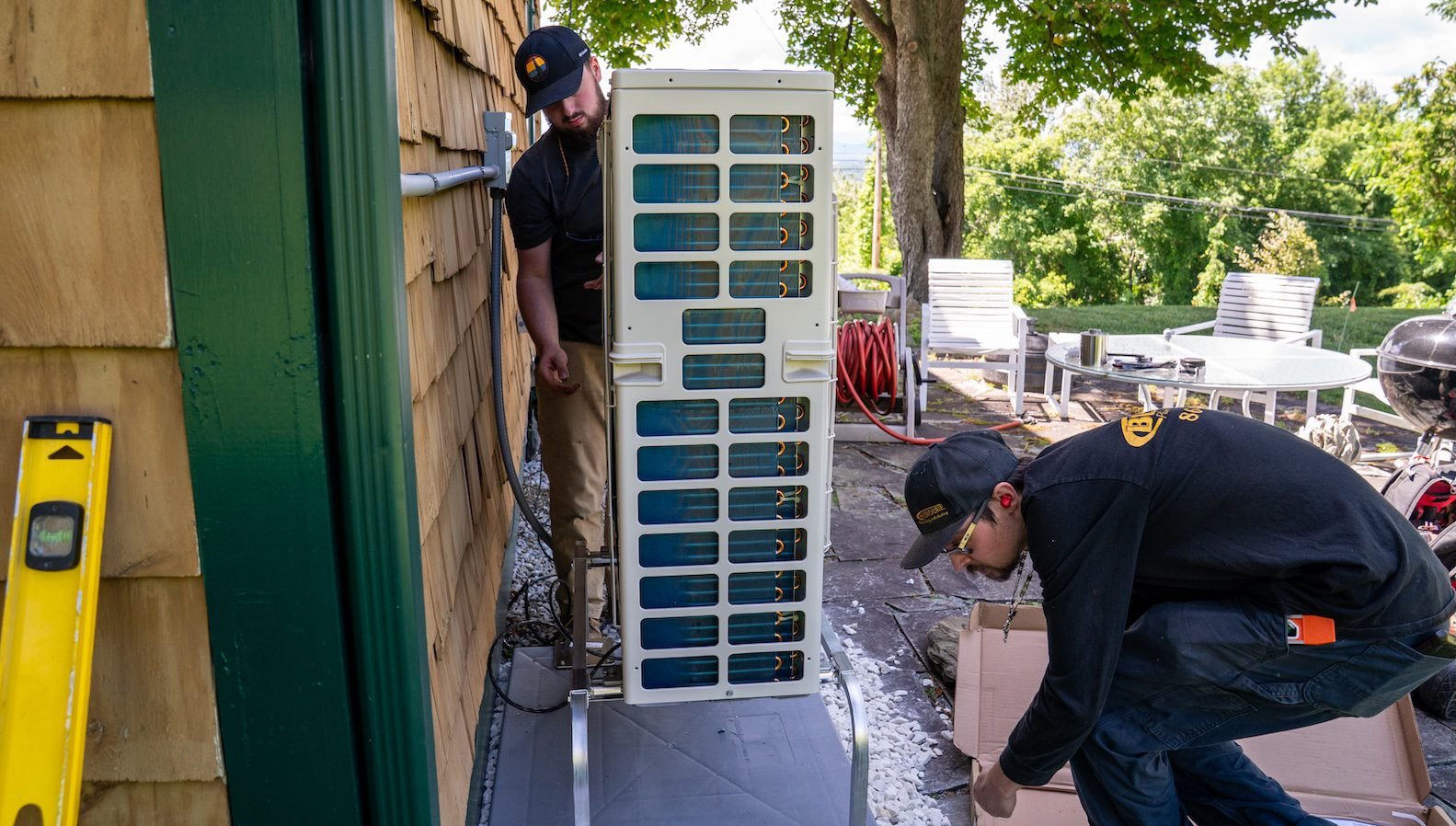
You may have heard by now that heat pumps — which transfer warmth from outdoor air to an indoor space, instead of generating it like a furnace — don’t work when it gets really cold out. That’s incorrect, as models designed for frigid climes can keep you toasty even in the dead of winter. Don’t believe me? Look no further than the Nordic countries, which have fully committed to them despite the region’s not-exactly-balmy winters.
OK, so heat pumps are more efficient than ever, which is why Americans seem to be warming up to the appliances. But surely, since they’re electric, switching to them en masse will push the grid to collapse? That’s also false. A new report from the energy thinktank RMI finds that thanks to “headroom” in the grid during the winter months, three-quarters of U.S. homes — some 109 million — could adopt the technology, no problem. That would significantly reduce greenhouse gas emissions and slash electric bills by over 20 percent in some states.
“A substantial number of homes can upgrade to heat pumps within the headroom today,” said Ryan Shea, a manager in the organization’s buildings team. “We’d be better utilizing the grid capacity that’s already there, that essentially spreads those costs across more kilowatt-hours, and everyone benefits with a lower electricity rate.”
What is this headroom, exactly? It’s the difference between the grid’s generation capacity and demand in winter. Typically, the need for electricity is highest in the summer, when millions of air conditioners gobble tremendous amounts of power. In the winter, many folks instead heat their homes with gas furnaces, so they’re getting that energy elsewhere, relieving strain on the grid. This means that during colder months, there’s additional capacity to provide power.
“That’s where we see moving to heat pumps, adding that electrical load in the winter, where there is all that available grid capacity, is a way to add load to the grid without needing to build it out more,” Shea said. In other words, keeping 109 million heat pumps running through the winter wouldn’t require, say, heaps of new gas-fired power plants.
This buffer, though, isn’t the same state to state or region to region. For one, climates are different: In Phoenix, summers are way hotter than in Boston, requiring more AC, with much milder winters, requiring less heating. How local utilities generate electricity matters, too. Gas power plants can run year-round, but with more solar coming online, generation dips in the winter as the days grow shorter. To compensate for this, utilities are building sprawling battery farms to store energy, and experimenting with using electric vehicles as a vast network of backup power. (They’re even using Earth itself as a giant battery for longer-duration storage.) Either way, renewables and batteries are combining to make the grid more reliable than it is with fossil fuels, and much more flexible no matter the time of year, further reducing costs for ratepayers.
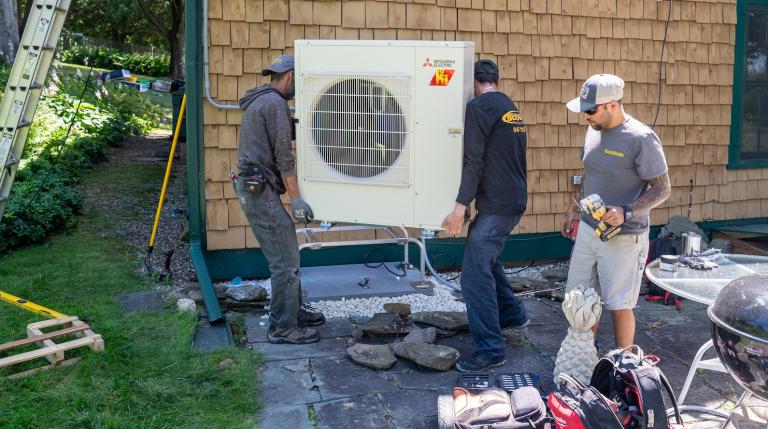
The ultimate goal is for heat pumps to replace fossil fuels as the dominant way of warming and cooling our homes. (Yes, heat pumps can cool a space by transferring warmth from inside to outside.) But they also need to replace electric resistance heating, like space heaters. These appliances are especially common in the Pacific Northwest and the Southeast, which endure less punishing winters than the Northeast. These giant toasters are, of course, a better option than a gas furnace, as they’re inherently more efficient and don’t poison homes. But heat pumps are around three to four times more efficient, meaning they require less electricity and therefore demand less from the grid. This could theoretically save households switching from resistance heating an average of $1,530 a year, according to RMI’s previous research.
So how can the U.S. accelerate its shift to heat pumps? For one, AC units that go kaput should be replaced with heat pumps. States can provide rebates to encourage people to make the switch. When a state puts its collective mind to it, the transition can happen faster than you think: Maine (again, another place not known for comfortable winters) blew past its goal of installing 100,000 heat pumps two years ahead of schedule. Oddly enough, simply building more apartments — tackling the housing crisis is a rare bit of agreement between Democrats and Republicans — is a sneaky way to get more heat pumps into units.
Instead of crashing the grid, then, heat pumps working in all American climates (even Alaska) will reduce electricity costs for owners — and rates overall — while making the system as a whole more flexible. As affordability dominates the conversation in American politics, the heat pump could well emerge as a superstar, a rare feat for an appliance. “We really think there’s a reason to include heat pumps within those affordability plans,” Shea said, “and try to really establish some heat pump installation goals.”