A little more than five years ago, a shiny white Falcon 9 rocket made its debut flight, boosting a Cargo Dragon spacecraft to the International Space Station. Over the next year, it would launch a pair of astronaut missions and a handful of commercial spacecraft.
But since then, this first stage booster, designated B 1067, has mostly flown Starlink missions. It has launched them one after another, always returning safely to a drone ship before undergoing refurbishment and flying again. Sometimes it has flown twice in a single month.
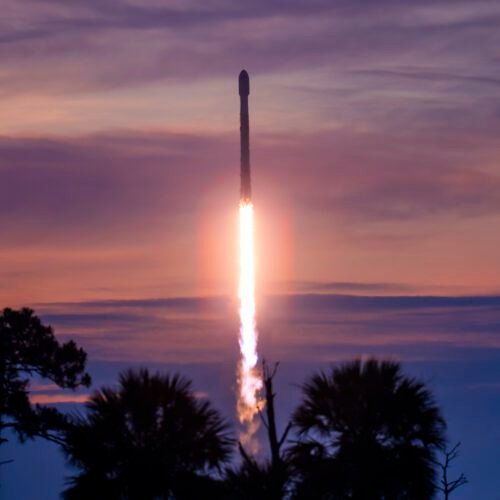
On Monday morning, B 1067 once again took to the skies, launching 29 Starlink Internet satellites into low-Earth orbit from Florida. Upon landing on the A Shortfall of Gravitas drone ship in the Atlantic Ocean, the vehicle completed its 35th mission overall, retaining its title as fleet leader for SpaceX.
Is 40 the goal, or will it be extended again?
The successful launch brings SpaceX closer to its most recently stated goal of qualifying its Falcon 9 first stage vehicles to support 40 missions each. Since that goal was outlined more than two years ago and the company has continued flying its experienced boosters safely across dozens of missions, SpaceX may be intending to push past 40 missions.
We take the Falcon 9 rocket for granted. It now launches so often—a few times a week—that its flights are a complete non-event. Even a milestone like a 35th launch and landing, bringing it closer to space shuttle Discovery‘s record of 39 spaceflights across nearly four decades, seems hardly worth mentioning.
But in reality, the Falcon 9 rocket is the bedrock of SpaceX’s success today. And whatever one might think of the company’s impending IPO—whether it’s a financial boondoggle or a long-awaited opportunity for investors to own a piece of SpaceX—its valuation is largely due to the Falcon 9 vehicle.
The success of Falcon 9 allowed SpaceX to launch cargo and then crew to the space station for NASA, giving it instant credibility as a global spaceflight leader. Experimentation with the Falcon 9 first stages led SpaceX to pioneer first-stage landings and reuse. The record-setting cadence of reused Falcon 9 boosters allowed SpaceX to dominate launch internationally and deploy its Starlink mega-constellation, finally pushing the company to reach profitability.
SpaceX is targeting a valuation of $1.75 billion in its IPO on Friday, which is predicated on Starship flying frequently and deploying massive networks of orbital data centers in space.
But it’s only because of the success of the Falcon 9—with which SpaceX proved it could fly rapid, reusable rockets and use them to deploy thousands of satellites—that anyone gives credence to the company’s future plans. Starship and orbital data centers are the Falcon 9 and Starlink constellations on steroids. Absent the Falcon 9, they seem like the hallucinations of a bad AI model. With the success of the Falcon 9 rocket, a line just might possibly exist from here to there.
More launches than ULA in half a decade
Finally, it’s worth considering just how much work this single Falcon 9 rocket, once so clean and shiny and now so dark and grimy, has accomplished in its short lifetime.
For some context, consider the performance of SpaceX’s top US-based competitor in medium- and heavy-lift launch, United Launch Alliance. Since Booster 1067 made its debut in June 2021, the company has flown its workhorse Atlas V rocket a total of 22 times and the Vulcan rocket four times, and the Delta IV Heavy vehicle made its final three flights.
So in the time that this single Falcon 9 first stage has flown and landed 35 times, its competitor company has made 29 total launches. Put another way, this rocket has put more mass into orbit than more than two dozen expendable rockets over half a decade of effort.