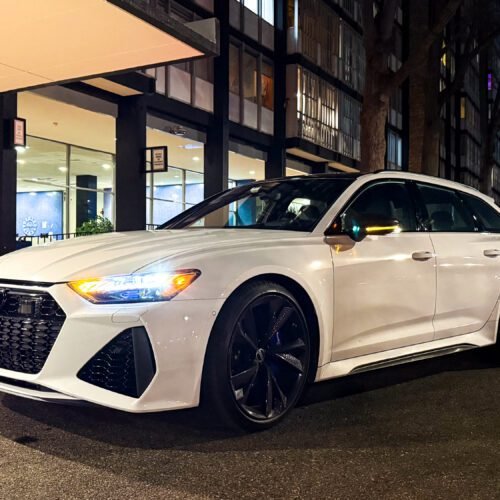
By the time you read this, the Audi RS6 Avant is dead. Production at the factory in Neckarsulm, Germany, has already switched over to new models; any unsold wagons at dealerships will be the last of their kind. Time moves on, leaving the unelectrified 2026 RS6 Avant Performance as a relic from a bygone age where people didn’t care quite so much about melting glaciers. In this regard progress is good and climate catastrophe is bad, but there are other things to like about the RS6 Avant, and much that Audi could and should bring to its other cars.
The car was always something of a unicorn here in the US. As the SUV became ascendant, the station wagon suffered a corresponding decline with the general public, and automakers like Audi responded by not importing them anymore. The economics, we were told, didn’t add up: wagon sales would just cannibalize SUV sales but at too small a rate to make the imported wagons profitable. But with smaller volumes, the math made more sense, which is why in 2019 the car maker buckled to pressure and said fine, we’ll import the RS6 Avant. And with a starting price of $130,700, you can understand why this is a low-volume model.
Subtly swollen
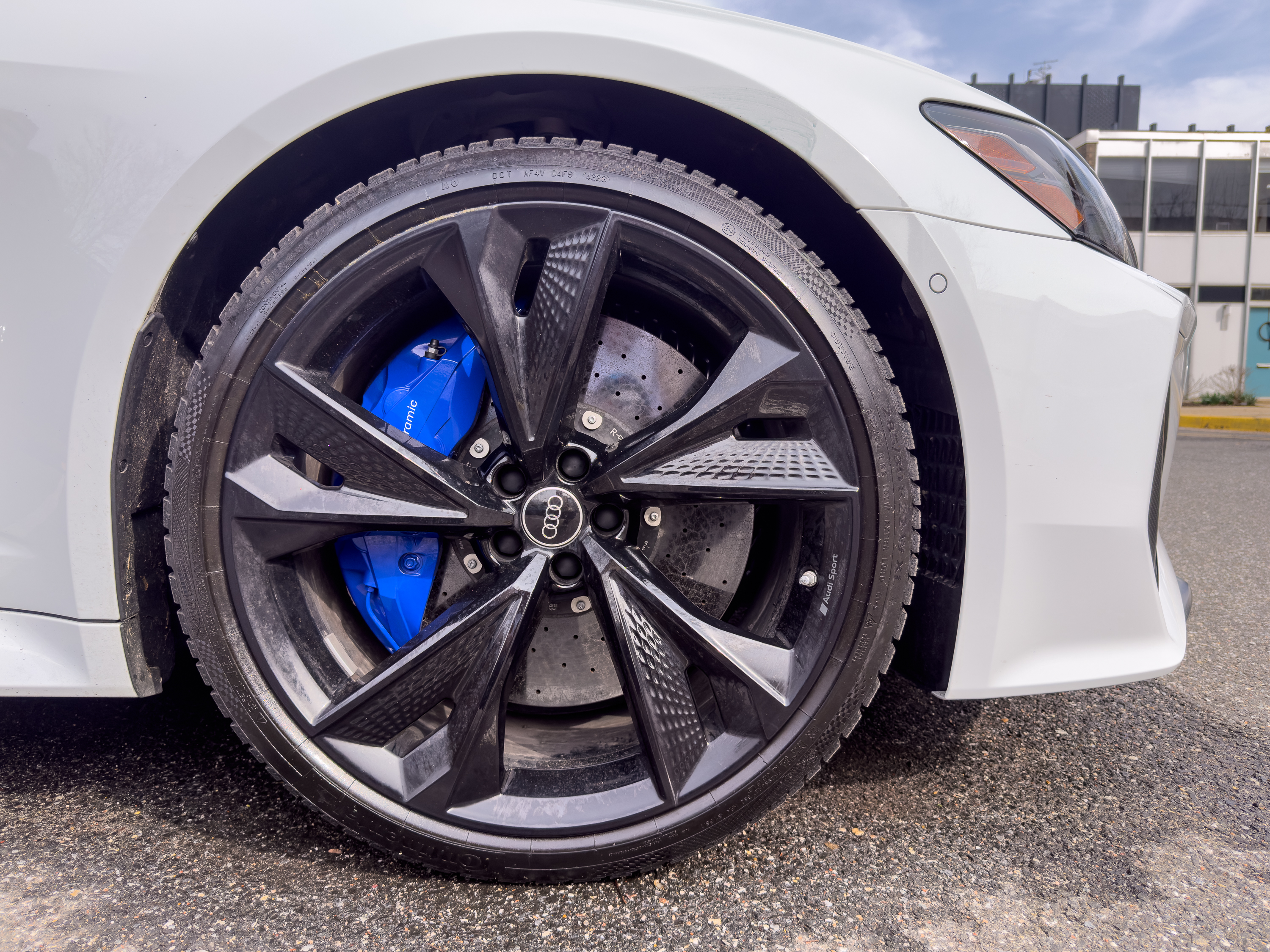
A look down its flanks reveals wheel arches that bulge to accommodate larger wheels, part of Audi Sport’s RS transformation applied to the sedate A6 starting point. Larger wheels provide clearance for larger brakes, which in turn help stop it from prodigious velocities—if you have a long enough runway or the right stretch of German Autobahn, top speed for this version, the Performance, tops out at 190 mph (305 km/h). Under the hood, hidden from view by plastic paneling, lies a twin-turbocharged 4.0 L V8 engine, which generates 621 hp (463 kW) and 627 lb-ft (850 Nm), sending power to all four wheels via an eight-speed ZF automatic transmission.
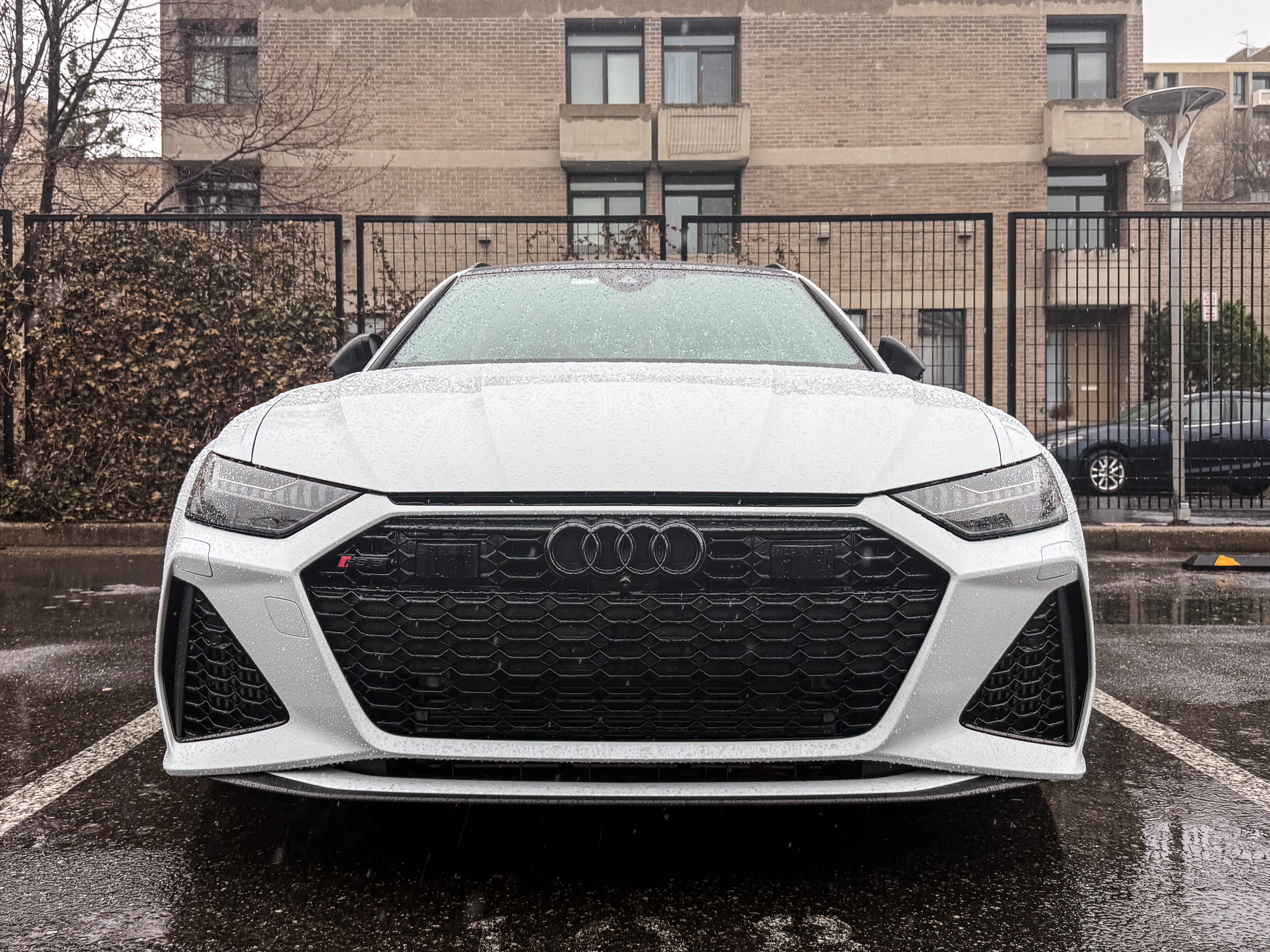
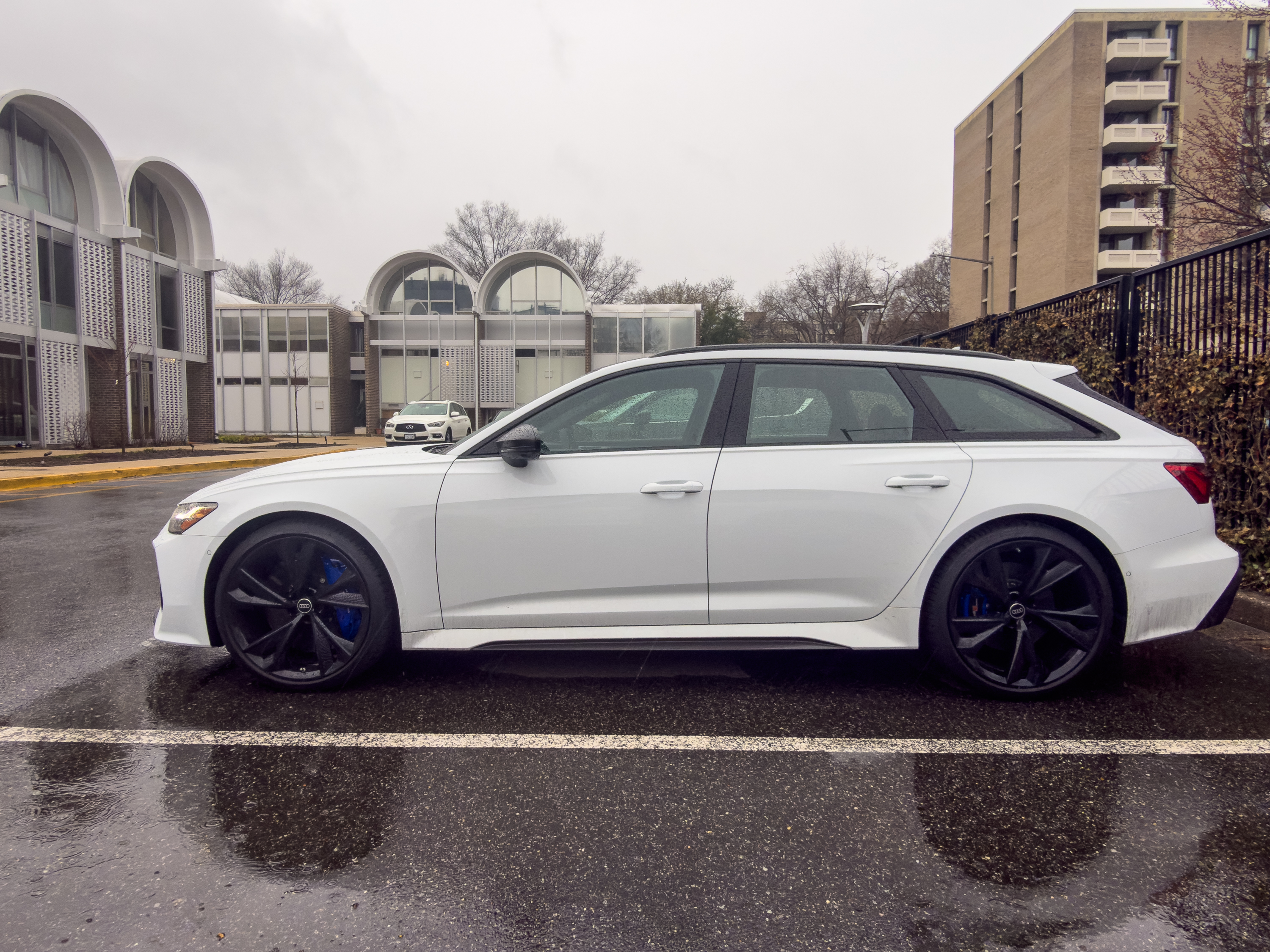
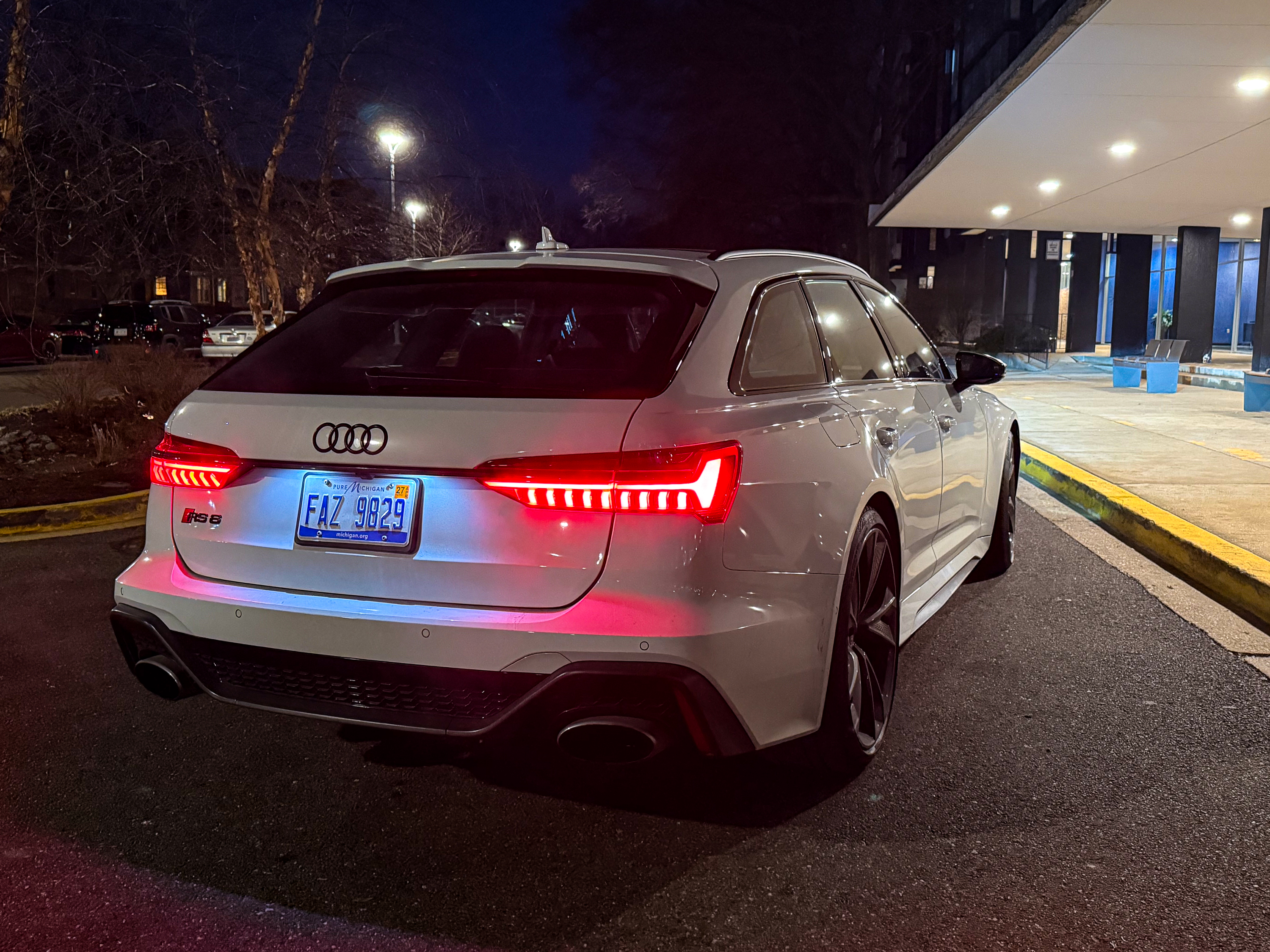
It is, as you might imagine, rather rapid. From a standstill 60 mph, it takes just 3.3 seconds, just a tenth longer than the V10-powered Audi R8 supercar that, like the RS6 Avant, is no more, having gone to its own sunset in 2024. (Fans of really quick Audis need to go completely electric: the RS e-tron GT will do the same dash in as little as 2.1 seconds, which even to this jaded author still feels extremely violent.)
The mechanicals and electronics are all shared with another fast Audi that’s also now out of production, the RS7, which might give you the impression they’re similar to drive. In fact, this is not the case. Even though they both weigh about 4,900 lbs (2,222 kg), depending on the options, and both have the same air suspension, the RS6 Avant manages to feel much lighter than the RS7—more eager to change direction. It also feels a little looser at the rear axle; like the last RS7 I drove, this RS6 Avant was fitted with a torque-vectoring rear differential, but the station wagon body shell means the car’s center of gravity is a little higher up and farther back than the fastback RS7.
That adds a measure of playfulness not always found in RS Audis, and less often in the company’s normal models. Forget taking the long way home—this is a car that you’ll find excuses to drive. In summer I’m sure there’s even more grip, particularly from the front axle, but even on winter tires, I never came close to reaching the limit on public roads.
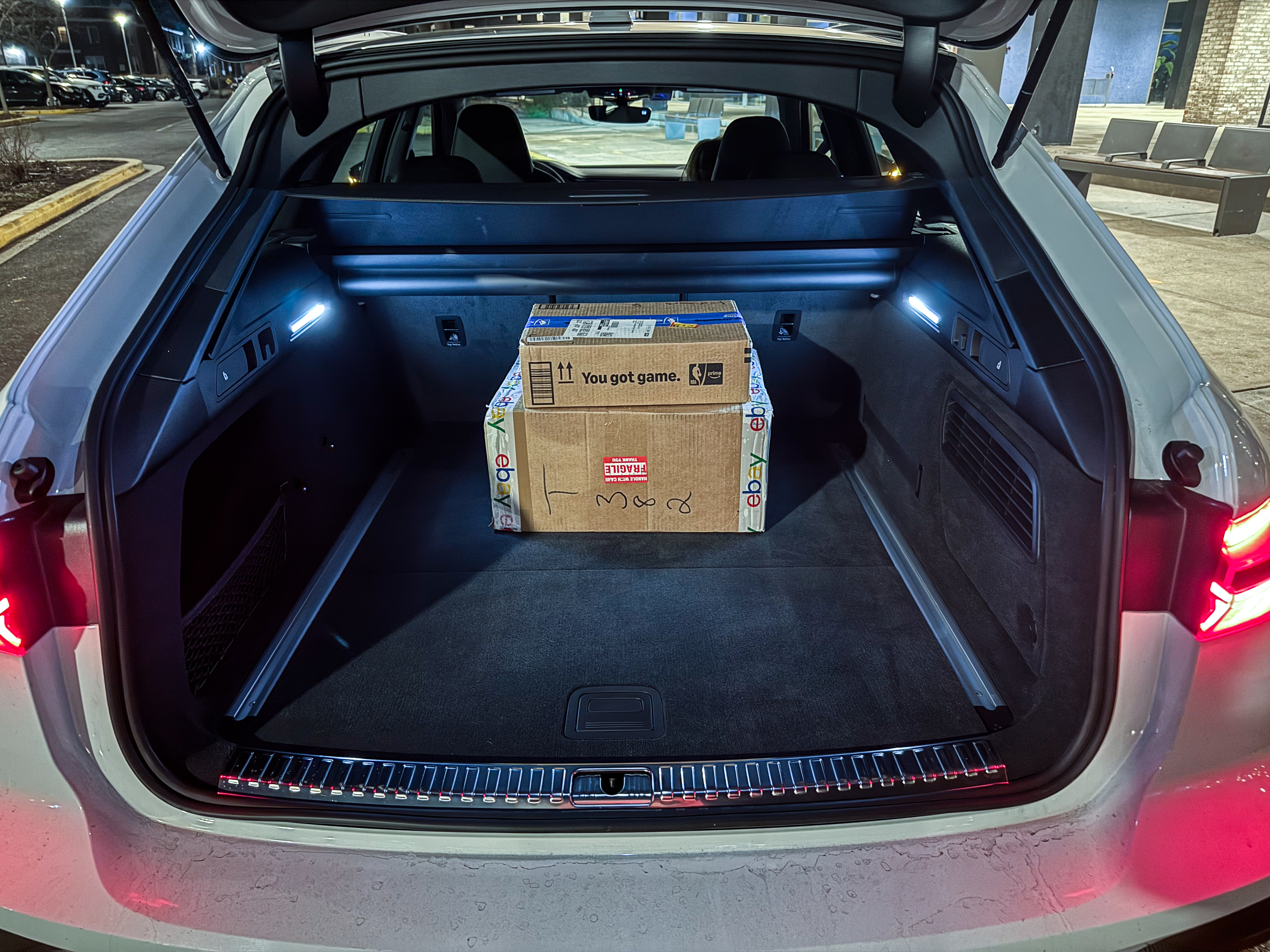
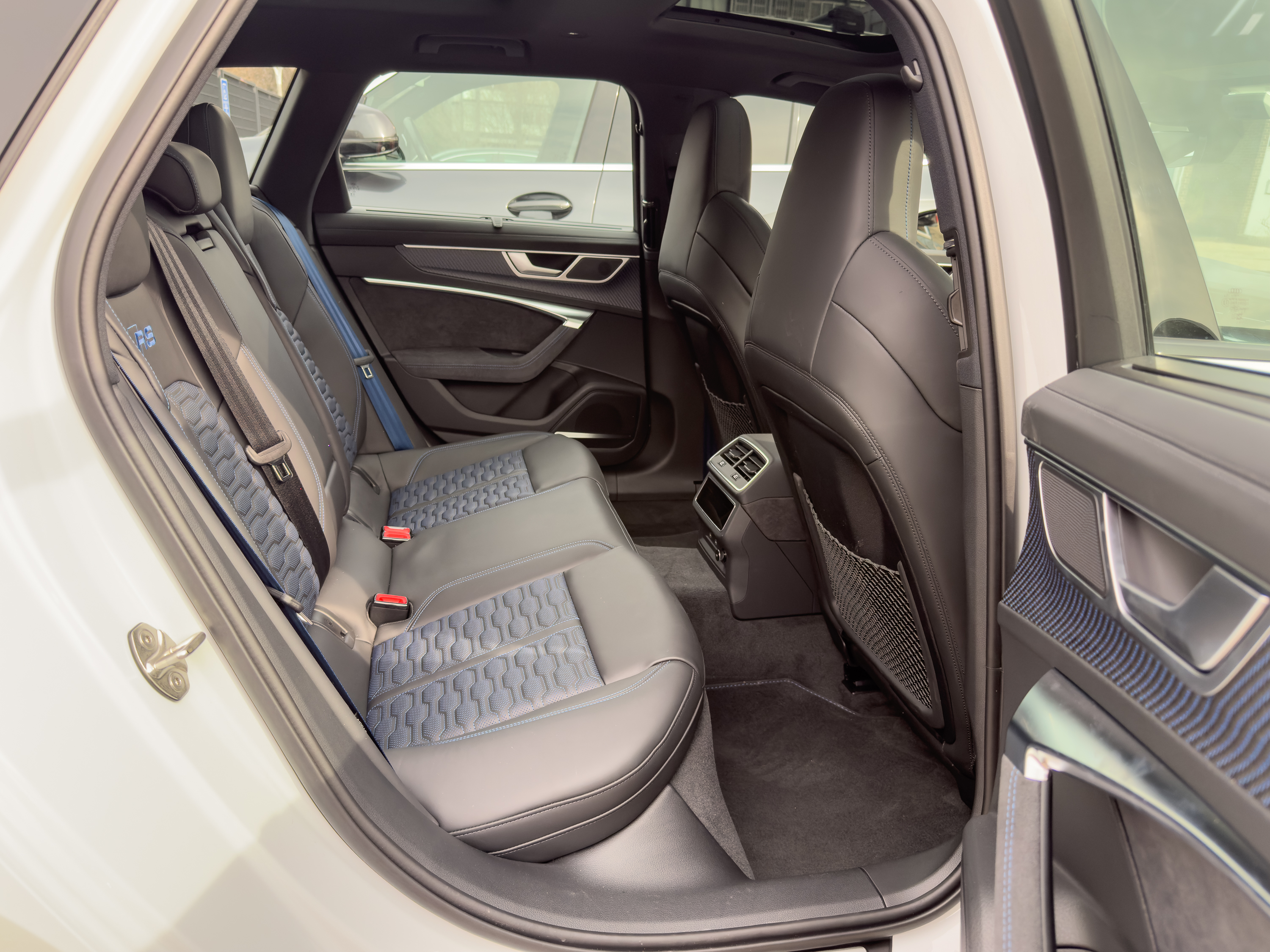
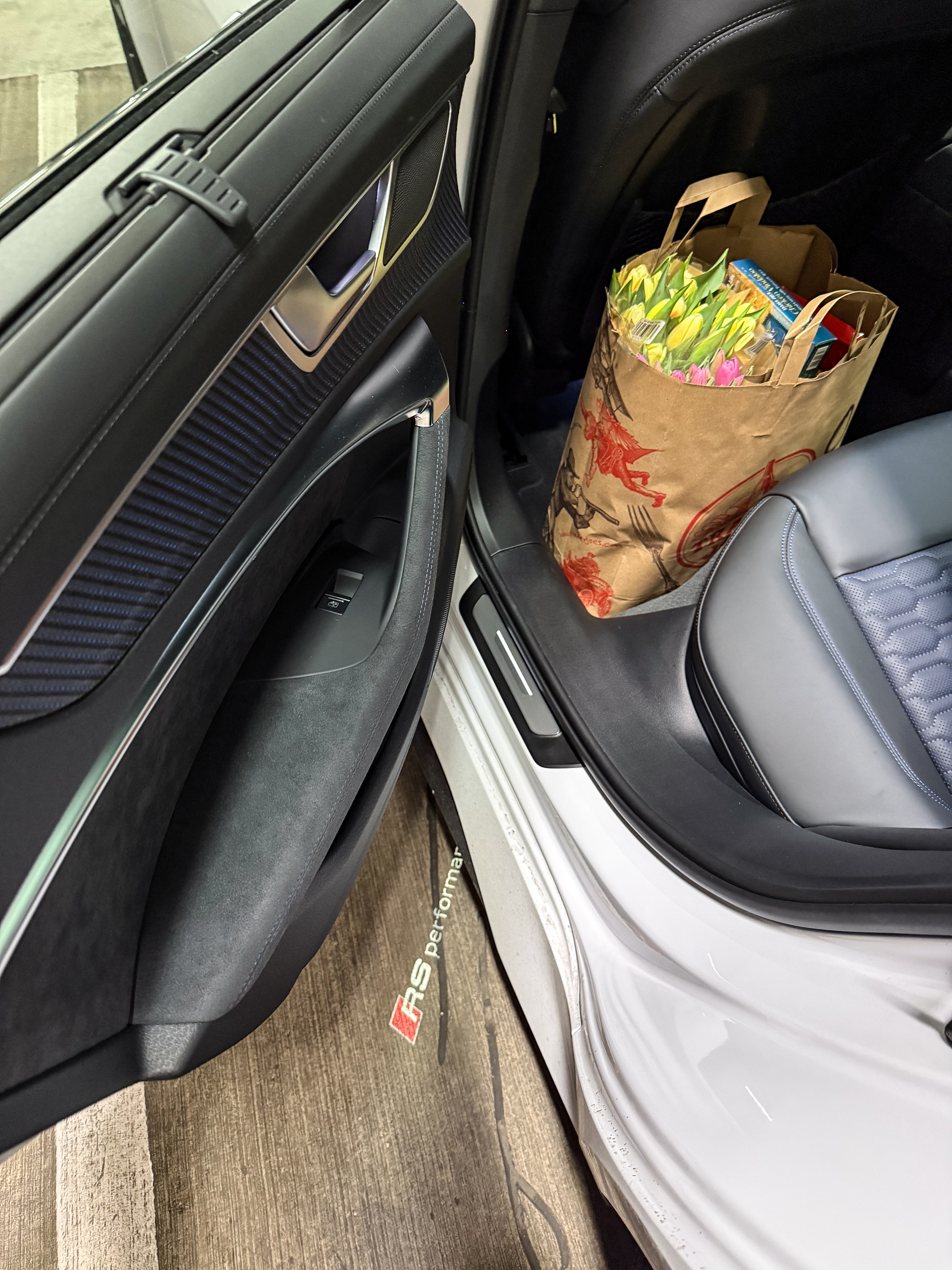
The bit I didn’t remember from the last time I drove an RS6 Avant was how easy it is to drive slowly, too. I make a note of this, because that’s something I found much harder to do in the recent Audi S5, for example. Here, the big white wagon was quite content to cruise along at 20 mph (30 km/h) or less, and in comfort mode you barely even hear the engine burble. With 30 cubic feet (850 L) of cargo volume with the rear seats in use and almost twice as much (59.3 cubic feet/1,679 L) with the rear seats flat, there’s more than enough room for Costco runs and camping trips.
I feel blue that you’re leaving me
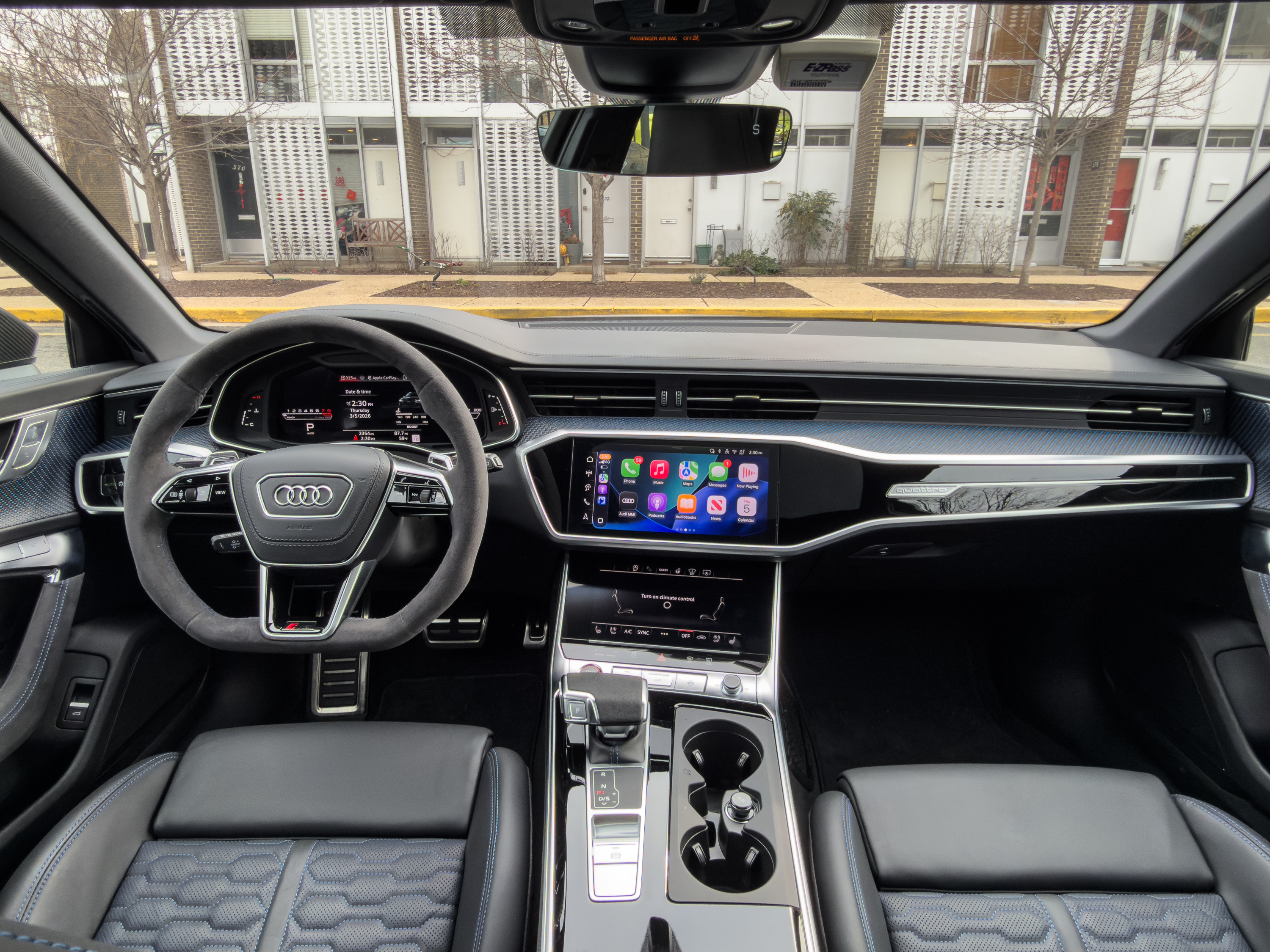
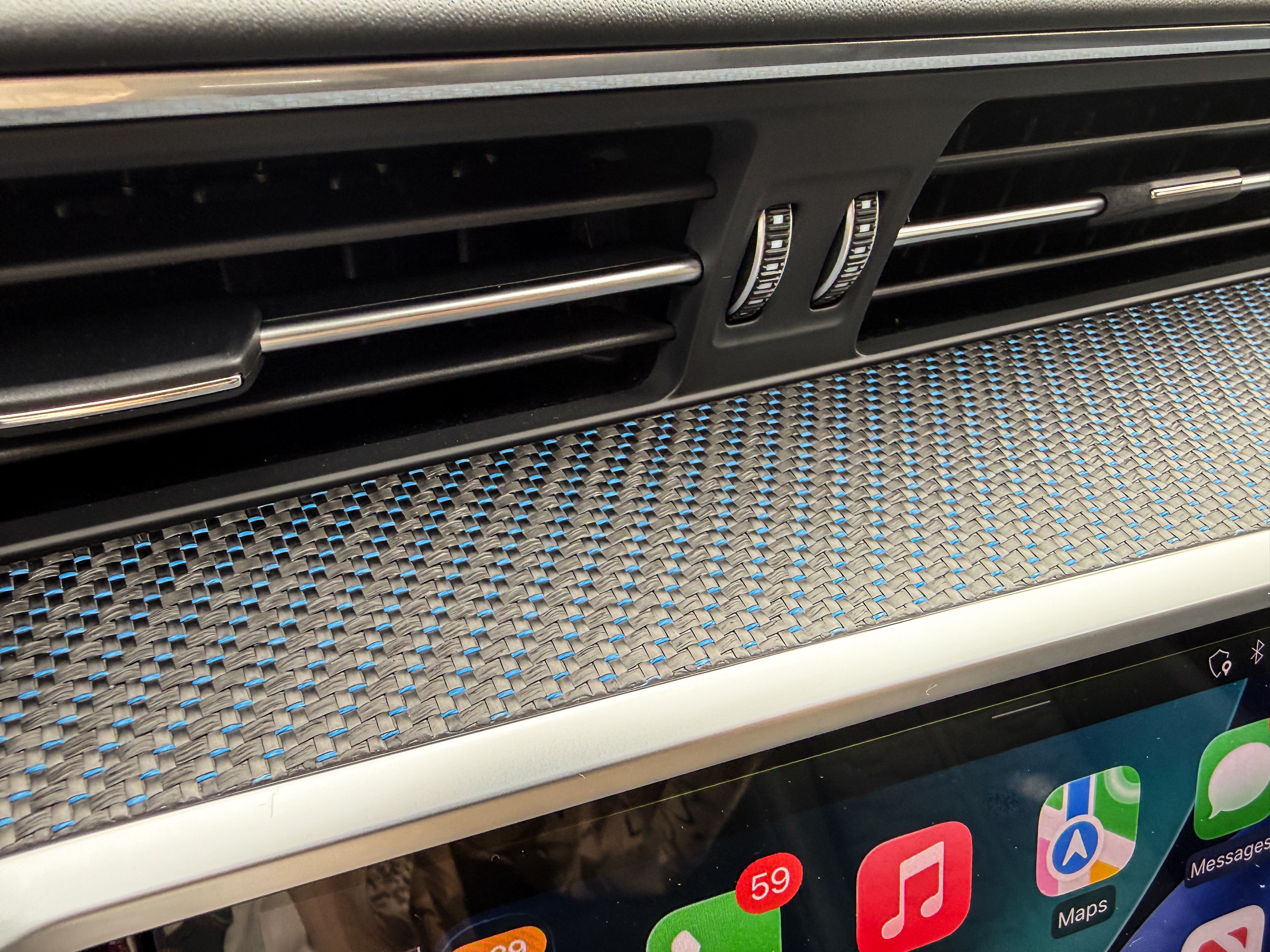
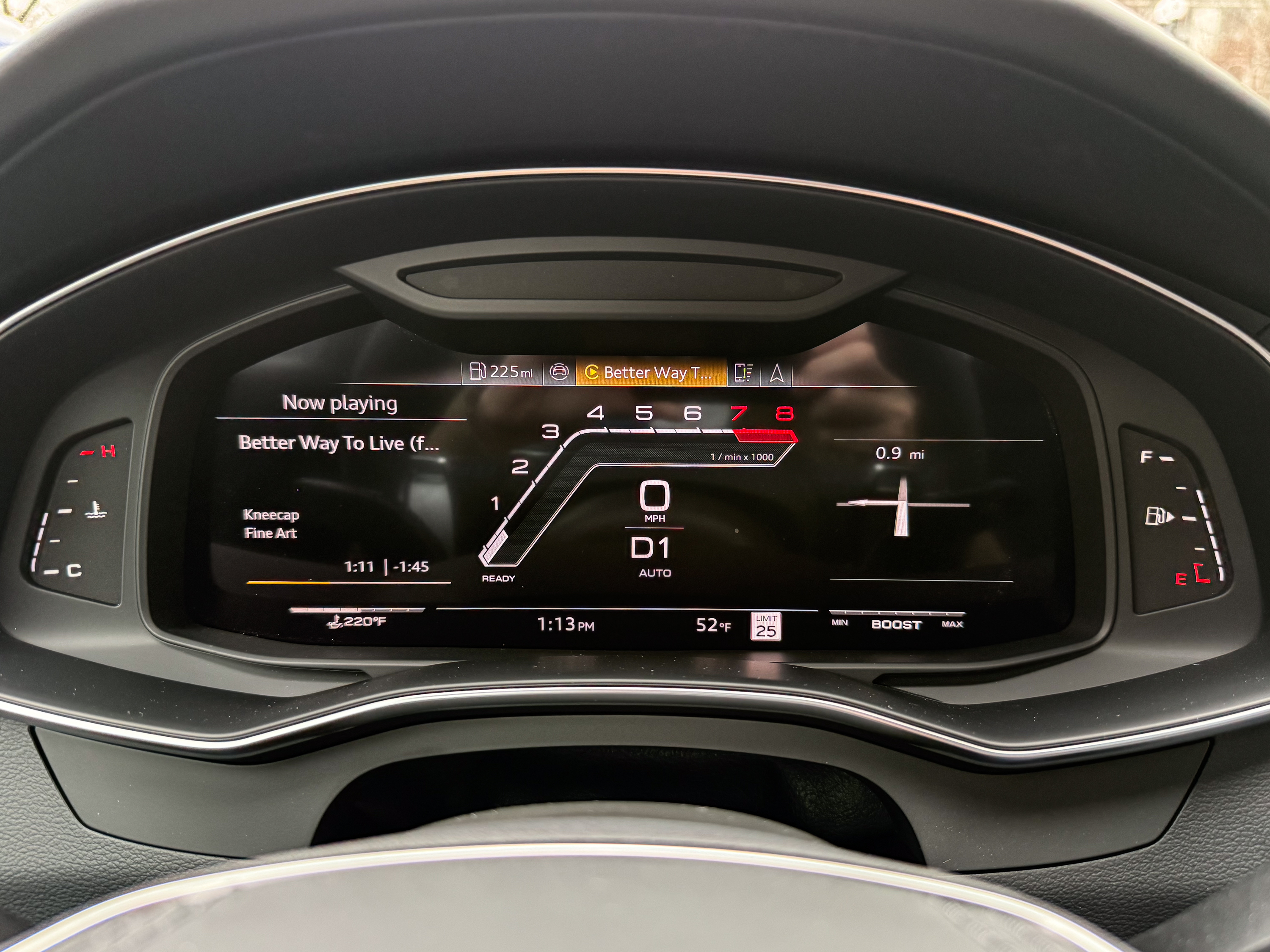
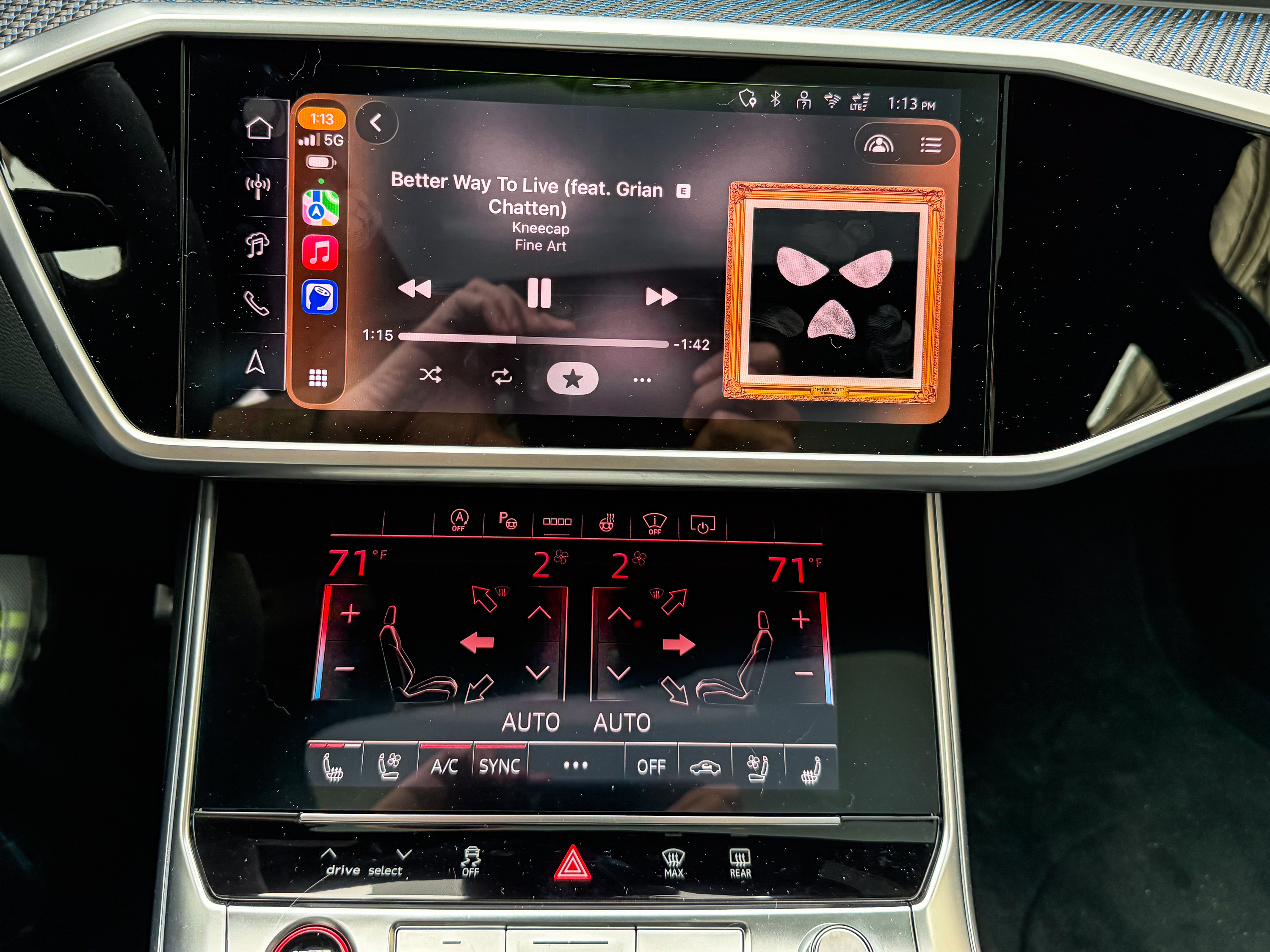
All the while, you’re sat in a rather elegant environment. Along with the blue brake calipers, our test car’s RS Design package also added blue thread to the stitching and even the weave of the carbon fiber on the doors and dash, which has a pleasing rough touch that contrasts with the fuzzy Alcantara that covers the steering wheel, transmission shifter, and door handles. The RS-specific themes for the main instrument display are eye-catching, and the infotainment is simple to use. Plus there’s no added passenger screen, a trend that thankfully postdates this car. The touchscreen that controls the climate is an inferior solution than buttons would have been, and there’s still a little piano-black trim on the dash, if we’re looking for demerits.
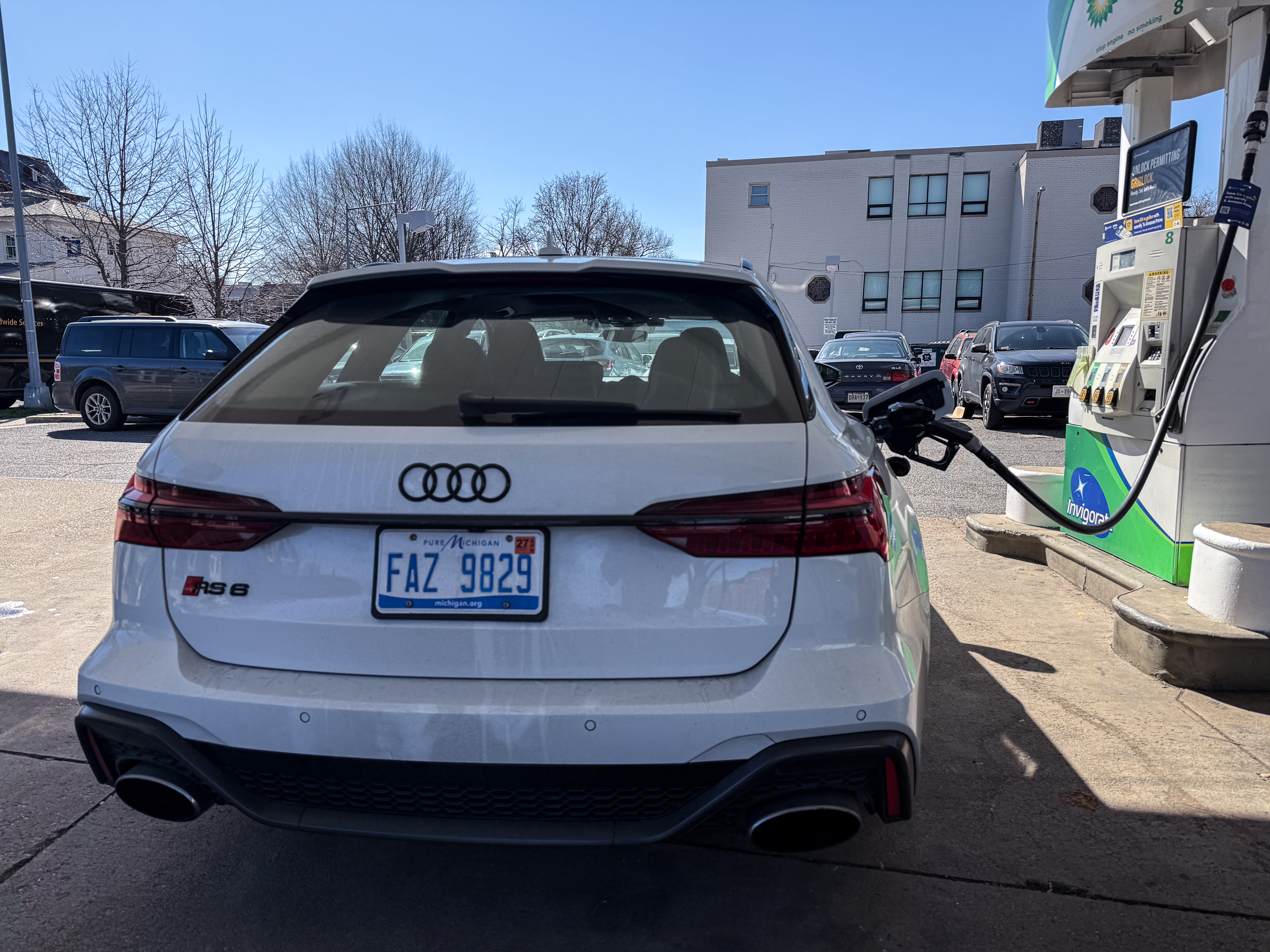
Unfortunately the RS6 Avant’s practicality is undermined by its one fatal weakness, the fuel economy. A combined 16 mpg (14.7 L/100 km) probably isn’t too bad in the context of a 2-ton car with this much power, but driving around town saw consumption drop into the single digits, even when I was being careful. Cold weather affects gasoline mileage, too, lest people forget. Running costs are less of a concern if you can already afford the near-$160,000 sticker price of our white wagon, but even for those with the means, the environmental costs might prove too high, particularly when BMW will sell them an even more powerful (even heavier) plug-in hybrid M5 wagon.
I don’t think that hybrid M5 will become quite the collector’s item that this RS6 Avant will, however. For now, it’s the last of its line—plans to build an RS variant of the electric A6 Avant e-tron got shelved last fall thanks to lack of demand from RS6 buyers for an all-electric version. Even if that car is no longer on the cards, maybe Audi Sport’s engineers can share some of this RS6 Avant’s magic with their colleagues and make other cars in the Audi lineup this enjoyable.