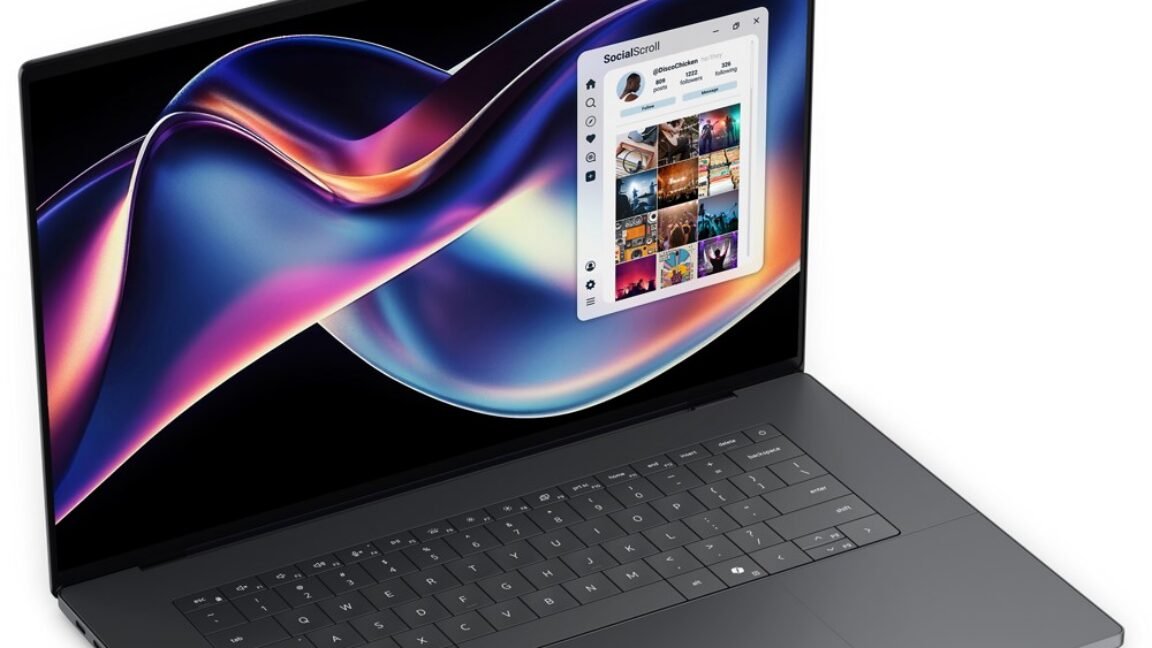
LG Display is mass-producing laptop screens that automatically change their refresh rate from 1 Hz to up to 120 Hz, based on what’s on-screen, it announced this week. The display supplier said that it’s the first company to mass-produce these 1–120 Hz screens, which are supposed to boost battery life.
According to LG’s announcement, the LCD screens, which it’s calling Oxide 1Hz, will automatically use a 1 Hz refresh rate when detecting a static image on-screen and switch to up to 120 Hz when needed. Without providing more detail, LG said it created proprietary “circuit algorithms and panel design technology” and discovered “new materials and [applies] the oxide with the lowest power leakage during low-refresh-rate mode to the display’s thin-film transistor.”
In its announcement this week, LG said that “when performing tasks involving primarily still images—such as checking emails or reading e-books and research papers—the panel operates at the lowest refresh rate of 1 Hz. Conversely, it runs in high-refresh-rate mode at up to 120 Hz when streaming content such as movies or sports as well as playing games with frequent screen changes.
Lower-refresh-rate screens generally consume less battery power than equally specced faster ones, and LG claims its so-called “Oxide 1Hz” screens lead to “48 percent more use on a single charge compared to existing solutions.” Although, what users actually experience will depend on how they use their computer and screen.
In November, BOE and Intel announced a similar 1 Hz laptop display technology that works in conjunction with Windows and Intel GPUs to automatically change refresh rates. However, the companies haven’t said when the displays might be available in devices.
Some OLED smartphones and smartwatches have been using a display tech that’s similar to Oxide 1Hz, called LTPO (low-temperature polycrystalline oxide), since 2018. LG’s so-called Oxide 1Hz brings the capability to LCD displays and laptops.
The concept behind Oxide 1Hz is also similar to dual-mode displays that have existed in gaming laptops and monitors since 2024 and that LG Display produces. However, those displays differ from Oxide 1Hz in that they require the user to press a button to quickly switch from a high refresh rate and low resolution to a lower refresh rate and higher resolution and are targeted at gaming.
Dell’s 2026 XPS laptops currently offer Oxide 1Hz displays as a base option.
LG said that it will mass-produce an OLED version of Oxide 1Hz starting in 2027.