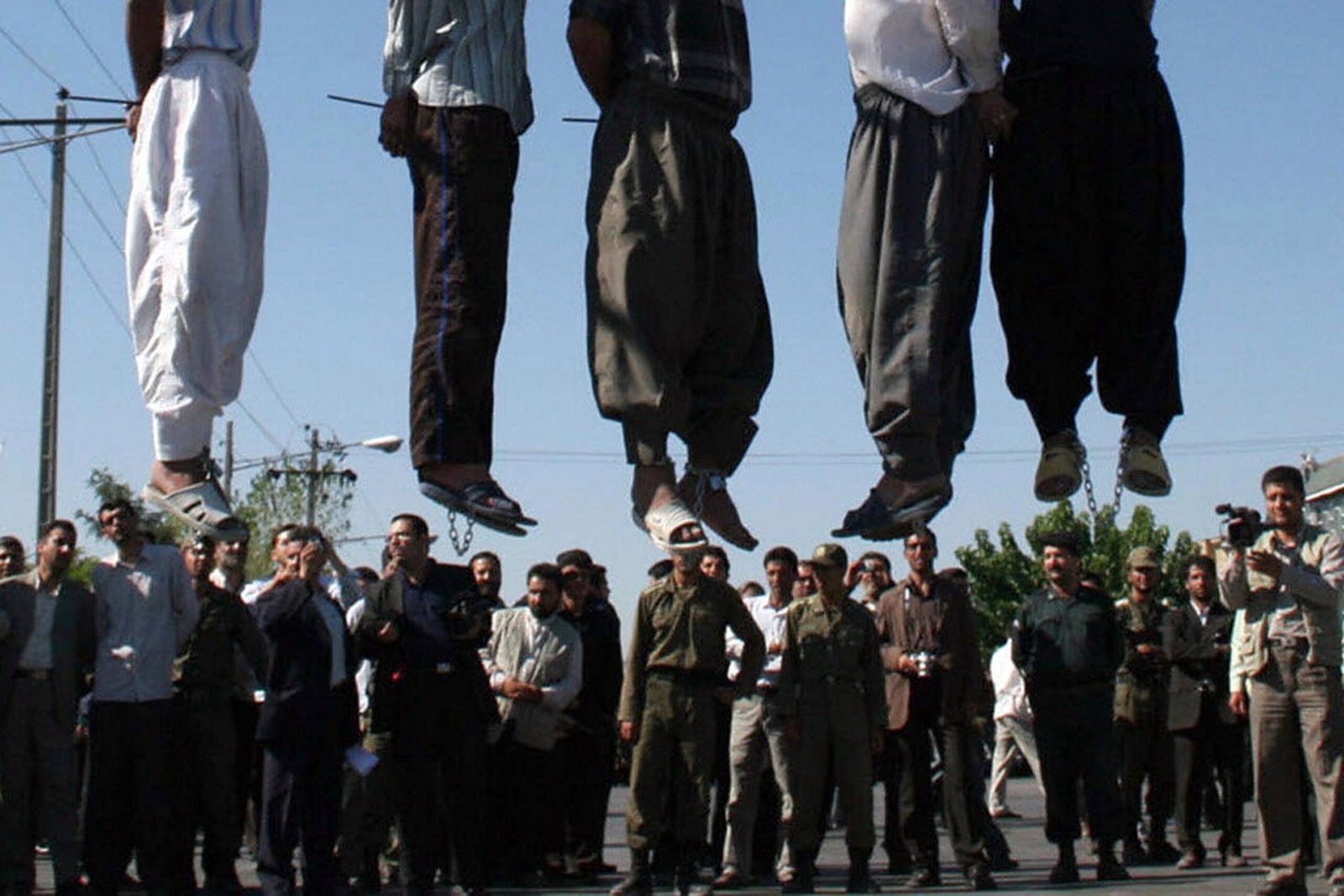
On Thursday, March 19, in the city of Qom, against the backdrop of war and repression, the Islamic Republic of Iran publicly hanged 19-year-old national wrestling champion Saleh Mohammadi. His crime was not violence or treason in any meaningful sense, but participation in the January protests. Alongside him, two other young Iranians, Mehdi Ghasemi and Saeed Davoudi, were also executed following what can only be described as sham proceedings devoid of due process. These deaths were not isolated acts of cruelty; they were deliberate signals—calculated instruments of terror designed to break the will of a nation.
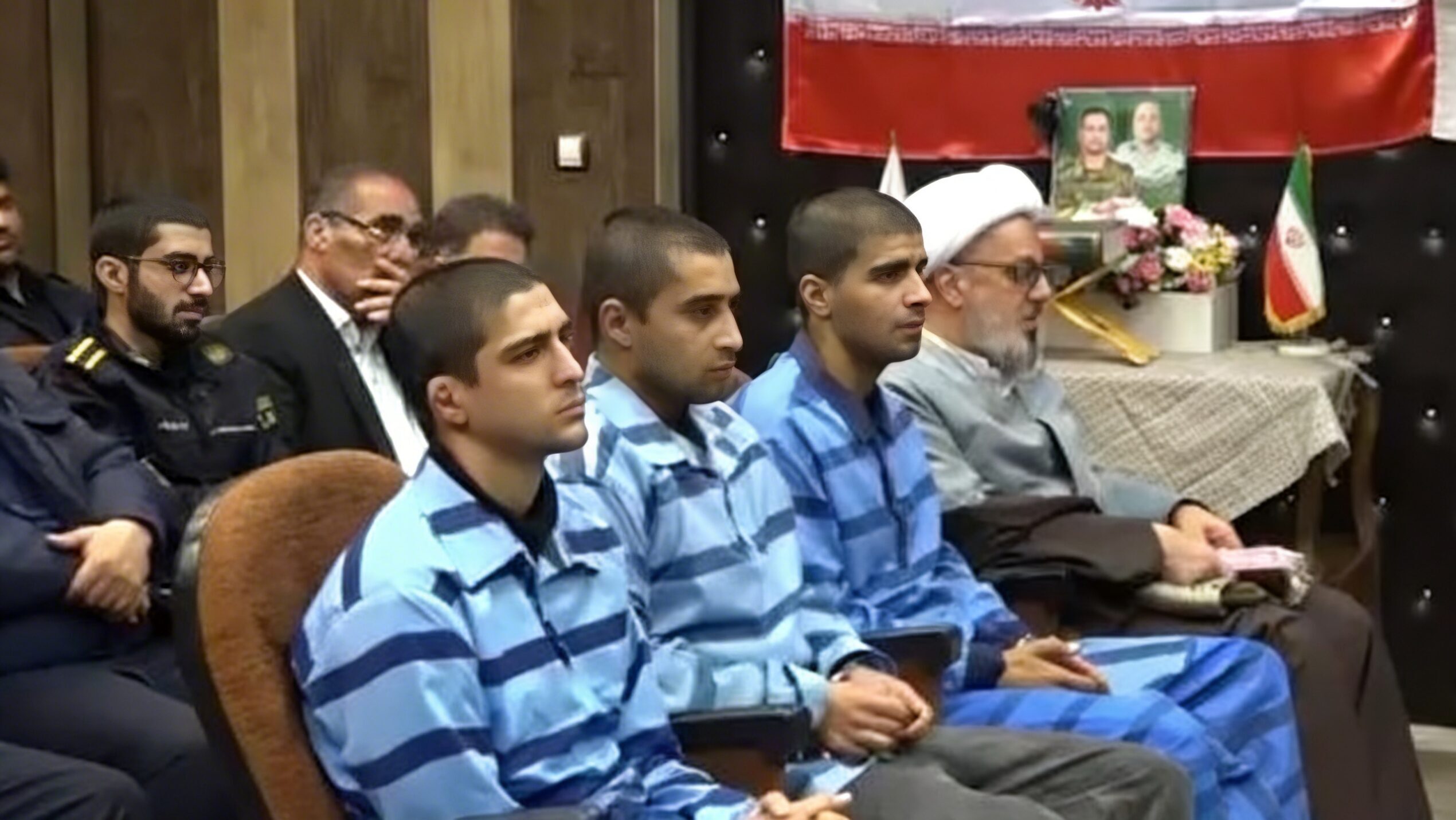
Three young Iranian protesters were suddenly executed at dawn on Thursday on charges of killing two police officers in Qom, even though they had renounced in court the confessions extracted from them under torture. (Screenshot: YouTube)
The January 8 and 9 protests, which brought millions of unarmed Iranians into the streets, represented one of the clearest expressions of popular defiance in the country’s modern history. The regime’s response was swift and merciless. Security forces, led by the Islamic Revolutionary Guard Corps and reinforced by transnational proxy groups, reportedly killed tens of thousands. Thousands more were permanently injured, and tens of thousands were arrested. In the aftermath, executions were used not as justice but as theater—public warnings meant to deter further dissent.
This pattern reveals the regime’s underlying logic: survival through fear. It governs not by legitimacy or consent but through intimidation—projected both inward toward its own population and outward toward perceived adversaries. Its message is consistent: Resistance will be met with annihilation, and even the most promising members of society—athletes, students, young workers—are expendable if they challenge the system.
Still, the Islamic Republic’s posture is not solely defensive. Its ideological framework compels it to confront and undermine any model of governance that contradicts its worldview. This antagonism extends regionally and globally. The regime has long defined itself through opposition—to Israel, to Western influence, and to any form of modernization that dilutes its ideological control. Its actions are not merely rhetorical; they are operational, involving networks that extend beyond Iran’s borders. The result is a persistent source of instability, not only for the Iranian people but for the broader international community.
At its core, the tragedy unfolding in Iran is generational. A government that executes its youth is, in effect, waging war against its own future. Saleh Mohammadi was not just a protester; he was a symbol of national pride, a young man who had already achieved excellence and who might have contributed even more to his country. His execution is emblematic of a system that views potential not as an asset but as a liability when it is coupled with independent thought.
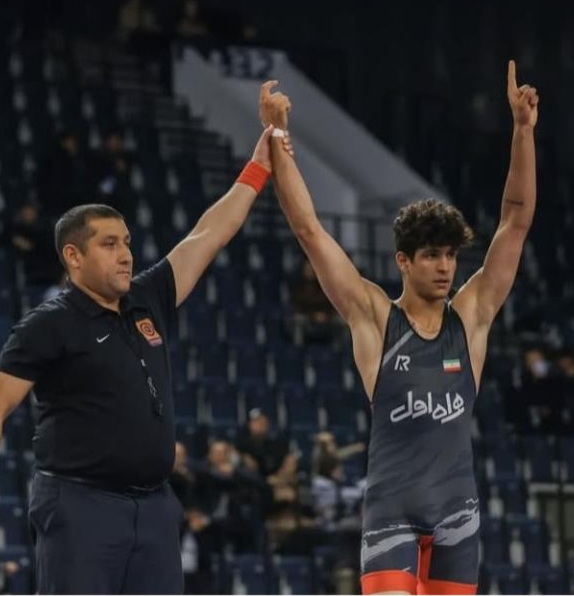
Saleh Mohammadi was a member of Iran’s freestyle wrestling team and had won a medal at the World Championships. (Social media)
The question, then, is not whether such a system is sustainable but how much more suffering will occur before meaningful change takes place. Every delay carries a human cost measured in lives lost. The longer the current structure remains intact, the greater the damage inflicted not only within Iran but across a region already strained by conflict.
Ending this cycle will require more than condemnation. The Islamic Republic is a vile and demonic regime that will remain a threat to its own people and to modern states around the world as long as it exists. It will continue to take the lives of young Iranians in prisons for as long as it can. To prevent more bloodshed, this regime must be consigned to the annals of history. To remove the Islamic Republic of Iran, its repressive forces must be neutralized, and plans must be put in place to break into prisons and free political prisoners.
To save lives, shorten the Iran war, and remove the threat to the global economy, the Islamic regime in Iran must come to an end as soon as possible. Further delay will result in more bloodshed by the Islamic regime against its own people and neighboring countries.