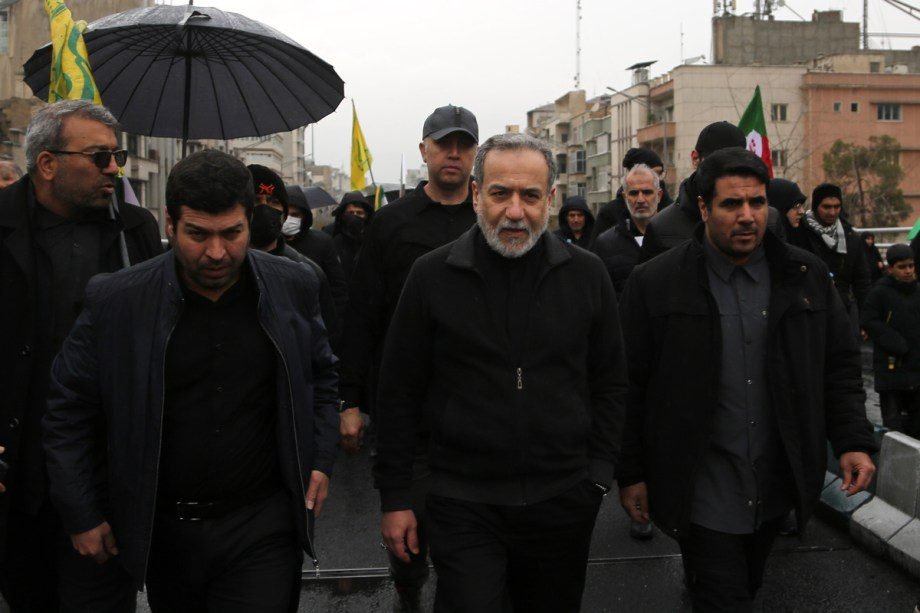
Iran’s foreign minister told his British counterpart that any end to the ongoing war with the US and Israel must include guarantees to prevent future attacks, according to Iranian state media.
Foreign Minister Abbas Araghchi made the remarks in a phone call with UK Foreign Secretary Yvette Cooper, Iran’s official news agency IRNA reported Friday.
“The path to normalizing conditions is the cessation of these attacks. The cessation of war must be accompanied by guarantees to prevent the recurrence of such aggressions,” Araghchi said.
He also warned against any support for the US and Israel during the escalation. “Such actions will only escalate the situation and make conditions more complicated,” he said.
Araghchi called on the UK to refrain from cooperation with Washington and Tel Aviv “in military or media arenas.”
Criticizing the UK’s provision of military bases to the US, he said: “These actions will certainly be considered participation in the aggression and will be recorded in the history of bilateral relations.”
“At the same time, we reserve our inherent right to defend the sovereignty and independence of our country,” he added.
READ: Qatar says Iranian missile strikes cut LNG export capacity by 17%
Araghchi also criticized the stance of the UK and some other European countries, saying Iran was attacked while engaged in diplomacy. He said the attacks killed more than 170 elementary school students in Iran.
“We respect the sovereignty of neighboring countries and have no intention to attack them,” he said.
“Unfortunately, however, US bases in these countries are used to strike us, and these countries have failed to fulfill their international responsibility to prevent the use of their territories for attacks against Iran,” he added.
Araghchi also condemned an attack on the South Pars facilities and expressed concern over what he described as a lack of condemnation, IRNA reported.
For her part, Cooper also called for an end to the war and a reduction in regional tensions.
She also expressed concern about the political and economic consequences of the conflict on a regional and global scale, including tensions in the Strait of Hormuz.
Since Israel and the US launched joint attacks on Iran on Feb. 28, so far killing some 1,300 people, including then-Supreme Leader Ali Khamenei, hostilities have escalated.
Iran has retaliated with drone and missile strikes targeting Israel, Jordan, Iraq, and Gulf countries hosting US military assets.
READ: Italy’s Meloni rules out military mission in Strait of Hormuz, says EU favors diplomacy