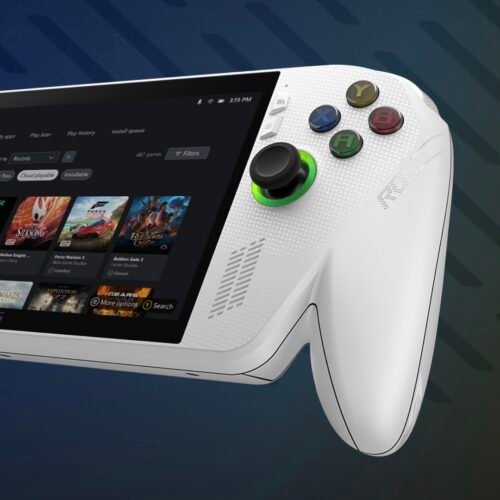
When Asus and Microsoft launched the ROG Xbox Ally X last summer, it came with a bespoke controller-driven full-screen interface running on top of Windows 11. The handheld was still running Windows under the hood, and you could bring up the typical Windows desktop any time, but it defaulted to the full-screen gaming UI.
Then called either the “Xbox Experience for Handheld” or the “Xbox Full-Screen Experience (FSE)” depending on who you asked and when, Microsoft said it would be available on all Windows PCs at some point in 2026. That point has apparently arrived: Microsoft announced this week at the Game Developers Conference that other Windows 11 PCs “in select markets” would be getting what’s now being called “Xbox mode” starting in April.
Under the hood, a PC running in Xbox mode is still running regular-old Windows, with the same capabilities as any other PC. But there are system services and UI elements (like the standard Start menu and taskbar) that don’t launch when the system is in Xbox mode, something Microsoft claims can save a gigabyte or two of RAM while also allowing systems to use less energy. Users can return to Windows’ traditional desktop mode whenever they want, though.
Our experience with Xbox mode on the ROG Xbox Ally X was mixed; a Windows PC in Xbox mode is still a Windows PC, with both the broad game/app compatibility and the messiness that entails.
The seams between the controller-friendly interface and the mouse-and-keyboard version of Windows were the most visible when trying to download and launch games from third-party game stores like Steam and the Epic Games Store, which generally required you to use those store apps to buy and download games before they could be launched from the comfort of Xbox mode. We’ll have to test the update on other PCs after it rolls out to see whether Microsoft has made substantial improvements.
Microsoft’s experiments with a “handheld mode” for Windows 11’s user interface date back to at least September 2022, when a team put together a mockup of a handheld interface as part of an internal hackathon. It’s probably not a coincidence that the Steam Deck and the modern version of SteamOS launched in February that year, and that they were already running a substantial number of unmodified Windows games in a Linux-based environment.
The Xbox software has always been Windows-based—even the original console used a modified version of Windows 2000. But it hasn’t shipped with all of Windows’ features, it hasn’t run the same apps as Windows, and it hasn’t been available to install on generic PC hardware. The Xbox console’s future has rarely been less certain than it is right now, but the new leadership of Microsoft’s gaming division suggests that the next one will run Windows and Xbox games somehow. Windows 11’s Xbox mode could be the first step down that road.
Microsoft made a number of other Windows gaming announcements at GDC this year, including improvements to DirectStorage and DirectX APIs, and a wider rollout of the ROG Xbox Ally’s Advanced Shader Delivery technology to reduce shader stutter in games. The full announcement post is here.