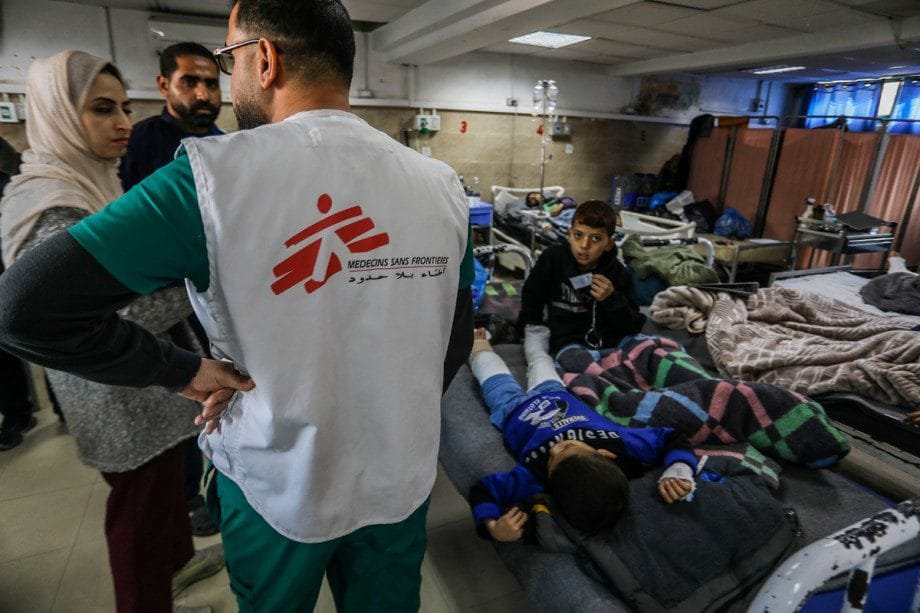
Israel is replacing dozens of established humanitarian organisations in Gaza with a new cohort of approved unknown groups that are more politically aligned and less likely to challenge Israeli conduct, an investigation by The New Humanitarian, has found.
The report reveals that 37 aid organisations operating in Gaza — including nearly all established non-UN international NGOs — face bans under Israel’s new registration law after refusing to comply with its requirements. In their place, Israeli authorities have approved around two dozen organisations that have agreed to the new terms.
Aid workers and legal experts cited in the investigation say the move is part of a broader effort to restructure the humanitarian landscape in Gaza. Internationally recognised reputable groups are being sidelined to establish a parallel aid system that they can more easily controlled by Israel.
Among the organisations facing exclusion are long-standing humanitarian agencies such as Médecins Sans Frontières (MSF), the Norwegian Refugee Council, Mercy Corps, Medical Aid for Palestinians, Oxfam and the American Friends Service Committee, which has worked in Gaza since 1948.
READ: Israel bans Doctors Without Borders from Gaza
By contrast, several of the newly approved groups have either avoided public criticism of Israel’s military campaign or echoed Israeli government narratives, including dismissing warnings of famine.
The Integrated Food Security Phase Classification (IPC), the world’s leading hunger monitoring body, declared famine conditions in Gaza in 2025, while a UN commission of inquiry later concluded that Israel had committed genocide in the enclave.
The newly favoured organisations fall broadly into two categories the report found: “Those that appear well-intentioned but have chosen to barter silence for access, and others that seem more politically aligned with Israeli authorities”.
Some of the approved NGOs have links to the Helping Hand Global Forum (HHGF), an Israel-based umbrella group connected to the Helping Hand Coalition (HHC), which operates in Israel and in illegal settlements in the occupied West Bank.
The investigation reports that member organisations such as Global Aid Network (GAiN) and Poland-based Time of Freedom have been authorised to bring hundreds of truckloads of aid into Gaza since the ceasefire.
However, public records show that HHC and affiliated groups have also donated equipment and supplies to Israeli military units, including brigades accused of war crimes in Gaza. Photographs and statements reviewed by The New Humanitarian indicate that non-lethal gear, boots and other materials have been provided to Israeli forces during the current war.
Senior members of some of these organisations were also photographed distributing food at militarised aid hubs run by the US- and Israeli-backed Gaza Humanitarian Foundation (GHF) during the summer of 2025. The GHF distribution system has been widely criticised after more than 1,100 Palestinians were killed and thousands injured in incidents involving Israeli forces and American contractors at the sites.
READ: Over 2,000 Britons served in IDF as 47,000 dual and multi-nationals enlisted during Gaza genocide
One organisation, Samaritan’s Purse, partnered directly with GHF and deployed staff to its distribution centres. Others reportedly used images from the sites in fundraising campaigns.
Aid workers quoted in the report argue that Israel is constructing a parallel aid system designed to exert greater control over humanitarian operations. By banning advocacy-oriented NGOs and elevating new actors willing to operate within Israeli restrictions, Israeli is “re-engineering the space of humanitarian actors in Gaza”, one senior aid worker said.
The investigation also highlights how some of the newly approved groups operate outside the UN-led coordination mechanism that tracks aid deliveries, raising concerns about transparency and oversight.
In addition to Gaza, several of these organisations are reportedly working in areas of southwestern Syria under Israeli control, coordinating with Israeli authorities and delivering assistance in territories where Israel has expanded its military presence.
Legal experts cited in the report describe the strategy as “humanitarian camouflage” — an attempt to project compliance with international legal obligations to facilitate aid while restricting independent humanitarian actors and consolidating political control.
READ: Extremist Israeli minister storms Ofer Prison, oversees abuse of Palestinian inmates