 cde.news desk · 4 min read
The European Commission will on Wednesday present a plan to provide a €45 billion loan to Ukraine backed by headroom in the bloc’s long-term budget, according to two EU officials.
The loan, which would have to be agreed by EU leaders, aims to keep Ukraine financially afloat in the coming year as Moscow ramps up its drone and missile attacks against Ukrainian infrastructure.
The Commission will propose that EU leaders agree to backstop the loan with the headroom in the EU’s current long-term budget, in a similar way to how a previous €90 billion loan was backed by the budget, the officials said.
EU leaders are due to discuss the loan at their next gathering on Nov. 26-27. They will need to agree unanimously to use the headroom, or remaining amounts, in the Multiannual Financial Framework to finance the loan.
Hungary, Slovakia, Czechia and Bulgaria have signaled they will not participate in future loans for Ukraine. In the past, however, these countries did not block using the MFF to backstop Ukraine loans.
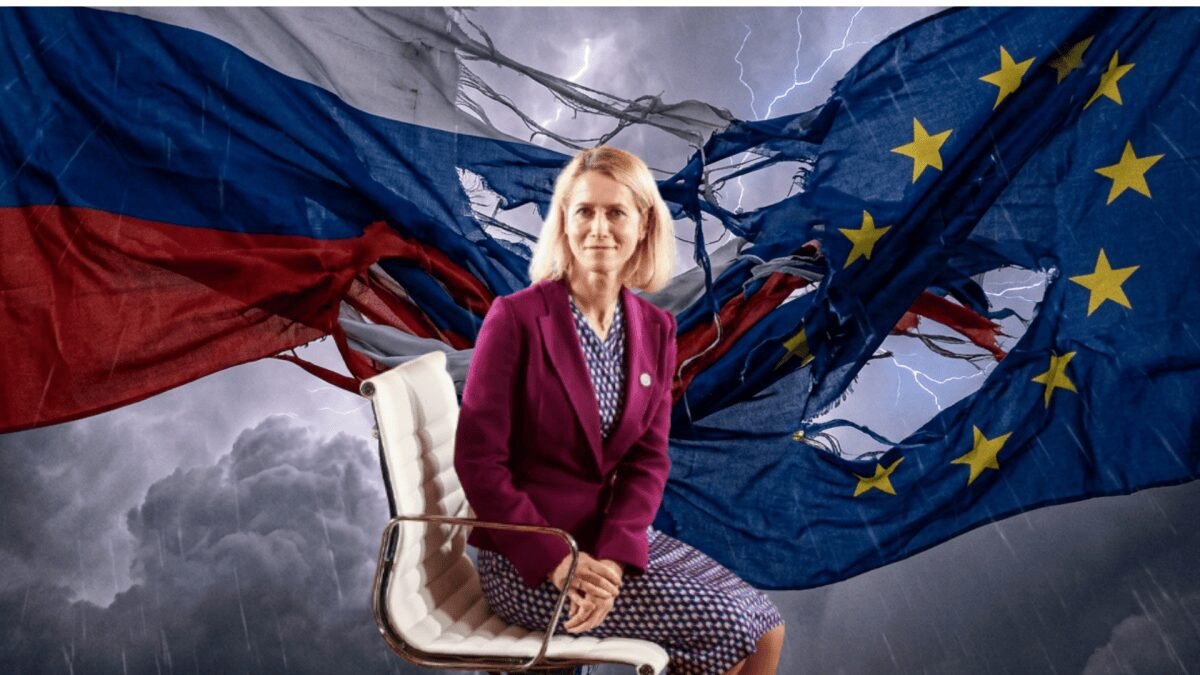
Separately, EU chief diplomat Kaja Kallas on Monday blasted Russian demands for concessions in its war against Ukraine as “absurd”, arguing that it is up to Moscow to move first to end a war that it started.
“The Russian demands are maximum demands and really absurd,” she told journalists on her way into a gathering of foreign ministers in Brussels. “They are using this usual playbook that they have where they present a lot … and then even put additional asks so that when they walk back from them they seem reasonable.”
Russia’s demands to end its five-year war include getting Ukraine to fully withdraw from the Donbas region, permanent neutral status for Kyiv and forcing NATO to pull back to its 1997 borders, per several reports. These are similar to the demands Moscow put forward just before its full-scale invasion of Ukraine in 2022, according to the reports.
EU leaders and foreign ministers, by contrast, insist that Moscow must accept a ceasefire as a first step in any negotiation. Finland’s defense minister has blasted suggestions that his country would withdraw from NATO as “absolutely outrageous”.
EU negotiating team takes shape
“We have to be very clear-eyed,” Kallas went on. “Whoever is the team that is negotiating, we should ask them, did you ask for something in return? Not only what we can offer. We have leverage that is the sanctions and … the frozen assets,” she added. She was referring to more than €200 billion in Russian immobilized assets currently being held by Belgium-based Euroclear.
Her comments come after EU leaders settled on a negotiating team to represent them in future Ukraine peace talks. It includes representatives from Poland, Germany, Italy, France and the United Kingdom, plus the European Council and Commission.
Kallas, whose job description includes foreign and security policy, is not part of the team. Officials close to the talks argue that the high representative is not involved because her U.S. counterpart, Secretary of State Marco Rubio, is not involved, and the talks are not happening at foreign minister level but among national security advisers.
Asked what role she and the EU foreign ministers could play, Kallas pitched her European External Action Service as crucial support for the negotiators.
“The leaders decided so it’s their decision,” she said when asked about her absence from future talks. “I have the foreign ministers every single month. I have the experts in the EEAS that know the previous negotiations, that are experts on Russia, so I can continue working on the substance.”
Lithuanian Foreign Minister Kęstutis Budrys voiced support for Kallas being on the team. “We will see what the final lineup will be, so to speak, because it wasn’t agreed who specifically. I am convinced that the high representative is perfectly suited,” he said.
Now that the EU has agreed on its negotiating team, capitals must decide on a mandate for it before the next round of Ukraine talks, according to senior EU officials. That round is expected after a meeting between U.S. President Donald Trump, Russian President Vladimir Putin and Chinese President Xi Jinping in Shenzhen, China, the officials said.
Austria circulated a paper, seen by POLITICO, spelling out 15 points as a potential basis for such a mandate. They include proposals for limited ceasefires paving the way to a larger truce, “strategic use” of EU leverage with sanctions and an international ceasefire-monitoring framework.
Still, other foreign ministers are doubtful about the negotiations’ chances of success.
“To be completely honest, I don’t have high hopes [on the talks]. Russia is still not interested in discussing peace in a serious way … we must change Putin’s calculus by increasing support to Ukraine and increasing pressure on Russia,” said Swedish Foreign Minister Maria Malmer Stenergard.
EU foreign ministers are due to discuss upcoming sanctions on Russia, as well as a possible mandate for the negotiating team, at the Foreign Affairs Council meeting.
Source: Iwpost.com