Chinese space officials confirmed this weekend that the Asian nation plans to land its astronauts on the Moon within three years.
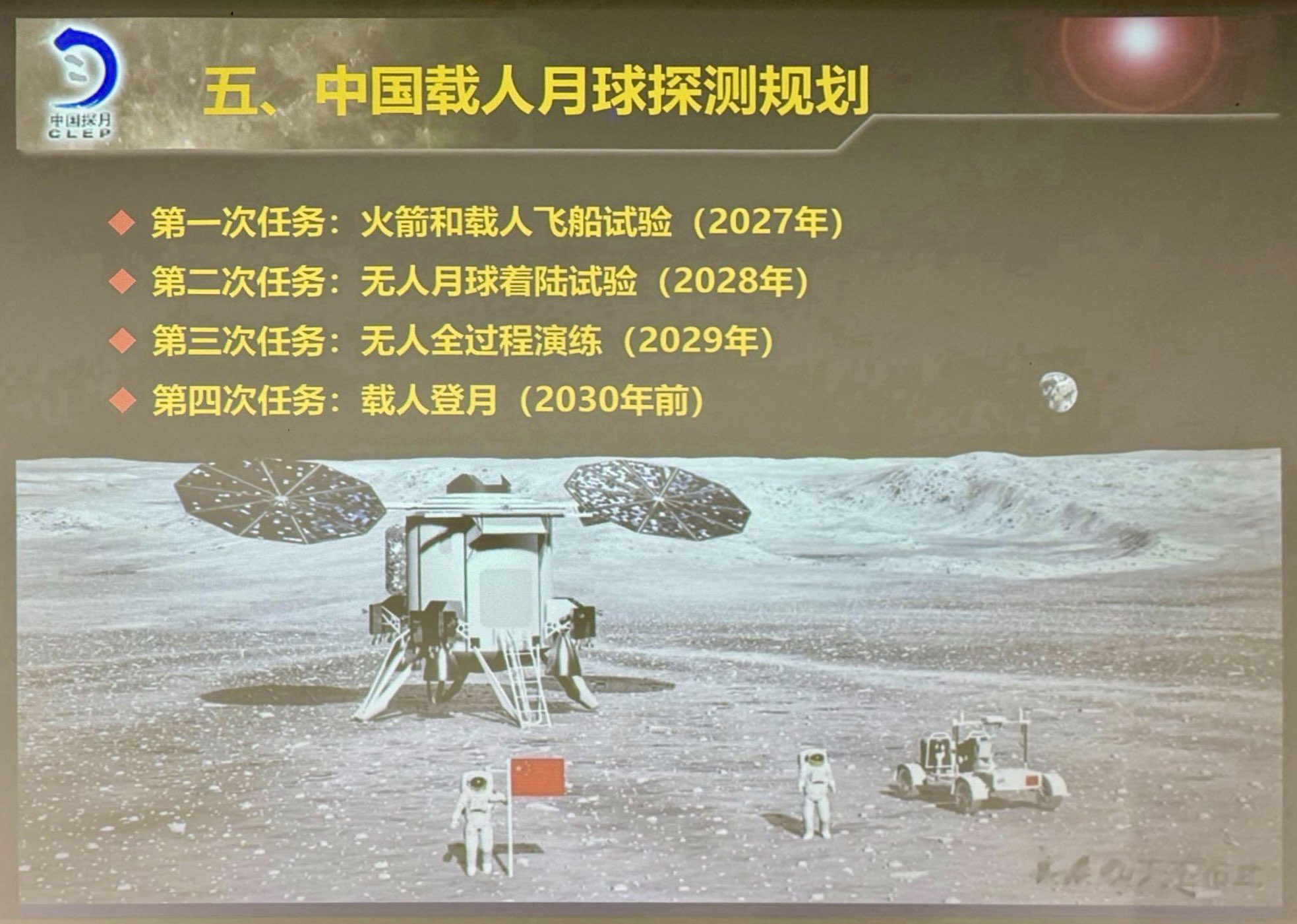
At the Seventh Manned Spaceflight Conference in Beijing, officials, including Wang Xiang, chief designer for the lunar exploration program, laid out the country’s most publicly detailed plans yet for a series of missions leading up to a crewed lunar landing “before 2030.”
China’s lunar landings will involve a lunar-orbit rendezvous similar to what NASA did in the 1960s and early 1970s with the Apollo program. However, lacking a rocket as powerful as the Saturn V vehicle, the crew and lunar lander will launch separately to the Moon.
According to slides shared on social media, the current plan involves:
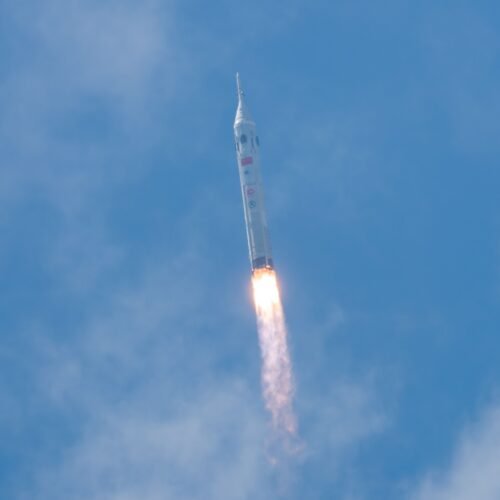
- An uncrewed test of the Long March 10A rocket (a single-stick variant, with no boosters) and the Mengzhou spacecraft to low-Earth orbit. Target: early 2027
- An uncrewed test of the larger Long March 10 rocket (a core stage with two boosters) and the Lanyue lunar lander, including descent/ascent from Moon’s surface. Target: 2028
- A concurrent launch of two Long March 10 rockets, one carrying uncrewed Mengzhou and the other the Lanyue vehicle; they will dock in lunar orbit. Target: 2029
- Dual launch of Long March 10 rockets, this time with crew on the Mengzhou spacecraft, leading to crewed landing mission. Target: “Before 2030”
The public release of this new information provides a timeline for gauging China’s technical progress in its efforts to land humans on the Moon before 2030 and beat NASA and the United States back to the lunar surface.
Notably, the plan (for now, at least) omits a mission similar to Apollo 8 or Artemis II, which involved a crew flying out to the Moon and either entering orbit or passing close by before returning to Earth. The Mengzhou vehicle should still get a workout closer to Earth with humans on board as part of missions carrying astronauts to Tiangong, China’s space station in low-Earth orbit.
China’s program has been largely opaque
NASA has set a target of landing humans on the Moon by 2028, a year or so ahead of China. The United States, which has been working on the Space Launch System rocket for 15 years and the Orion spacecraft even longer, has a more established rocket and crew vehicle.
But there are major questions surrounding the development of a lunar lander, for which both SpaceX and Blue Origin have multibillion-dollar development contracts. Depending on how these projects go, a US lunar landing could be delayed to 2030 or even later.
Although it is virtually impossible for outsiders to glean information about technical milestones achieved inside China’s space program, the country is clearly making credible progress toward reaching the Moon. For example, in August 2025, the China Manned Space Agency successfully tested a high-fidelity mock-up of its 26-ton Lanyue lunar lander. The test used giant tethers to simulate lunar gravity as the vehicle fired its main engines and fine-control thrusters to land on a cratered surface and take off from a location near Beijing.
Recently, the Mengzhou spacecraft for the 2027 test atop a Long March 10A rocket arrived at the Wenchang Space Launch Site in Hainan, China, where the mission will launch.
US government assessments of the Chinese space program are restricted, but lawmakers are clearly taking the threat seriously. In the last 12 months, the US Congress and White House have given broad latitude to NASA Administrator Jared Isaacman to streamline the Artemis Program to land humans on the Moon. He has moved swiftly to cancel the Lunar Gateway space station and planned upgrades to the Space Launch System rocket. And just last week, Isaacman announced plans to help Blue Origin develop a lunar lander by finding a way to boost the Orion spacecraft into low-lunar orbit.
“We have the mandate, we have the resources, and the support from our stakeholders to be able to execute, and that’s what we intend to do,” he said at the time.
For a couple of years, it has been clear that China has made a major commitment to landing astronauts on the Moon, preferably before the United States returns to the lunar surface, to score a major geopolitical win. Beyond this near-term competition, both NASA and China’s space program are building capabilities to establish a long-term presence at the Moon’s South Pole. As part of this second phase of the contest, Isaacman committed NASA to the development of a base on the surface of the Moon over the next decade.