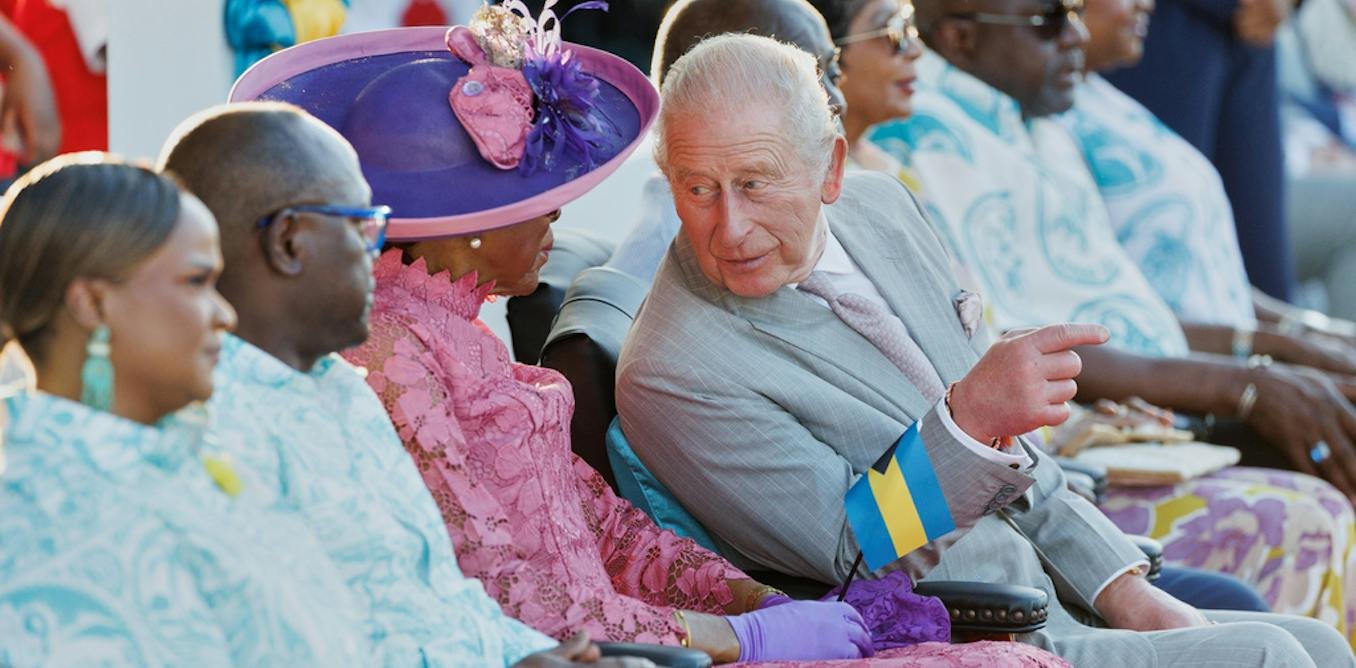
King Charles III touched down in the Bahamas on Oct. 27, 2026, with far more baggage than usual. The nine-day trip in the Caribbean also features stops for the U.K. monarch in Guyana and in Antigua and Barbuda for the annual Commonwealth Heads of Government Meeting.
The king’s royal tour comes amid mounting Caribbean demands for reparations and renewed scrutiny of the British monarchy’s historical role in slavery. These developments have intensified debate in Caribbean Commonwealth realms over whether to retain the British monarch as head of state.
Anticipating local calls for a royal apology, Buckingham Palace telegraphed ahead of time that Charles would not formally apologize for slavery on behalf of the British government during the visit. King Charles started his tour noting the “great suffering of the past,” but Buckingham Palace has said previously that the legacies of colonialism and slavery are matters “primarily for governments to address.”
It is a familiar formula for the Crown: acknowledge the horrors of the past, express sorrow and leave responsibility unanswered.
Both as heir apparent and now as king, Charles has spoken about the atrocity of slavery during visits to Ghana, Barbados, Rwanda and Bermuda. Such acknowledgment matters, particularly when historical injustices have been repeatedly minimized or excluded from official narratives.
But as a historian focused on Britain’s Atlantic slave empire, I believe that expressions of regret cannot substitute for meaningful engagement with the demands of those whose ancestors were enslaved. The king’s Caribbean visit is an occasion to recognize the full story of Britain’s trafficking and enslavement of millions of Africans across the Atlantic – and the Crown’s direct culpability.
The monarchy’s deep ties to slavery
While Buckingham Palace today says it is up to the government to litigate questions of historical justice, the monarchy was no passive participant in the Atlantic slave system.
Alongside the work of other historians, my recent book, “The Crown’s Silence,” documents the monarchy’s direct involvement in the expansion and administration of Britain’s Atlantic slave empire.
Beginning in 1563 with the reign of Elizabeth I, the monarchy invested in transatlantic slaving voyages, granted monopoly charters to slave-trading companies, provided Royal Navy vessels for convoy protection of slaving vessels, and profited from the expansion of slavery in the Atlantic world.
Successive monarchs relied heavily on customs revenue derived from enslaved labor and endorsed colonial laws categorizing enslaved people as property – to be bought, sold, mortgaged, seized for debt and inherited. Enslaved men and women were also purchased in the Crown’s name to labor at Royal Navy dockyards and serve in the West India Regiments.
The paper trail of royal complicity in slavery thus stretches across three centuries.
The financial settlement that accompanied Britain’s abolition of slavery in 1834 makes the injustice particularly stark. The British state compensated enslavers $26.6 million (approximately $4.5 billion today) for the loss of their so-called human property.
In contrast, the formerly enslaved received no restitution for generations of stolen labor and lives, extreme brutality and family separation. The consequences extended well beyond emancipation, shaping patterns of land ownership, wealth, racial inequality and economic dependency that continue to affect Caribbean societies and members of the African diaspora today.
Calls for reparatory justice
This history is central to understanding why reparatory justice remains a pressing demand.
Reparations transcend apologies and requests for monetary compensation. In June, the African Union and CARICOM, the intergovernmental organization covering more than a dozen Caribbean nations, agreed to a 19-point reparations plan that calls for, among other things, formal apologies, debt relief, financial reform, cultural restitution and the establishment of an international reparatory justice fund.
The Caribbean has advanced a comprehensive case for reparations targeting Britain and other European colonial powers for years. In 2014, CARICOM’s reparations initiative gained momentum – but efforts to pursue claims against the British government met legal resistance, including a successful challenge that the claim lacked jurisdiction. The demand has nonetheless persisted, exposing for countries in question the inadequacy of indefinitely postponing reparations through diplomatic language.
The Commonwealth Heads of Government Meeting, Nov. 1-4, 2026, offers another test of the Commonwealth, which comprises 56 member states, the majority of which were once part of the British Empire, and its commitment to equality. The organization describes itself as a voluntary association of independent states united by shared goals and values. Yet that ideal sits uncomfortably alongside the afterlives of slavery and empire.
Caribbean countries are attempting to participate as equal partners, while Britain, the former imperial center, resists meaningful engagement with the historical foundations of its wealth and power. As Shirley Botchwey, the Commonwealth’s secretary-general, recently remarked, the “time has come” for the king to apologize for slavery and discuss reparations.
The Crown’s position on this issue extends beyond what Charles does or does not say in a speech. That, to critics, is evident in the boundaries imposed on the discussion: The king may condemn slavery, but he leaves the monarchy’s institutional responsibility unaddressed; he may express sorrow for colonial atrocities, but reparations are left to governments that refuse to consider them.
The ripple effects for the Commonwealth
As new historical research has further documented Britain’s involvement in slavery, the United Nations in March 2026 declared slavery “the gravest crime against humanity.” In September, Jamaica submitted a petition asking Charles, as Britain’s head of state, to refer questions about the legality of slavery, its compatibility with international law and Britain’s potential obligation to provide a remedy to the Judicial Committee of the Privy Council – Britain’s final court of appeal for overseas territories and Crown dependencies.
The petition represents the first time a Commonwealth realm has sought a legal determination on the legality of Britain’s trafficking and enslavement of Africans. On Sept. 22, the king referred the petition to the Privy Council, which has set a preliminary hearing for March 2027.
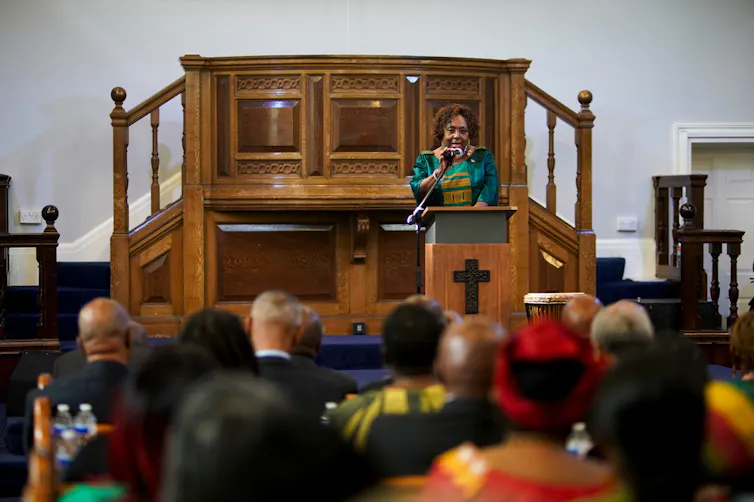
Charles could have declined the referral, and the move provides a route for legal consideration of questions long resisted by Britain. But it also illustrates the monarchy’s contradictory position. The king’s constitutional role can facilitate a pathway for Jamaica’s reparations petition, even as the Palace invoked constitutional limitations to temper expectations during the Caribbean royal tour.
Consequently, while the referral marks a significant procedural step, it’s still, on its own, insufficient, according to reparations activists.
Unless the king takes more substantive action, his position as head of state in multiple Caribbean countries is at risk. Since Charles’ accession in 2022, several Commonwealth realms have renewed discussions about becoming republics. Following Barbados’ removal of the British monarch as head of state in 2021, Jamaica, the Bahamas, Antigua and Barbuda and others have reconsidered their own constitutional arrangements.
These republican movements in the Caribbean are about more than opposition to Britain or the monarchy. They concern sovereignty, democratic accountability and an end to the extractive institutions inherited from colonial rule. Proponents argue that if a distant head of state cannot meaningfully engage with issues of profound historical and national significance, the value of retaining that relationship must be questioned.
Thus, CARICOM leaders aim to use the Commonwealth Heads of Government Meeting as a springboard to press for sustained engagement with the region’s reparations plan, despite the British government’s insistence that an apology and reparations are off the table.
King Charles sits on a throne inextricably bound up with slavery and colonial extraction. Although his formal political powers are limited, his symbolic influence is considerable. Even if the Crown continues to defer constitutional questions over Britain’s responsibility for slavery to the government, there are other steps Charles could take. Those include acknowledging the monarchy’s own institutional role in colonialism and slavery and commissioning an independent investigation into its history, as King Willem-Alexander of the Netherlands has done.
The question now is to what degree Charles will use his office to encourage a consequential reckoning or, in the eyes of many of his Caribbean subjects, to continue to offer little more than superficial acknowledgment of historical suffering. That could well decide the visit’s lasting significance.