<
article id=”post-951825″>
The US needs to creatively combine two counter-drone capabilities it already has and do it quickly to deal with swarm attacks of drones and cruise missiles. The Russians are already doing it.
Counter-drone warfare is changing as the push for solutions gains momentum in the United States and worldwide. In modern combat scenarios, drones are used in “swarm numbers,” defined as “more than a handful,” and combined with other threats, notably cruise missiles and ballistic missiles.
Attacks seen in Russia and Ukraine also mix in decoys to confuse air defenses, or rely on multiple attack waves to exhaust them. All the players have relied heavily on expensive air-defense interceptors such as Patriot, NASAMS, IRIS-T, SAMP/T, S-300, S-400, Pantsir and others.
The US and Europe have spent between US$25 and $40 billion on air defenses in Ukraine to shoot down missiles and drones. Not only are the costs practically prohibitive, but supplies of interceptor missiles have been exhausted.
It takes the US between 24 and 30 months to manufacture a PAC-3 (Patriot) interceptor missile. Each missile costs between $3.8 million and $4.2 million, with two missiles typically launched against an individual target.

The recent Iranian and Houthi attacks in the Middle East, including on Saudi Arabia, the UAE, Kuwait and Jordan, show that current-day air defense systems cannot adequately cope with Iran’s and the Houthis ’ attacks, even after staggering expenditures by the US and its friends on air defenses.
Saudi Arabia has spent between $40 billion and $50 billion on air-defense hardware, interceptor missiles, radar infrastructure and maintenance over the past decade, but these procurements did not do the job.
There are different low-cost solutions, such as laser systems, that are beginning to be deployed. The Pentagon selected five strategic US military bases — including Fort Bliss, Whiteman Air Force Base, Grand Forks Air Force Base, Fort Huachuca and Naval Base Kitsap — to integrate directed-energy (laser and high-power microwave) systems specifically for counter-drone and base infrastructure protection.
The US Army fielded prototype Stryker vehicles equipped with 50-kilowatt laser systems to CENTCOM operational areas, including CENTCOM facilities in the Middle East, for real-world user evaluations against Group 1–3 drones and mortars. It is too soon to judge the effectiveness of lasers for perimeter protection of US bases.
Israel is using its lasers (especially Iron Beam) for border protection (e.g., Gaza, northern Israel) and at least so far not directly for base protection. Unlike the US laser deployments, Israel’s Iron Beam is integrated and works synergistically with Iron Dome air defenses, using AI and command and control systems to determine whether to fire a Tamir missile (Iron Dome) or use a laser.
Looking up and down the Israeli air defense matrix, other systems including David’s Sling and Arrow 2 and Arrow 3 also are networked and integrated.
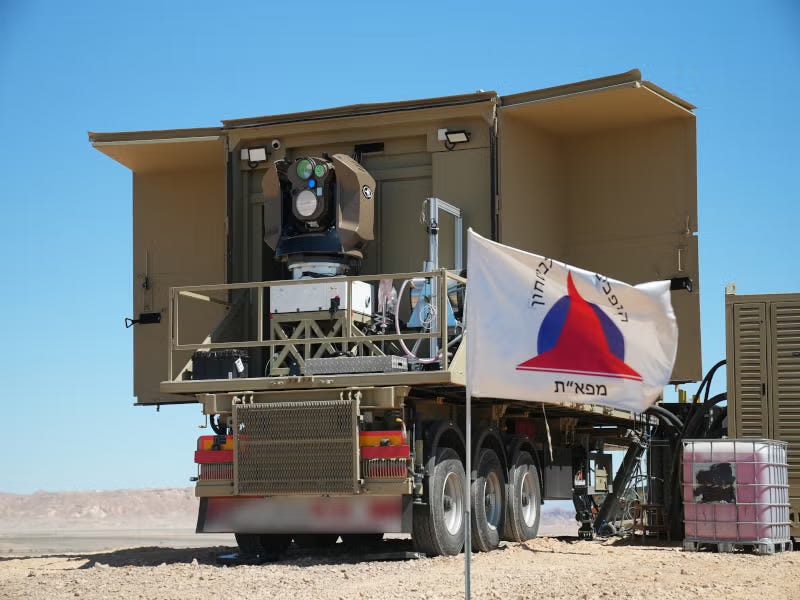
Unlike US air defense solutions, the Iron Dome interceptor is reasonably cost effective at around $50,000 per missile. It can also knock out a variety of threats, including jet-powered cruise missiles.
Unlike lasers, which must be kept on a target long enough to damage it, Iron Dome is a fast missile with an 11 lb. blast fragmentation warhead, plus an onboard electro-optical/laser seeker and proximity sensors that trigger the warhead when it enters the lethal detonation radius (a few meters away).

Compared to a laser, which is short range of one or two miles, the Tamir missile can climb to 10,000 meters (33,000 feet) and has a slant range as much as 43 miles.
Tamir is manufactured in a joint venture between Rafael Advanced Defense Systems and Raytheon (RTX) in East Camden, Arkansas.
The US Marines are procuring a version of the Tamir called SkyHunter. SkyHunter has been adopted as part of the US Marines Medium Ranger Intercept Capability. The Marines MRIC have started to deploy to the Indo-Pacific region, with mass production of interceptors expected in the next few years.
The Air Force, Army and Navy have no plans to take advantage of MRIC. In Israel, Iron Dome has been adopted for ships and is being used on Sa’ar 6-class corvettes. It uses shipboard radars and other equipment and is named C-Dome. C-Dome’s mission is mainly to protect offshore oil and gas installations.

Israel deployed Iron Dome to the UAE, and the UAE has purchased radars and other equipment to support the system, which was initially operated by an Israeli team.
Bahrain may also have acquired an Iron Dome unit, although that is not certain. Saudi Arabia has expressed interest in Iron Dome, but Israel probably won’t agree unless and until the Saudis decide to join the Abraham Accords.
In Europe Romania and the Czech Republic apparently have acquired Iron Dome, and others are purchasing Iron Dome’s radar (ELm-2084 made by Elta in Israel) including the UK, Singapore, Azerbaijan and Slovakia.
The unguided guided missile
Another emerging solution is the conversion of unguided Hydra rockets by adding a guidance package called APKWS. This allows the cheap Hydra rocket to act as an interceptor missile using a laser designator. The resulting APKWS Hydra, mounted on A-10 interceptors, proved effective in the Persian Gulf.
The Hydra is a 70mm (2.75 inch) unguided rocket that, on aircraft and helicopters, is fired from seven or 19 rocket tubes hung underneath a wing or pylon. In air-to-air use, it has a range of 11km; if launched from a ground platform (Vampire or EAGLS), its range is 2-5 km.
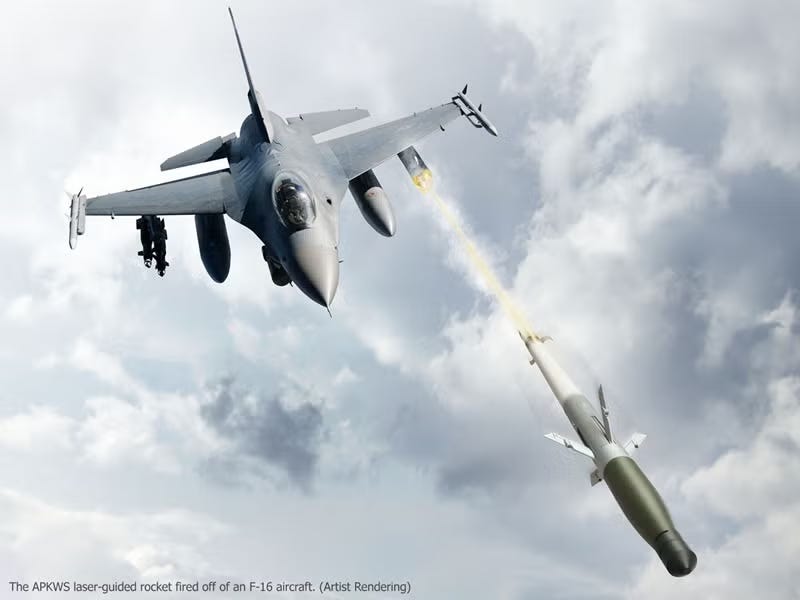
The APKWS is a kit that is mounted behind the rocket warhead and in front of the rocket motor. It include a laser seeker and fins that steer the Hydra missile to the target. The laser designator is operated from the aircraft and the operator is either the pilot or second officer (in the case of two-seaters). The operator has to aim the laser pointer at the target and hold it there until the target is destroyed.
An APKWS kit (for each missile) costs (including the Hydra ) between $35,000 and $40,000 per unit. This October, the DoD contracted with BAE Systems for 25,000 APKWS kits, with a plan to scale up to 35,000 each year thereafter. These kits will go to all services. They can be used for air-to-air and ground-to-air launches of kit-modified Hydras.
APKWS can be fitted on the A-10, F-16, F-15E and others, plus helicopters such as the Viper, Cobra, Apache, Seahawk and Little Bird.
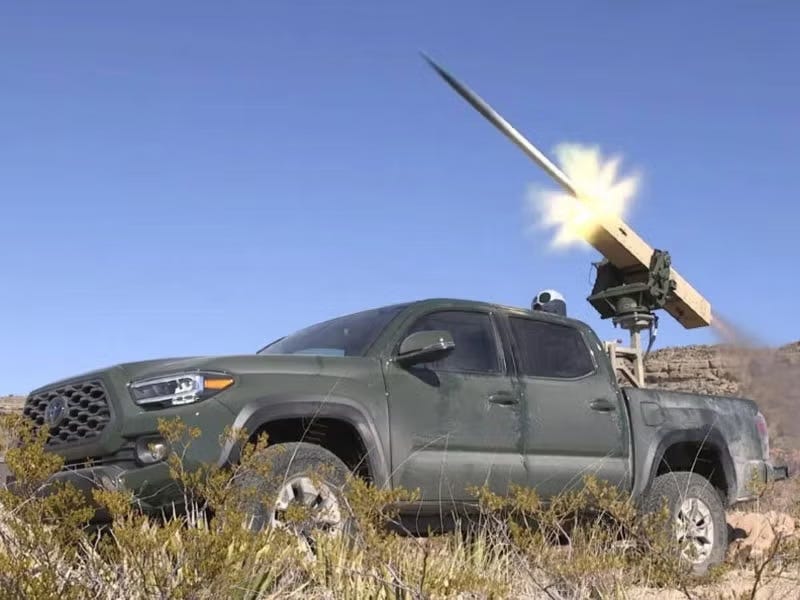
APKWS also works on ground launched platforms such as Vampire and EAGLS. Vampire has shown to be effective in Ukraine. Both Vampire and EAGLS use a four missile launcher.
Around 14 Vampire ground systems (manufactured by L3 Harris Technologies) went to Ukraine, and in a recent $106 million procurement, the US Army bought Vampire with delivery expected in the fourth quarter of 2026.
The Army and Navy have bought EAGLS but only in small numbers. NAVAIR bought five units recently for $279 million, making the units far more expensive than Vampire, but EAGLS also includes radars and other integrated equipment not included in Vampire.
There are certain limitations for ground-based units including problems coping with swarm threats and limitations caused by weather, since a laser does not work well in cloudy skies, rain or fog.
Russian mini-missiles
Russia has developed a mini missile that is replacing the gun system on the Pantsir air defense systems. The mini missile is designed as a lower cost solution to shooting down enemy drones.
The TKB-1055 Gvozd (Nail) has a circumference of 80 mm, a little bigger than the Hydra (70mm). The range of the missile is between .5 and 7 km. A Pantsir features a single multi-tube quad-pack container that matches the exact outer mounting dimensions of a standard 57E6 launch tube on the Pantsir.
It can launch between 12 and 48 missiles, and it can mix standard 57E6 missiles with TKB-1055s. The system uses radar and optical tracking.

The latest Pantsir system, Pantsir-SMD-E, has removed the twin 30mm gun system and replaced it with the TBK-1055 and 57E6 launch tubes. The SMDI is designed primarily as a static or semi-stationary defense module to protect oil refineries, energy grids, factories, command centers, and airfields inside Russia from persistent long-range drone raids.
Because it is lighter weight and does not require a vehicle, the SMD-E can be lifted onto rooftops or placed on towers using helicopters. There is no information on the cost of a mini missile, but it is likely comparable to the cost of an APKWS Hydra package.
Speed up needed
It is easy to see that the APKWS and the US Marines’ MRIC with SkyHunter are important developments, but they should be combined, in the way the Russians are starting to combine interceptor missiles on the Pantsir (57E6 and TKB-1055).
Doing so might require replacing or supplementing the APKWS with an infrared seeker or in combination with the laser. BAE Systems already produces a dual-, or combining it with amode APKWS-II kit that includes a passive infrared seeker combined with a distributed aperture laser. While apparently optimized for air-to-air use, a ground-based version is needed.
The Pentagon should accelerate development of a combined system, as the Russians already are doing on Pantsir. The result would blend US, European and Israeli technology in a combo-solution needed for the defense of air bases, “heavy” air defense and radar installations and the protection of command and control centers.
Stephen Bryen is a former US deputy undersecretary of defense and special correspondent at Asia Times. This article was first published on his Weapons and Strategy Substack and is republished with permission.