Varon said any future government, regardless of who serves as prime minister, must pass a mental health law that establishes a dedicated, structured budget for mental healthcare
Soldiers and others suffering from post-traumatic stress disorder (PTSD) as a result of the Iron Swords war must have a seat at the table when mental health policies are developed if Israel wants its next generation to recover and thrive, according to Shahar Varon, a Knesset candidate running with former Prime Minister Naftali Bennett’s B’Yachad party.
In a phone interview with The Media Line, Varon, 30, who is spearheading the party’s mental health program, spoke candidly about the need for younger representation across the political spectrum, particularly from people who have firsthand experience fighting for their country since October 7, 2023, and understand what it means to recover physically and psychologically.
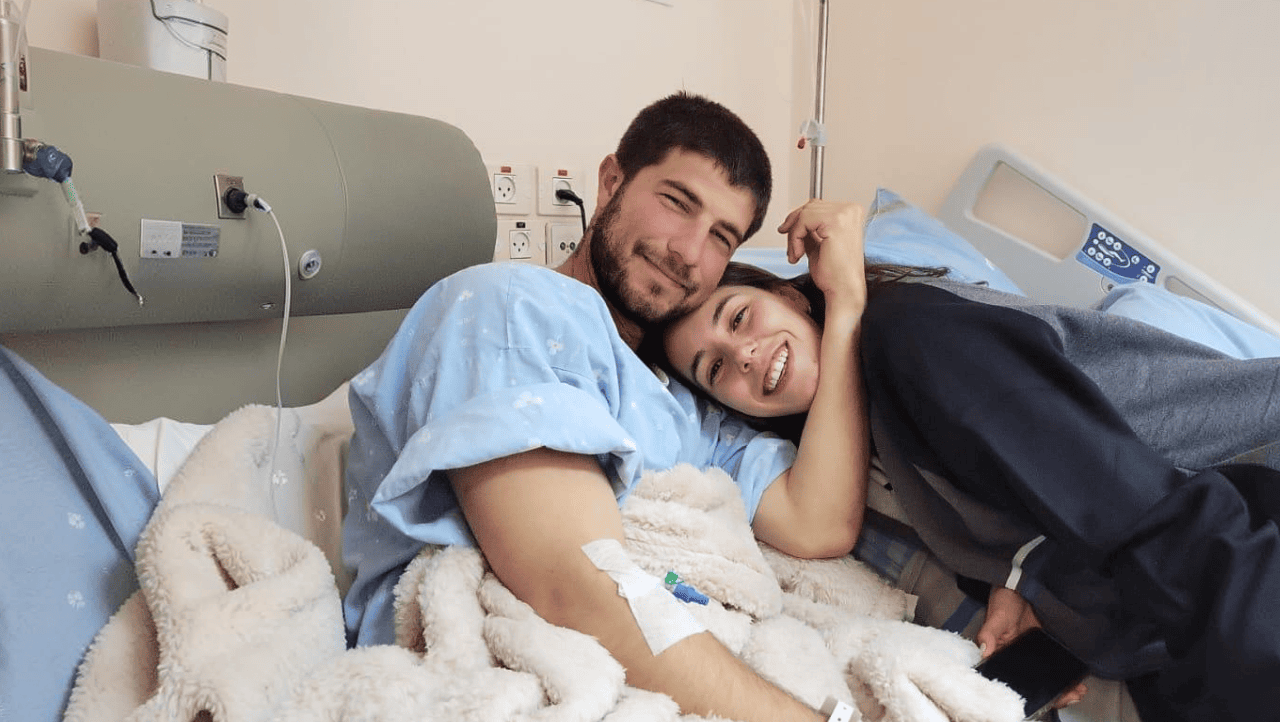
An Israel Defense Forces (IDF) major (res.) and former commander in the elite Maglan Unit, Varon was critically wounded in Gaza but returned to fight after recovering. With his dark hair and pleasant smile, he comes across as approachable and optimistic, despite the difficult experiences he has endured.
I absolutely believe that parties with representation from the younger generation, especially wounded soldiers, have an important role to play.
“I absolutely believe that parties with representation from the younger generation, especially wounded soldiers, have an important role to play,” Varon said.
He cited, for example, IDF Capt. Israel Ben-Shitrit, who was seriously injured while fighting in Khan Yunis and is now running on the Yisrael Beitenu ticket under MK Avigdor Liberman. Varon and Ben-Shitrit are working closely together on what a national mental health plan could look like.
“When it comes to these issues, we do not care that we belong to different political parties,” Varon explained. “We meet, we talk, and we share our plans. We understand that this is not a partisan issue. In the next government, all the parties will need to join forces to advance these programs.”
According to the State Comptroller, as many as 3 million Israelis suffer from depression, anxiety, or symptoms of PTSD. A study released for the third anniversary of the October 7 massacre by Clalit Health Services and the Myers-JDC-Brookdale Institute found that one in five adults in Israel reports severe impairment in daily functioning.
Varon said that beyond the fundamental Jewish value of caring for those sent into battle, there is also an economic reality that Israel cannot afford to ignore.
“We simply will not be able to afford the consequences if we fail to treat these people,” he said. “We are talking about costs that could reach billions of shekels.”
According to a report released last year by NATAL, a nongovernmental organization specializing in psychological trauma, the trauma experienced on and since October 7 is harming Israel’s labor market, healthcare and education systems, as well as the public sphere, generating cumulative economic damage. The report estimated that the Iron Swords war could cost Israel NIS 500 billion in direct and indirect psychological trauma-related expenses over five years.
Varon said that nearly every political party has someone addressing mental health, but some have fewer young people involved. He believes that this lack of representation affects how policies are developed and ultimately implemented.
“I see an enormous difference when we participate in panels with social workers, psychologists, and the Israeli trauma organizations from when someone comes directly from the field, someone who has seen these things and experienced them personally over the past year or two, that person understands the issues on a much deeper level,” Varon maintained. “They see the reality from the ground up. They are not focused only on budgets, salary agreements or how the system looks on paper. They understand what treatment actually means. I believe that firsthand experience gives us a very clear advantage.”
Varon is not the only young candidate in B’Yachad. He is joined by Yonatan Shalev, 23, Bennett’s youngest recruit, and Amir Strugo, another IDF reservist.
“We are seeing a new spirit, a younger generation coming directly from the field. These people reflect the reality that the younger generation in Israel is experiencing today,” Varon told The Media Line.
For Varon, the mental health crisis is deeply personal.
He acknowledged that he suffers from PTSD as a result of the war. He underwent individual therapy, and he and his wife also attended couples therapy to overcome the difficulties they experienced following his military service.
Those experiences ultimately led him to develop a comprehensive rehabilitation program for people wounded both physically and psychologically, and eventually to join Bennett’s party.
Initially, Varon focused on the IDF and security services. Together with his colleagues, he developed a plan to provide more comprehensive support for wounded soldiers who had given so much to their country, rather than simply sending them before a committee to determine their disability percentage.
We should not look at the wounded soldier only as an injured individual. We need to look at the entire family unit
“We want to look at them and their families,” Varon said. “That is the central change. We should not look at the wounded soldier only as an injured individual. We need to look at the entire family unit. And we need to bring these people back into the workforce. Ultimately, I am not interested in whether someone is officially defined as wounded or not. What interests me is whether that person can return to being active, working, earning a living, and contributing productively to the country.”
The program would allocate state funding to help establish a national rehabilitation authority and provide medical, legal and financial support for wounded soldiers.
But Varon stressed that the plan must extend far beyond the military.
According to him, the entire country is suffering from trauma. There are children who spent two weeks in bomb shelters, terrified that an Iranian missile might strike their homes. There are mothers who waited anxiously for their sons, fearing a midnight phone call telling them to come to the hospital. There are wives, husbands and families who have spent years living with uncertainty.
“We are a country that is genuinely traumatized,” Varon said.
We are a country that is genuinely traumatized
One part of his plan focuses on reaching people faster by training thousands of Israelis to recognize signs of emotional distress. In schools, that would mean teachers. In universities, professors and lecturers. In workplaces, employees and managers across the private and public sectors.
“We need to establish a network of resilience representatives who can serve as the first point of contact, identifying people in distress and referring them for appropriate care,” he said. “Sometimes, these representatives will recognize that someone is struggling before the person even realizes it themselves.”
The next challenge is reducing the time between identifying someone who needs help and actually providing treatment.
Varon said that the average person in Israel waits six months from the time they request help until they see a psychologist or psychiatrist. Sometimes, the wait is even longer. He therefore wants to increase the number of clinicians available to provide care.
However, numerous reports have indicated that increasing the number of mental health professionals alone will not solve the crisis. Israel must also embrace new technologies and explore alternative treatment methods to expand access to care.
The Directorate of Defense Research and Development (DDR&D) at the Defense Ministry has already been working with the Rehabilitation Department to identify and test technologies that could improve mental healthcare.
“Mental crisis has become a national phenomenon,” according to Dr. Alona Barnea, director of the Neurotechnology Division at the Israel Ministry of Defense’s (IMOD) DDR&D.
Speaking at the International DefenseTech Summit in December 2025, hosted by the IMOD’s DDR&D and Tel Aviv University, Barnea said that since October 7, 2023, Israel has experienced an “unprecedented scale of mental health casualties … The tools at our disposal are no longer sufficient, which is why we are leading the defense-tech sector into the realm of mental health and cognitive resilience.”
At the same event, Barnea explained that technologies originally developed for defense, neuroscience, artificial intelligence and brain-computer interfaces are increasingly being adapted to strengthen mental resilience and improve the treatment of psychological trauma.
“The number of startups in this field has surged beyond expectations. We discovered that mental health is relevant to nearly every company we work with, enabling us to adapt existing technologies into solutions for this domain,” Barnea said.
“We are rethinking how we treat and prevent post-trauma, aiming to create change at both the individual and national levels … AI and big data will serve as tools for extracting deeper insights from therapeutic processes, identifying new patterns, and enabling therapists to improve treatment quality and reach more people who need it,” she added.
Earlier this month, the Defense Ministry reported that more than 30,000 wounded soldiers and security personnel had sought treatment since October 7, 2023.
For Varon, whether Israel can afford to invest in mental health ultimately comes down to national priorities.
“It is a matter of priorities,” he said.
His decision to enter politics, however, was driven by more than the mental health crisis. It also grew out of the sharp contrast he experienced between the sacrifices demanded of soldiers on the battlefield and the political debates taking place back home.
When Varon finally left Gaza after more than a year of fighting and continued his recovery, he began paying closer attention to what was happening in Israeli society. For much of the war, he said, he had been “living in the world of the military, a world of mutual responsibility and a willingness to sacrifice.” What he encountered outside that world stunned him.
According to Varon, “We, the soldiers, were willing to die for our country, while in the Israeli Knesset, they were doing everything possible to pass a law allowing people to evade military service. That enormous gap between what was happening in the military and what was happening in civilian life in Israel at the same time really broke my heart.”
He said he could not understand how members of the government could consider exempting ultra-Orthodox men from military service in the middle of a war, when so many soldiers were risking their lives.
Rather than remain on the sidelines, Varon decided to act. In 2024, he co-founded Shoulder to Shoulder, an organization fighting against military draft exemptions.
He described the issue of ultra-Orthodox draft exemptions as one of “existential importance,” particularly given Israel’s changing demographics. According to the Israel Democracy Institute, Haredi children account for 28% of all elementary school students in the country.
If we continue granting exemptions and continue doing what has been done in recent years, we will not have a country. Period.
“If we continue granting exemptions and continue doing what has been done in recent years, we will not have a country. Period,” Varon said.
He told The Media Line that he is willing to face the backlash today if it means his children will benefit from a stronger, more equitable society in the future.
That same concern for the next generation shapes his approach to mental health. Varon believes Israel must move beyond the emergency response that followed October 7 and begin building a coordinated, long-term system capable of meeting the country’s needs for years to come.
He said the initial response after October 7 was understandable. Mental health services needed to decentralize, new centers had to open quickly, and resources had to be mobilized to make treatment more accessible.
But today, three years later, he believes the country requires a more structured approach.
“We need to stop and conduct a serious assessment,” he said. “We need to coordinate the system and understand the full picture. Only then can we develop a five-year plan for the future.”
Varon said any future government, regardless of who serves as prime minister, must pass a mental health law that establishes a dedicated, structured budget for mental healthcare.
For him, the obligation begins with the soldiers Israel sent into battle, but it cannot end there. The country’s ability to recover, rebuild its workforce and secure its future will depend on how seriously it takes the psychological wounds of an entire generation.
“Whether they return wounded or not. Whether they return as the same people they were before or not. Even if, at first, they become a burden on the Israeli economy, our first moral obligation must be to the people we sent into battle,” Varon concluded.