The first election since October 7 may change Israel’s government, but the country’s deeper divisions will remain. Real political renewal requires fresh leadership beyond the familiar parties and personalities.
It has become almost passé for pundits to warn that the coming election will be the most crucial in shaping Israel’s future. Pardon my cynicism, but I have heard it all before.
That warning is a mantra repeated at election time, often accompanied by fearmongering. Yet the 2026 election will be the first opportunity for the public to have its say since the Hamas-led attacks of October 7, 2023.
Much has changed since October 7. The political landscape, though, remains largely static. The divisions that existed on October 6, 2023, have not disappeared. If anything, they have deepened.
Whether the pro-Netanyahu camp wins, the anti-Netanyahu camp prevails, or the result is a stalemate, I struggle to see a fundamental difference between the two blocs in how they would end the current conflict or approach Palestinian statehood. There are important differences, of course—not least over ultra-Orthodox military enlistment, judicial reform, and the form an inquiry into the failures preceding October 7 should take. But it is difficult to believe that the election alone will resolve the deeper questions facing the country.
Removing Finance Minister Bezalel Smotrich and National Security Minister Itamar Ben-Gvir from the government might improve Israel’s image abroad. So might the departure of Prime Minister Benjamin Netanyahu. But it would be folly to assume that a change of faces would, by itself, end Israel’s isolation or alter the way its enemies portray the country. They would have little difficulty casting Gadi Eisenkot, Naftali Bennett, or Avigdor Liberman as the next villains.
That brings me back to a conversation I had with a 28-year-old student who was called up for reserve duty for the second time in 2024. He believed that the entire leadership of the major parties—the leaders who had embraced the security assumptions that prevailed before October 7—should go. Many Israelis share that sentiment.
Accountability is one of the core principles of public life. Those responsible for the failures that allowed the October 7 attacks to happen cannot simply expect to carry on as before. They must answer for what happened, and some will have to leave public life. An election is one means of accountability; a serious inquiry is another.
But accountability alone will not bring renewal. Nor will a new coalition assembled from the same political cast necessarily heal the divisions that have taken hold. What Israel needs is a new generation of leaders who can build on the strengths the country has shown since October 7 without inheriting the habits and divisions of the old political establishment.
Israel has produced outstanding people in almost every field, including technology, education, business, medicine, law, and the military. Yet too few people with talent and experience in these fields have entered politics. The question is not whether such people exist, but how they can be identified, encouraged, and given the chance to learn how to govern.
October 7 exposed the nation’s failures. Its aftermath also revealed its strengths: Israelis rallied to support one another, often in spite of their leaders. The hope is that a new generation shaped by the events since October 7 can carry that spirit into public life without being trapped by the divisions that preceded them.
No leader is irreplaceable. The political clock will eventually run out for the current generation, including Netanyahu. But renewal will not happen automatically. It may take another election cycle or two. What matters is beginning now: identifying people with integrity and ability and bringing them into public service.
I do not expect the current election to bring the major changes Israel needs. Nor am I persuaded that any of the current candidates can form a unity government capable of healing the country’s divisions.
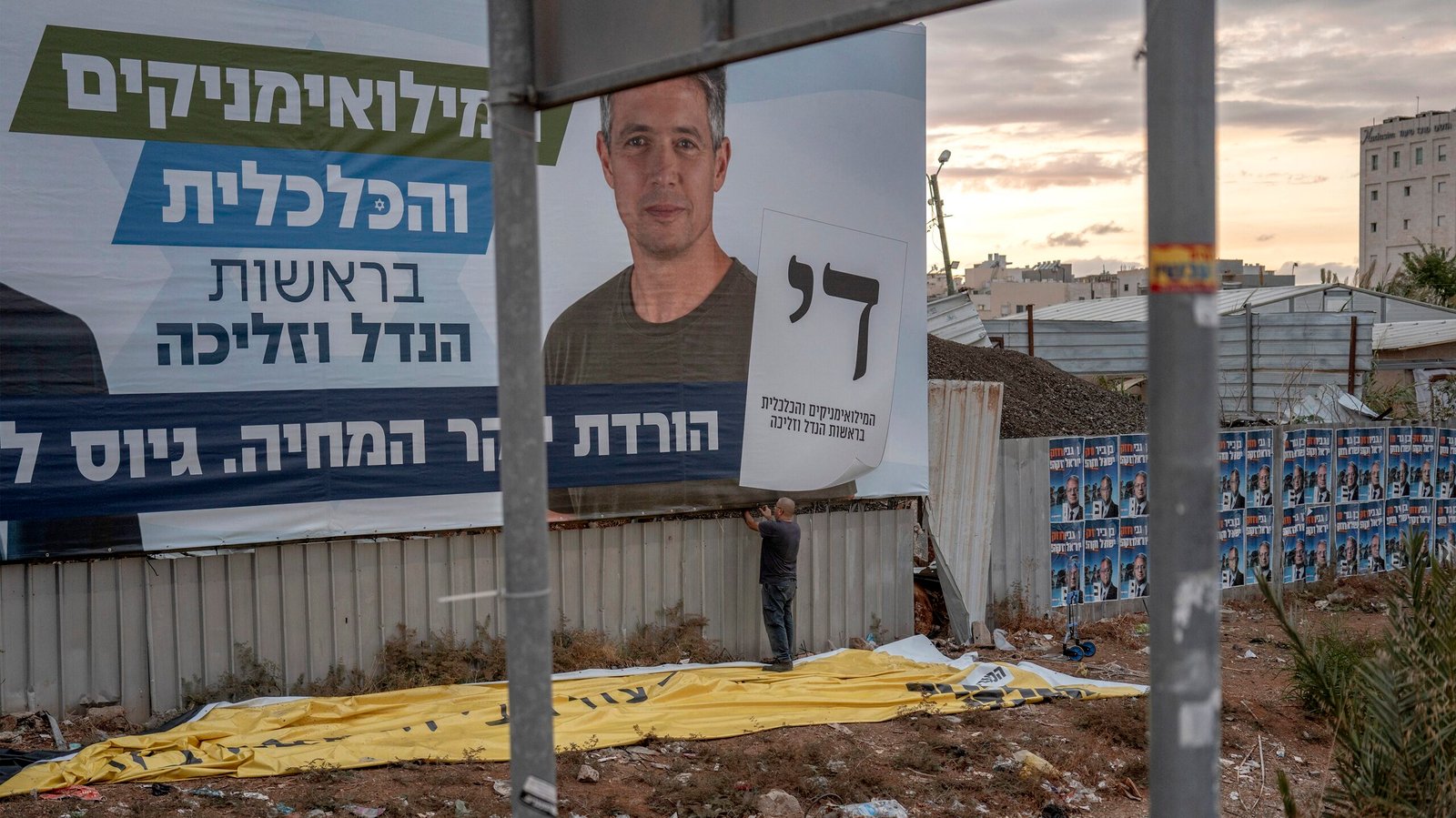
So I will cast my vote symbolically for The Reservists, which is running on a joint electoral list with the New Economic Party. I do not expect one vote—or one party—to transform Israeli politics overnight. I hope, rather, that the movement can establish a foothold, recruit the heroes of a new generation, and help prepare a new cadre of leaders to take the reins of power over the coming decade.