<
article id=”post-951713″>
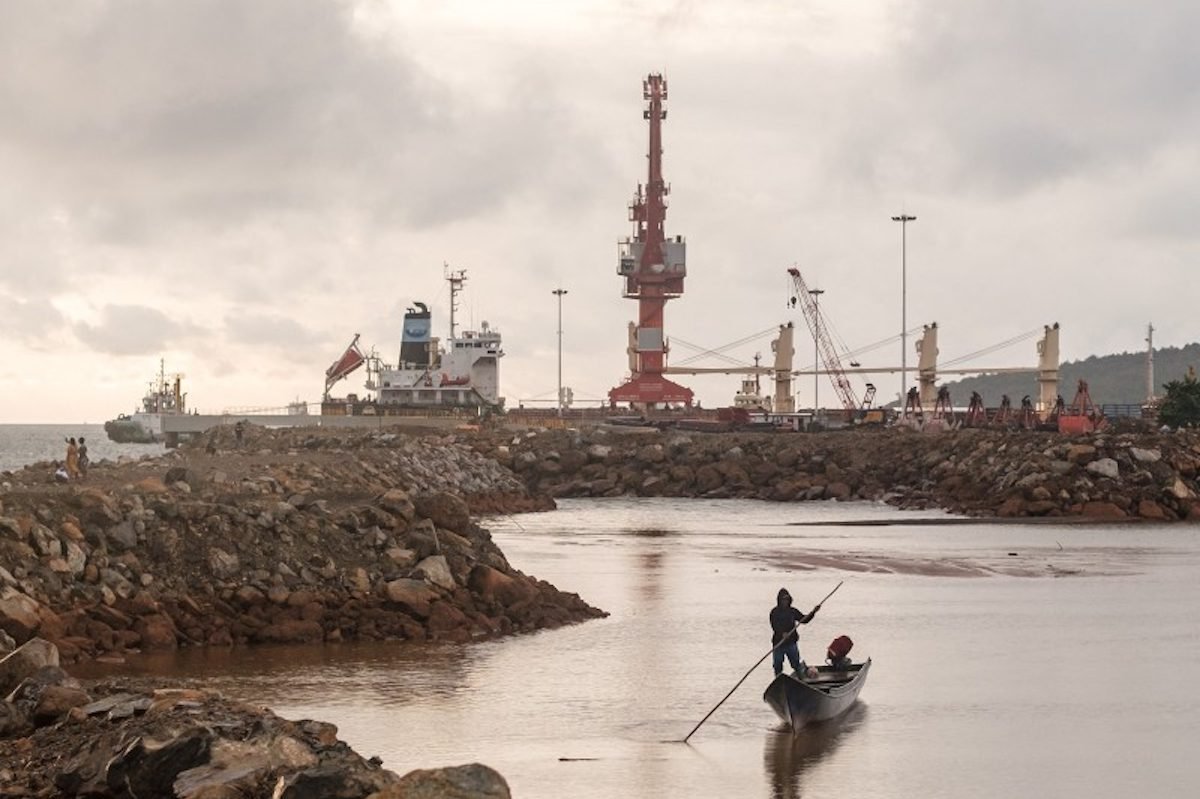
A growing share of the world’s electric-vehicle batteries contains nickel from Obi, an Indonesian island where the mining company Harita Group has long paid for goodwill, according to alleged leaked documents published on October 22 by the Organized Crime and Corruption Reporting Project (OCCRP).
When accusations of such payments reach an Indonesian courtroom, accountability usually stops with one person. In 2024, a Ternate court sentenced Stevi Thomas, a Harita director, to one year and ten months in prison for paying North Maluku’s governor, Abdul Gani Kasuba, US$60,000 to ease permits for the company’s mining operations.
However, as far as public records show, Harita itself was never charged, and its business kept growing after Thomas’ conviction. Harita’s listed nickel arm reported revenue of 17.1 trillion rupiah, or about $1 billion, in revenue in the first half of this year.
The OCCRP-published documents suggest the Thomas case was no isolated incident and is part of a broader pattern. (Harita Group did not reply immediately to Asia Times’ emailed request for comment.)
Between 2013 and 2023, the OCCRP files show, Harita planned or approved at least $389,000 in payments to village officials, imams and pastors, a district head whose signature the company needed, and military projects.
The largest single payment was allegedly about $140,000 from a disaster relief fund, used to repair buildings at a military academy in Java. The OCCRP report said it could not confirm that every payment was definitely made.
In Kawasi, the village now ringed by Harita’s plant, residents say jobs and supply contracts were routed through the village head. A 2020 company security memo says he identified and reported residents suspected of leading protests, so that they and their families could be kept off the company’s payroll. The same official earned about $304,000 selling land to the company.
Higher up, a senior director wrote in 2016 that Harita was building its first smelter without a building permit because of its close ties with local officials, the same documents show. He also drafted a government decision on hazardous waste storage himself, cutting a line that required a field check by law, the documents show.
Paid silence
The same approach, the documents show, is used in Harita’s handling of alleged damage. A 2025 OCCRP report found that the company’s own monitoring had recorded chromium-6 in local water above legal limits for about a decade.
Most Kawasi residents have since been moved to a company-built “eco-village.” The few who stayed deal with power cuts and with flooding whenever the mine’s sediment pond overflows.
Obi’s nickel is marketed as a clean-energy metal, yet Obi runs largely on coal. According to the climate group Market Forces, Harita operates about 890 megawatts of captive coal power on the island, with another 1.2 gigawatts under construction.
Market Forces estimates the operation emitted 10.87 million tonnes of CO2 equivalent in 2024, close to 1% of Indonesia’s national emissions that year. Earlier this year, Harita removed detailed coal-capacity figures from its website after Market Forces cited them in a complaint to the Singapore Exchange, Eco-Business reported.
To be sure, Obi is no outlier. A 2024 study by the Centre for Research on Energy and Clean Air (CREA) and our institute, CELIOS, found that the economic benefit from nickel processing peaks around the fifth year, at about $4 billion, then declines as pollution takes its toll. The study also estimated that the resulting health damage could cost at least 3,800 lives a year.
Harita reportedly did not respond to OCCRP’s questions about the alleged payments or Asia Times’ request for comment. The company has previously rejected reports of water pollution, saying its tests met national standards.
It also points to an ongoing audit by the Initiative for Responsible Mining Assurance. That audit should now weigh these OCCRP-leaked documents in its assessments.
Chinese partner
Indonesia produces about two-thirds of the world’s mined nickel, according to the US Geological Survey, and much of the processing is financed by Chinese capital. On Obi, Harita’s battery-grade refineries were built with Lygend, a Ningbo-based firm listed in Hong Kong since 2022.
The partnership has also entrenched polluting coal-fired power. In 2022, the Chinese contractor Tianjin Electric Power Construction won a deal to build four 380-megawatt coal units on Obi for the Harita and Lygend projects, only months after Chinese President Xi Jinping told the United Nations that China would stop building new coal power plants abroad.
Nothing in the OCCRP’s leak links Lygend to the payments. But Chinese investors often treat land, permits and local consent as the local partner’s responsibility. Beijing’s own 2022 guidelines for overseas projects ask Chinese companies to consult affected communities and gather their views.
What should change
Two steps would make the most difference. First, Indonesia’s Corruption Eradication Commission should investigate Harita as a company, not only the people who previously worked for it and currently do.
Indonesia’s new national criminal code, in force since January 2, 2026, allows a corporation to be held liable when an offense benefits it or reflects its policy. Payments approved by senior managers, recorded in spreadsheets and charged to company funds, would appear to fit that description.
Second, Lygend should commission an independent review of social conditions around its Obi operations, publish the findings and set a clear and firm timeline for replacing coal power on the island.
Indonesia has every right to build its own nickel industry. But a battery is not clean if the permits behind it were bought illegally and the people around the mining operations were paid to stay quiet.
As long as only the middlemen go to court and face prosecution, the companies that profit will have little reason to change. And every EV with a battery made from Obi’s nickel mines will carry traces of the taint that allowed its production.
Muhammad Zulfikar Rakhmat is director of the China-Indonesia Desk at the Jakarta-based Center of Economic and Law Studies (CELIOS) independent research institute. Yeta Purnama is a researcher at CELIOS.