<
article id=”post-951541″>
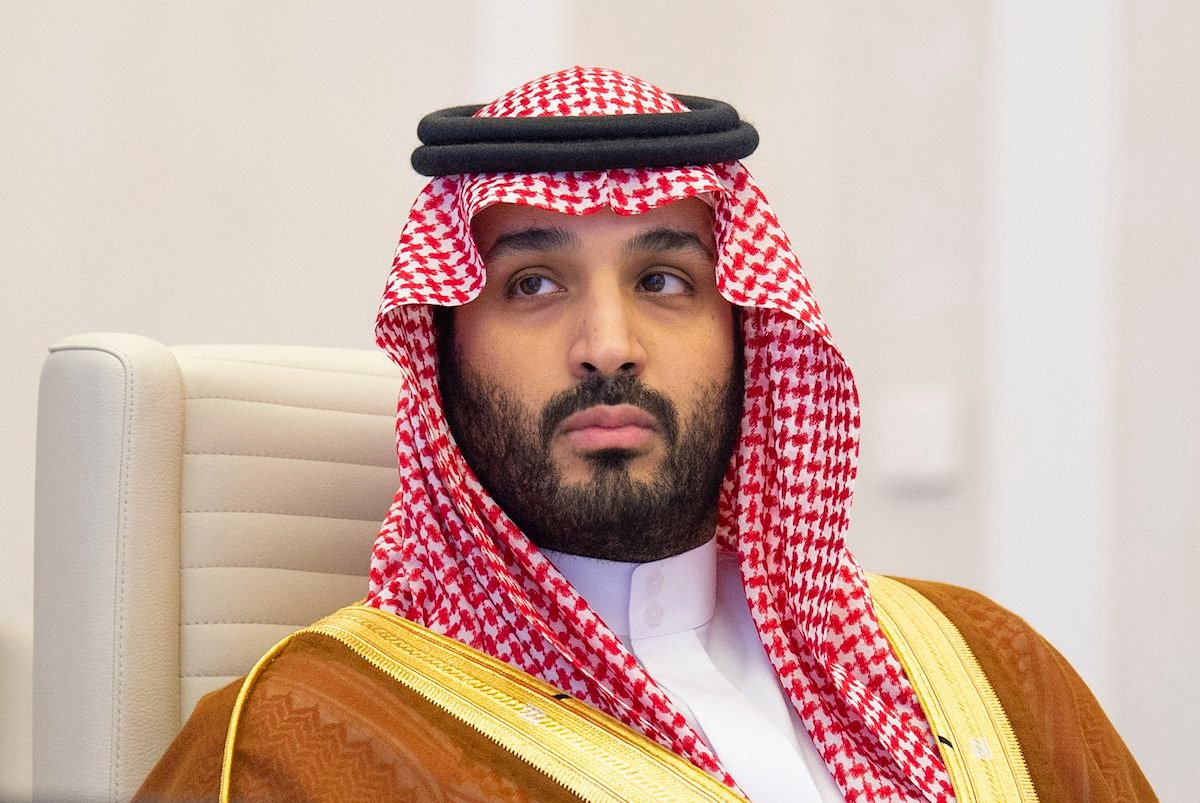
In “The Muqaddimah”, the 14th-century historian Ibn Khaldun wrote that “great dynasties often decline after three generations because they fail to produce capable successors.” Under Crown Prince Mohammed bin Salman, Saudi Arabia now asks this question precisely: Has he weakened the very dynasty he was meant to strengthen and secure?
The kingdom is under mounting pressure from both internal and external forces. Prince Mohammad’s key policies and bets, namely that he could defeat the Houthis and create a pliant puppet state in neighboring Yemen, that he could transform the Saudi economy to reduce its dependence on oil, and, crucially, that a Donald Trump-led America would be a reliable ally, are all failing at once.
Many now feel the best way forward is to transfer power, replace Prince Mohammed with a suitable successor, overhaul the country’s diplomacy and economic policies, and implement long-needed democratic reforms. Failing to do so could balkanize the kingdom into smaller entities run by competing princes and end Saudi Arabia as it currently exists.
External actors who covet the kingdom’s vast oil and mineral assets, including an estimated 114 million tonnes of rare minerals and uranium-bearing ores on top of massive fossil fuel reserves, would not hesitate to carve up the country.
Having failed in Iran so far, Saudi Arabia could be the next target, and perhaps an easier one. The refusal of US President Donald Trump and the Western powers to support Prince Mohammed against Yemen’s Houthis lends weight to this hypothesis.
Since assuming power, the crown prince has arguably done more harm than good for the kingdom. Crucially, he has numerous enemies while failing to ensure the nation’s security. Saudi Arabia spends roughly US$83 billion a year on defense, equivalent to about 6.5% of GDP and around 3% of total global military spending.
The October 10 Houthi missile strike on Riyadh’s international airport, killing at least 13 and making the kingdom unsafe for international travelers, shows how highly vulnerable the kingdom has become.
In 2015, when Prince Mohammed served as minister of defense, this expenditure reached as high as 13% of GDP. That year, in coordination with the United Arab Emirates (UAE), he launched a military campaign against Yemen, a conflict that dragged on for eight years. Bombardment and a blockade that caused shortages of food and medicines resulted in the deaths of approximately 700,000 Yemenis.
The Saudi kingdom has spent about $200 billion on defense, yet it has failed to prevail over a ragtag adversary with a military budget estimated at less than $6 to $7 billion. That, critics say, is because much of the military spending has gone toward protecting and propping up the crown prince’s regime rather than fortifying national security against external enemies.
The crown prince has also arguably squandered the kingdom’s wealth on boondoggle economic plans. Reports indicate that billions of dollars have gone to consultancy fees pumping up his blurry Vision 2030, which aims to diversify the Saudi economy away from dependence on fossil fuel exports.
Jamal Khashoggi, a critical journalist who was murdered and dismembered in Istanbul, had argued in his reporting and commentary that if these sweeping giga-projects failed, Saudi Arabia could become one of the poorest nations in the region.
The Wall Street Journal (WSJ), meanwhile, reported that a leaked audit report on NEOM, a massive smart-region megaproject in Saudi Arabia’s Tabuk Province launched in 2017, now effectively faces bankruptcy.
The report said closing The Line, a planned 170-kilometer linear city that has been scaled back as funds shifted toward 2030 World Expo and 2034 World Cup infrastructure, would cost Saudi Arabia up to $16 billion.
Meanwhile, the US-Israel war on Iran and related blockade of the Strait of Hormuz have hit Saudi Arabia especially hard. So, too, have the later blockade of the Bab el-Mandeb Strait and attacks on Saudi Arabia’s East-West oil pipeline by Houthis and Iraqi militias, both of which have prevented Saudi Arabia from exporting oil and depleted its most crucial revenue source.
The Saudi economy, earlier projected by the IMF to grow 4% in 2026, is now headed for a 3.3% contraction.
Another WSJ report said that, amid various security threats, Prince Mohammed frequently moves between different palaces and bunkers, presumably to avoid possible drone-launched assassination attempts. While the Houthis have not yet homed in on his location, the crown prince’s internal enemies and royal rivals might.
Experts note there is precedent for regicide. King Faisal, arguably the finest monarch the House of Saud ever produced, was killed by a member of his own family, allegedly at the instigation of foreign powers.
By tradition, the House of Saud passed power horizontally, from brother to brother among the sons of Ibn Saud, rather than vertically from father to son. With his father’s backing, the crown prince broke that practice in 2017 by sidelining the designated successor, then Interior Minister Mohammed bin Nayef, who reports say remains under house arrest to this day after the de facto palace coup.
Critics of Prince Mohammed viewed the move as a blatant power grab, and many suspect it could not have happened without the support, if not involvement, of the United States. (Ironically, the detained princes were accused by Bin Salman of contacts with foreign powers to carry out a coup.) What the crown prince might have promised in return is still unknown, but Washington rarely gives such favors for free.
To be sure, Prince Mohammed has staked out a more pragmatic policy in 2021, when he ended a blockade on Qatar and sought a deal with the Houthis. Before the October 7, 2023, Hamas attacks on Israel, which ignited the Gaza War, there were murmurs of a possible US-brokered deal that would have seen Saudi Arabia recognize Israel. Nobody is talking about such a deal now amid the fires of the Iran war.
While Vision 2030 foresaw a kingdom weaned from oil, Prince Mohammed’s actions have only intensified the kingdom’s economic burdens and concerns, increased dependence on that revenue, and weakened national security. Once among the world’s wealthiest nations, Saudi Arabia is in clear, if not rapid, decline as the crown prince drives the kingdom deeper into debt.
Today, no European or American nation is stepping forward to offer Saudi Arabia support as Houthi attacks put the kingdom under unprecedented fire. So far, only other Muslim nations have stepped forward. These nations, driven by different incentives and aims, could end up fighting one another, opening the way further for the formation of a possible “ Greater Israel.”
Saudi citizens, nearly 65% of whom are reportedly under 27 years old, should start to look past Prince Mohammed’s light talk about “freedom” and “modernization” and ask whom his policies really serve: the prince or the people? Never before has Saudi Arabia faced such clear risks of collapse from within while being pressed from without.
Dr. Zakir Hussain is a senior fellow at the Indian Council of World Affairs think tank. His research focuses on the Middle East, South Asia and the role of major powers. He was previously associated with the Institute for Defence Studies and Analyses (IDSA) and National Maritime Foundation (NMF), a New Delhi-based think tank of the Indian Navy.