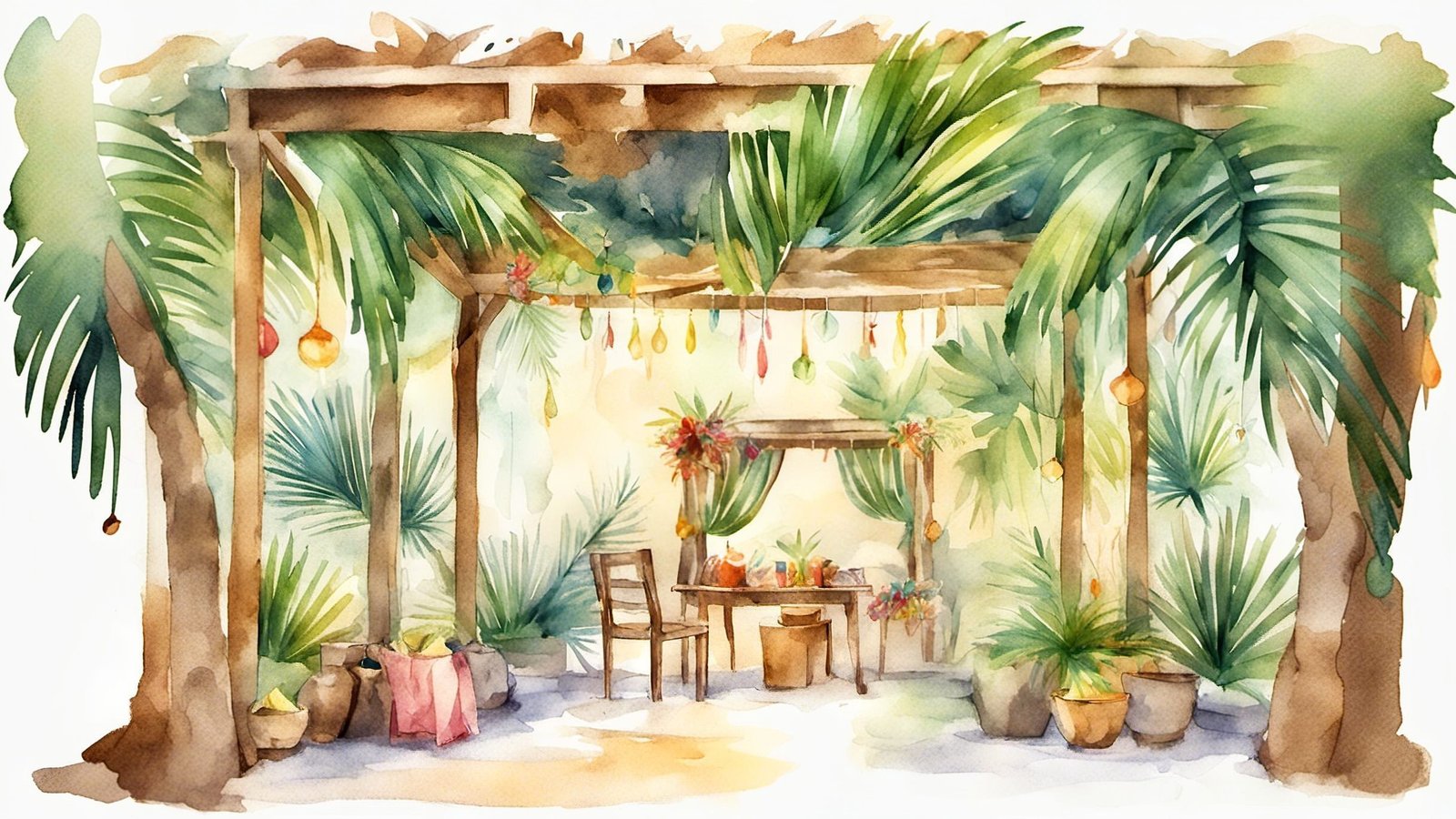
Sukkot is a Jewish holiday, but its themes reach far beyond any one faith tradition.
At its heart is a simple idea: the structures we rely on are more fragile than they seem. Security can be shaken. Familiar routines can disappear. What helps people endure are the things that outlast walls and institutions — gratitude, hospitality, community, humility and responsibility for one another.
Those ideas feel especially relevant in today’s Middle East.
Across the region, wars, political upheaval and rapidly changing alliances continue to reshape lives. At the same time, people everywhere are trying to make sense of an information environment saturated with misinformation, propaganda, algorithmically amplified outrage and artificial intelligence-generated content.
In such a moment, trustworthy journalism is one of the institutions we cannot afford to lose.
For more than 25 years, The Media Line has reported directly from across the Middle East as an independent American nonprofit news organization, with journalists and sources throughout a region where facts are often contested before the smoke has even cleared.
Through the Mideast Daily News, we bring that reporting directly to you.
Our journalists cover Gaza and Jerusalem, Syria and Iran, the Gulf, North Africa and beyond. We speak with government officials, diplomats, academics, business leaders and people whose lives are shaped by the events behind the headlines. We provide context that cannot be produced simply by aggregating what others have already reported.
That independence comes with real costs.
The Media Line was recently targeted in a sophisticated cyberattack intended to disrupt our operations. At the same time, we are investing in stronger digital security and preparing a new website built for an age in which readers need more than another stream of headlines.
Our goal is to help people understand how to evaluate what they are seeing and reading. The new platform will expand our contextual journalism and introduce specialized coverage of technology, health, science, and infrastructure, while strengthening our role as a teaching news agency committed to news literacy.
We are also expanding our Press & Policy Student Program, an intensive three-month internship offered in Jerusalem and remotely. Students studying journalism, international relations, and public policy learn directly from veteran journalists, diplomats, and policymakers. The program has already produced 100 alumni, with graduates going on to work at CBS, Reuters, Bloomberg, Univision, The Arizona Republic, and other news organizations. We hope to reach 200 participants over the next four years.
Sukkot is also associated with gathering and welcoming guests. That message, too, is universal.
At a time when the Middle East is so often reduced to opposing camps, good journalism should create room for complexity. It should allow Israelis, Palestinians, Arabs, Iranians, Americans, and others to be heard while still testing claims against facts. It should resist propaganda, stereotypes, and easy conclusions.
That is the journalism we are asking you to support.
This season offers a useful reminder that even something fragile can endure when it is carefully built and sustained by a community.
Independent journalism works much the same way.
Your contribution helps us protect our digital infrastructure, launch our new platform, train the next generation of journalists, and keep reporters working throughout the Middle East.
Please consider making a donation and becoming part of the community that keeps the Mideast Daily News and The Media Line strong.
In a season that invites reflection on gratitude, shelter, and shared responsibility, we are deeply grateful that you read our work, share it, and believe that independent reporting still matters.
Thank you for standing with us.