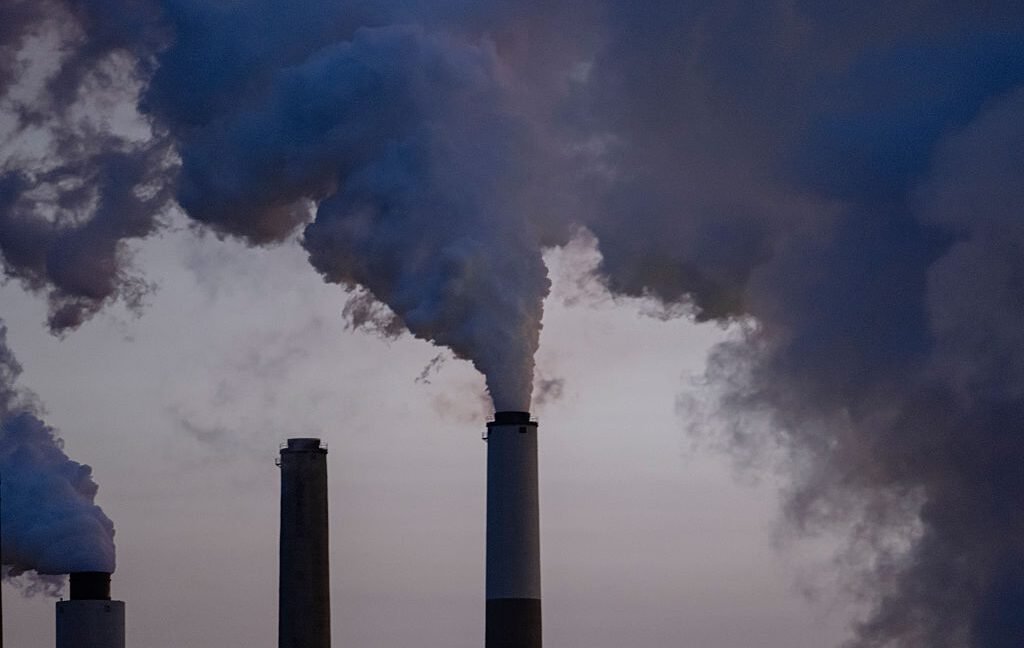
Days after finalizing a rule that would eliminate climate rules for power plants, the Environmental Protection Agency (EPA) was sued by groups who say the EPA’s repeal was shockingly short-sighted and risked leaving the country’s single largest source of industrial climate pollution unchecked.
On Thursday, the American Lung Association, the American Public Health Association (APHA), the Clean Air Council, Clean Wisconsin, the Environmental Defense Fund, and the Natural Resources Defense Council (NRDC) filed a petition requesting that the US Court of Appeals for the DC Circuit review if the EPA’s action conflicts with the Clean Air Act.
“Clean air is a basic human right,” APHA CEO Georges C. Benjamin said.
A physician and long-time public health policy leader, Benjamin warned that the EPA was “weakening” “life-saving standards” and stripping away “vital protections for all, and especially for children, pregnant people and communities already overburdened by pollution.” The lawsuit alleges that the rule change could cause thousands of premature deaths.
In the EPA’s announcement of the proposed repeal, the agency claimed that its action was based on “the best reading of the Clean Air Act.” Benjamin disagrees.
“Power plant pollution threatens the health of millions of Americans and fuels climate change, worsening extreme heat, poor air quality, and other serious health risks,” Benjamin said. He urged the court to recognize that the “EPA must maintain strong clean air and climate standards so every community can live a healthy life.”
The EPA may struggle to defend the rule given that its core mission is “to protect human health and the environment.” Meredith Hankins, NRDC’s federal climate legal director, accused the EPA of abdicating its legal responsibilities. She appeared confident that the EPA repeal will not survive court scrutiny.
“The Clean Air Act and Supreme Court precedent demand that the EPA address climate pollution from the largest industrial source in the nation,” Hankins said. “The EPA’s legal reasoning is fatally flawed, so we are going to court.”
“Devastating consequences” of EPA’s rollback
So far, the EPA has not acknowledged any potential harms of the rule change. Instead, the agency proposed rescinding all remaining greenhouse gas emissions requirements for power plants, claiming that the restrictions produce “virtually no benefits.”
Rather than meaningfully addressing the risks that advocacy groups describe, the EPA relied on an argument that anyone who’s ever monitored a climate lawsuit will recognize: that climate change is global and “public health harms are too uncertain, conjectural, remote, and convoluted to tie specifically to the US power sector.”
Overall, the agency appears more focused on claiming to have delivered $310 billion in savings on utilities for Americans, while saying that the repeal is “expected to unleash the full potential of America’s vast energy resources, including coal and natural gas.” The announcement also said the power plants will “save an additional $370 million in direct compliance costs.”
Advocacy groups say the EPA is turning a blind eye to a wide range of harms that could be easily addressed by maintaining the status quo. Lawrence Hafetz, the legal director of the Pennsylvania-based Clean Air Council, warned that the “EPA is senselessly discarding readily attainable carbon standards for power plants mere weeks after the UN showed the world on a trajectory to exceed the heating limit needed to avoid severe levels of economic, ecological, and social disruption.”
Impacts will be felt throughout the US, groups forecasted. For example, Brett Korte, a senior staff attorney for Clean Wisconsin, said he is bracing for “devastating consequences” if the rollback is allowed to stand.
“Here in Wisconsin, we’re experiencing warmer winters with less snow and ice cover, more exceedingly hot days in summer, and more frequent extreme weather events, like flooding and tornadoes, due to climate change,” Korte said. “On top of that, Wisconsin has the ninth-highest death rate from particulate matter pollution from fossil fuel combustion. EPA abandoning its responsibility to regulate carbon pollution would only make these problems worse.”
The EPA’s timing is terrible, and communities will experience unnecessary deaths if the court does not intervene, said Vickie Patton, who serves as general counsel for the Environmental Defense Fund.
“More Americans than ever are suffering from the dangerous heat and more powerful storms caused by that pollution and are facing the ensuing skyrocketing insurance bills and health costs,” Patton said. By increasing power plant climate pollution in this moment, the EPA rule change “will cause thousands of premature deaths and billions of dollars in additional health costs,” she predicted.
“We are taking action in the court of law to ensure [the] EPA carries out its responsibilities under our nation’s clean air laws to protect the American people from this harmful pollution and to address the health risks and financial costs for people across the country,” Patton said.
Thousands of Americans have submitted comments on the rule change so far, and the EPA continues to seek public input. At the end of this month, the EPA will hold a public hearing on the proposed repeal, an a public comment period extends through October.