Kuwait invoked the UN Charter’s self-defense provision after Iranian attacks, while the Mecca alliance’s mutual-defense clause has not been publicly tested
[ISTANBUL] The newly established Mecca Defense Alliance has put a strategic question before India: Will the collective-defense pact linking Pakistan, Saudi Arabia and Turkey remain mainly political, or develop into an operational military arrangement?
The three countries signed the Mecca Joint Defense Agreement on Aug. 7 and met in Istanbul on Aug. 31 to establish a secretariat in Saudi Arabia, to be led by a Pakistani secretary-general for three years. Reuters reported that the agreement treats an armed attack on one signatory as an attack on all three, but the governments have not released a detailed public text setting out the commitments that would follow.
Turkish Foreign Minister Hakan Fidan said after the Istanbul meeting that the alliance was designed to expand and that officials had begun work on an accession roadmap. The talks addressed counterterrorism, defense production and interoperability, including possible joint land, sea and air exercises, air defense, drones, autonomous systems, electronic warfare and artificial intelligence.
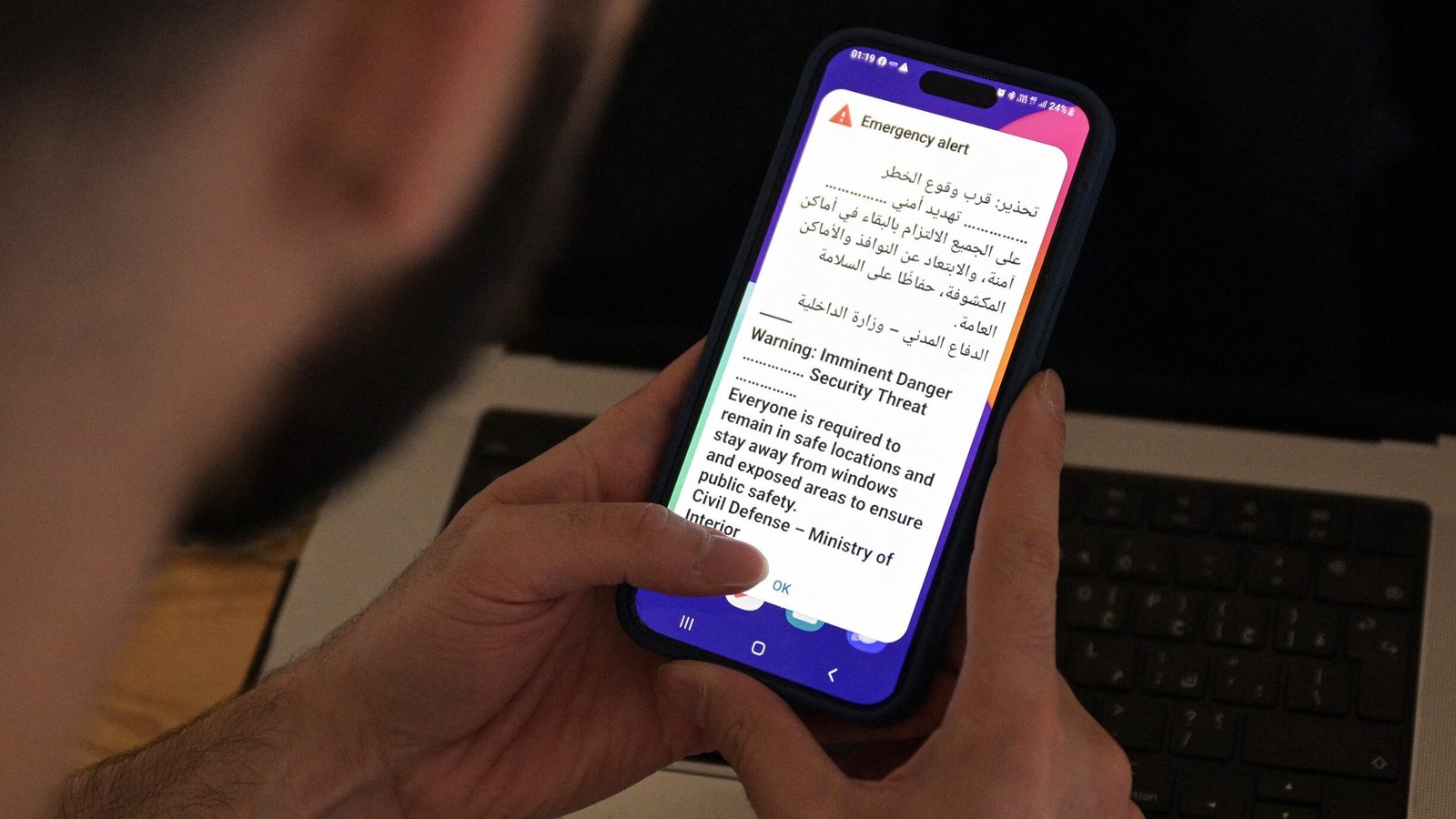
The alliance is taking shape as Gulf states confront renewed Iranian attacks. On Sept. 3, Kuwait said its air defenses intercepted Iranian missiles and drones targeting the country. Reuters reported that Tehran had struck a US base there after a major escalation in the US-Iran conflict.
Kuwait invoked Article 51 of the UN Charter, which recognizes a state’s inherent right of self-defense, and said it reserved the right to take necessary measures to protect its territory. Kuwait is not a Mecca alliance member, and its defense cooperation with Pakistan remains centered on training, intelligence, logistics, capacity building, and border management—not a collective-defense guarantee.
India can measure the Mecca pact against Kuwait’s limited arrangement with Pakistan. The newer alliance uses broader mutual-defense language, but its practical military obligations have yet to be publicly defined.
American and Indian troops are training together this month in the Rajasthan desert, where India faces Pakistan, and in the Himalayas, where Auli is about 60 miles from the disputed frontier with China.
The US Embassy in New Delhi announced the exercise Tuesday, a day after the Istanbul meeting. Since 2004, the embassy said, Yudh Abhyas has strengthened the US-India Major Defense Partnership in support of a free and open Indo-Pacific.
Yudh Abhyas, Hindi for “training for war,” is in its 22nd edition. The three-week exercise involves 350 soldiers from each army, starting at the Mahajan Field Firing Range near Bikaner and moving to Auli. Mahajan focuses on live fire and mechanized maneuver, while Auli tests high-altitude logistics.
Dr. Arzan Tarapore, a research scholar at Stanford University, said the public record provides scant evidence that the pact is a binding mutual-defense treaty in the operational sense. He told The Media Line that he does not expect the three to conduct military operations together, whether against Iranian strikes on Saudi Arabia or in coordination against India.
He expects flows of money, arms and technologies, including drones, among the members and across the region. Pakistan already used Turkish drones against India in May last year, Tarapore said, and that is the kind of defense-industrial cooperation he expects to deepen.
Brig. Anil Raman, a retired Indian officer at the Takshashila Institution in Bangalore, reached a similar conclusion. India has asked Washington for nothing so far, he told The Media Line. It should seek tighter controls on American-origin weapons that could reach Pakistan through Turkey and urge Saudi Arabia and Turkey to limit the cooperation, he said.
Any expectation that Saudi fighter jets, Pakistani F-16s and Turkish F-16s are going to be running joint raids somewhere in the Middle East is Hollywood fiction
“Any expectation that Saudi fighter jets, Pakistani F-16s and Turkish F-16s are going to be running joint raids somewhere in the Middle East is Hollywood fiction,” Kabir Taneja, who directs the Observer Research Foundation’s Middle East office in Dubai, told The Media Line. “It is never going to happen.”
Taneja also cautioned against comparisons with NATO. Article 5 of the North Atlantic Treaty has been invoked only once in the alliance’s history, he said.
The alliance does not eliminate or replace Turkey’s obligations under NATO or its other agreements, Fidan said in Istanbul. It complements them.
Asked at the same news conference about Israeli statements calling Turkey a strategic threat, Fidan said Israeli Prime Minister Benjamin Netanyahu should be stopped and called him “an enemy of humanity.” He said hostility toward Turkey from Netanyahu’s government had grown since Israel’s election campaign began.
The three countries do not agree on the adversary either, Taneja said. Each has its own view of what the arrangement is for and a different neighbor in mind.
“Ankara and Riyadh were not on good terms until 2022 or 2023,” he added. “That can happen again.”
Islamabad has reportedly sent 8,000 troops, a squadron of JF-17 fighters and an air defense system to Saudi Arabia under the bilateral agreement the two countries signed in September 2025. Neither government has publicly provided a full account of the deployment. Pakistan has sent soldiers to the kingdom for decades. More than 20,000 served under the 1982 Joint Defense Protocol, and a Pakistani general commanded the Saudi-led Islamic Military Counter Terrorism Coalition beginning in 2015.
Pakistan raised $3 billion on the international bond market on Sept. 3, its largest single issuance, with orders near $6 billion. The proceeds will repay a $3 billion Saudi loan made in April, which Islamabad had used to repay the United Arab Emirates and which Riyadh had already extended once.
Saudi Arabia committed another $3 billion in support in April and extended an existing $5 billion deposit as Islamabad faced repayment obligations to the United Arab Emirates. The assistance ties Riyadh to Pakistan’s financial stability as well as its defense planning.
Pakistan spent decades treating the Gulf as its own ground, Taneja said. It lobbied hard to keep India out of the Organization of Islamic Cooperation when the bloc of Muslim-majority states was founded in the 1960s.
India’s economic rise changed the picture. Dubai was built by Indian hands in the 1990s, Taneja said, and Indians now come as engineers, managers and chief executives rather than as construction workers, while it has become more difficult for Pakistani laborers to obtain Emirati visas.
What we are seeing now with the Mecca agreement, with the mediation with Iran, with the—dare I say—good relationship with President Trump, is Pakistan finding a very good wedge to re-enter
“What we are seeing now with the Mecca agreement, with the mediation with Iran, with the—dare I say—good relationship with President Trump, is Pakistan finding a very good wedge to re-enter,” Taneja said. “And to be fair to them, they seem to be doing a decent job of it.”
“If you are going to build an architecture that will require mobilization at some level, you cannot mobilize if you are not trained, and you cannot mobilize if you are not experienced,” he said. “Pakistan brings all those things together.”
India’s national security adviser has visited Saudi Arabia four times in the past six months, Taneja said, and Riyadh kept New Delhi informed before signing its bilateral agreement with Islamabad so India would not read the arrangement as a coalition against it.
Asked at a New Delhi forum on Aug. 22 whether the pact worried him, S. Jaishankar said: “There are live military situations which each of the signatories face, what has the Mecca pact done in response to that?”
In my calculus, everything counts, everything will have a weight
He said India would not ignore it either. “In my calculus, everything counts, everything will have a weight,” he said, “and sometimes things need to play out.” India factors in developments involving countries whose policies are not favorable toward it, he added.
India’s quarrel with Turkey predates the pact. Days after the May 2025 fighting, New Delhi revoked the security clearance of Celebi Aviation, a Turkish ground-handling company operating at nine Indian airports. Indian officials said drones Pakistan launched at Indian towns came from Turkey.
The deeper irritant is Kashmir, Taneja said. President Recep Tayyip Erdogan raises it at the UN General Assembly almost every year, which India treats as a red line and an endorsement of Pakistan’s position. New Delhi has told Ankara so repeatedly.
For India, he added, the larger concern is Saudi Arabia’s membership. The relationship with Turkey was already contentious.
Indian commentators have also asked whether the pact responds to India’s closer ties with Israel. India and Israel upgraded their relationship in February to what the two governments call a special strategic partnership for peace, innovation and prosperity. Their bilateral investment agreement took effect in July; the three countries signed in Mecca on Aug. 7.
The Hindi-language outlet Webdunia asked whether the alliance was a direct response to India-Israel ties and to mechanisms such as I2U2 and the India-Middle East-Europe Economic Corridor. Netanyahu telephoned Indian Prime Minister Narendra Modi on Aug. 6, the day before the signing, and Modi posted about the call in English and Hebrew.
India’s Foreign Ministry has rejected reports that New Delhi approached Israel seeking a new defense treaty in response to the pact.
The Qatari Foreign Ministry welcomed the pact as a positive step but declined to discuss joining it. Doha is already present in more than one platform, the ministry said.
Qatar has a US security assurance that Washington did not extend to Saudi Arabia. After the Israeli strike on Doha in September 2025, President Trump issued an executive pledge that the United States would treat an attack on Qatar as a direct threat to itself. The US-Saudi defense agreement two months later provided Riyadh with F-35s, tanks, civil nuclear cooperation and major non-NATO ally status, but did not include the same formula.
Turkey has maintained about 3,000 troops in Qatar for almost a decade under several defense agreements. Their presence did not prevent Iranian strikes on Qatar in 2025 and 2026 or the Israeli attack on Hamas leaders in Doha.
The United Arab Emirates has kept its distance. Abu Dhabi has the Abraham Accords, ties to Israel, expanding relationships with India and China, and a defense industry of its own. It has less urgency than Riyadh to accept automatically triggered obligations.
Col. (res.) Dr. Hanan Shai wrote for the Misgav Institute for National Security and Zionist Strategy on Aug. 18 that “Israel cannot assume that the Mecca pact will also remain an empty declaration.” He proposed not a rival military alliance but an economic-security organization built around the India-Middle East-Europe Economic Corridor, with India, Israel, Greece, Cyprus and the United Arab Emirates at its core, Jordan providing land continuity and Saudi Arabia welcomed even while Riyadh remains in the Mecca pact.
Saudi Arabia has invited Bangladesh, a Bangladeshi official told Reuters, and Dhaka says it is interested. Turkish officials said after Istanbul that they had begun building a mechanism for other countries to join. Taneja is untroubled by the prospect. Bringing in countries from outside the region would dilute the agreement, he said, and he does not know what Bangladesh would add to it.
The idea is to build a regional security architecture in the Middle East, he said. Expand geographically before it has any depth, and other organizations offer the warning: the core mandate becomes diluted, and symmetry replaces purpose.
“There is very little unity in the Gulf right now,” Taneja said. “They have a lot of their own stuff to figure out first. It is going to be chaotic. It may be violent.”