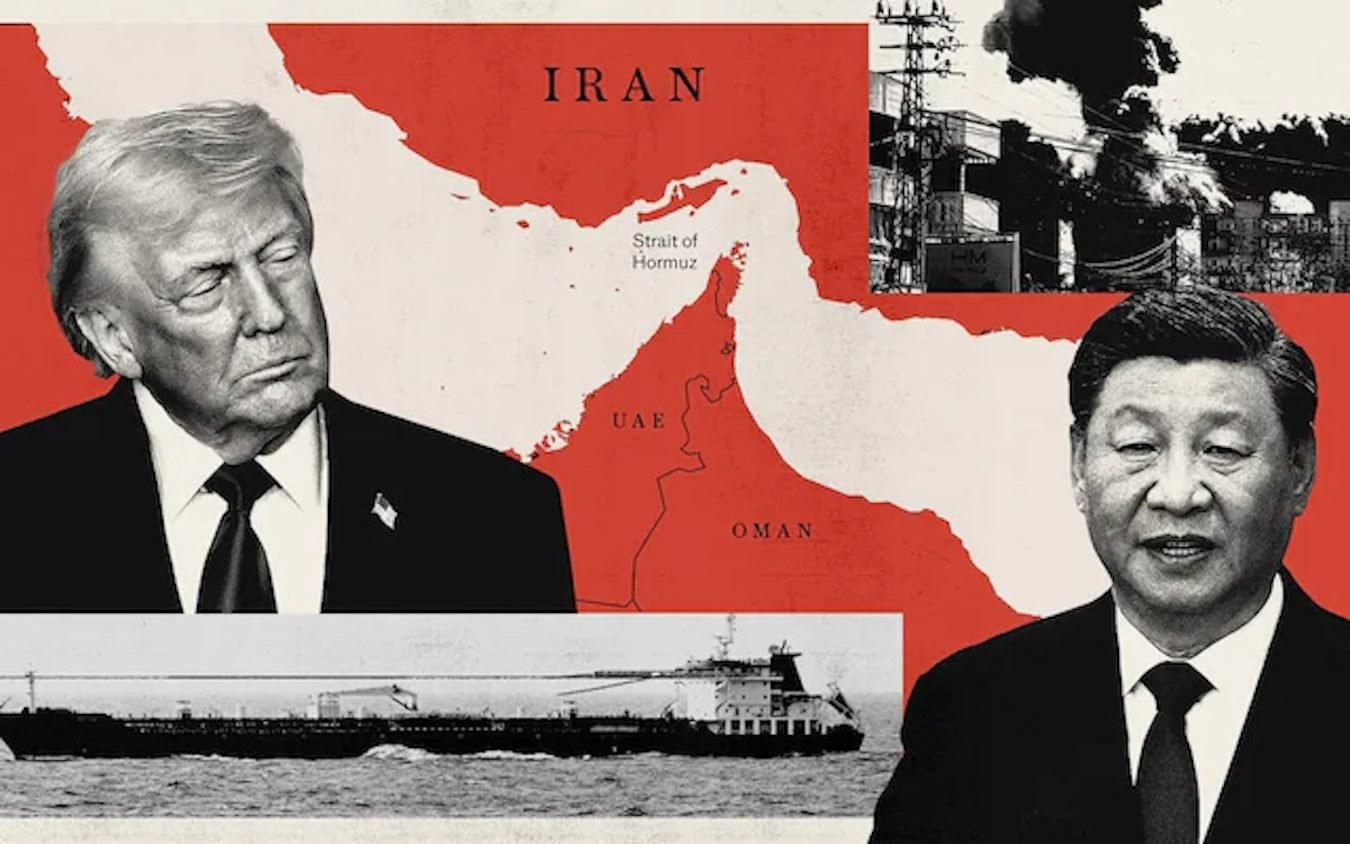
China faces a dilemma in the six-month war between Iran and the United States, wanting the conflict to drag on and drain American military and government resources, yet wary of becoming a target of Washington’s newly announced economic campaign against countries that do business with Tehran.
Beijing’s struggle comes as the US Department of the Treasury launched Operation Economic Outcast on Monday, an unprecedented, whole-of-government campaign to isolate Iran and sever the networks that sustain it. The action designated nearly 60 entities, individuals and vessels across five sectors, including digital assets, technology, gold, aviation and shipping.
Among the companies named was a cluster of Hong Kong- and Shenzhen-based firms accused of acting as procurement, logistics or shipping fronts for Iran’s trade network. In total, 16 Hong Kong- and Shenzhen-based firms were designated, spanning equipment procurement, oil and gas trading, shipping and logistics. The biggest Hong Kong-based firms named include:
- Sweet Ocean Industrial Ltd
- RPT Technology Ltd
- Sky Oil and Gas Asia Ltd
- Vienna Shipping Co Ltd
The Shenzhen-based firms include:
- Shenzhen Sweet Ocean Technology Ltd
- Shenzhen Huamei Lianyun International Logistics Co Ltd
- Shenzhen Bositong Logistics Co Ltd
- Bositong Supply Chain Shenzhen Co Ltd
US Treasury Secretary Scott Bessent cast the campaign in sweeping historical terms, likening it to a wartime offensive against a common enemy.
“In the Second World War, D-Day marked the historic beginning of a campaign with our allies to target and drive the enemy from its positions, including those in third countries,” he said on August 24.
“Today, in that same spirit, we are launching an economic onslaught against Iran’s financial connections around the globe. Our objective is to sever every economic lifeline that sustains this tyrannical regime until Tehran stands alone.
“Any entity that facilitates money laundering on behalf of Iran will be removed from the US dollar system. Let there be no ambiguity as to the position of the US. An economic engagement of any kind with this murderous regime will expose those responsible to the full reach of American power,” he said.
Bessent said Iran faces a choice between total isolation and rejoining the global economy if it changes course. He added that governments still financing Tehran have a limited window to comply before the Treasury acts unilaterally.
The new round of sanctions comes ahead of a summit between US President Donald Trump and Chinese President Xi Jinping at the White House scheduled for September 24. The Chinese Foreign Ministry has criticized the sanctions campaign, vowing to “do everything necessary to firmly safeguard its rights and interests.”
Reactions among Chinese commentators have been mixed. Some say the indirect fallout on China should not be underestimated.
“What Chinese readers really need to pay attention to in this round of US sanctions on Iran is not just whether Tehran can hold on, but that Washington has widened its target from Iran itself to outside players with energy, shipping or financial ties to the country,” says a Liaoning-based columnist using the pen name “Ciyuanjun.” “China has been pulled directly into that expanded campaign.”
“This should not be read simply as a financial contest between the United States and Iran,” she says. “If Washington keeps expanding secondary sanctions, Chinese refining, shipping and trade-finance firms linked to Iran will face growing uncertainty.”
She says the US Treasury had already targeted China’s independent refiners and several mainland and Hong Kong firms in previous rounds, and that the latest list added more Chinese shipping and business entities. She says China has been dragged into the fallout, although ordinary Chinese workers are not seeing their wages drop right away.
She adds that if Washington widens sanctions further while the Strait of Hormuz stays high-risk, elevated energy costs would squeeze China’s corporate profits and gradually erode household purchasing power as the effects ripple through shipping, feedstock and consumer prices.
“The negative spillover from US policy is undeniable, and it is already a reality,” says Tinglan, a columnist with Zhouji Kuaibao, an online outlet. “Data show that China has long been a major buyer of crude oil from the region. If Washington imposes secondary sanctions indiscriminately on normal international energy trade, it will inevitably hurt China and shake the stability of the global energy market.”
She says Washington has used various pretexts to unfairly target Chinese companies, and that Beijing could push back in several ways:
- Chinese rules blocking foreign laws’ extraterritorial reach are now actively enforced, barring domestic firms and banks from complying with unilateral US sanctions;
- Beijing calls its trade with Iran normal commerce between sovereign states, and rejects Washington’s long-arm jurisdiction as a breach of the UN Charter;
- As a top trading nation and supply-chain hub, China could respond with proportionate or sharper countermeasures, while US inflation and looming elections limit Washington’s appetite for a full break;
- Iran is likely to retaliate more forcefully, damaging US facilities in the Middle East.
Teapots running dry
Since the US and Israel launched their military campaign against Iran on February 28, Washington has steadily tightened sanctions on the Chinese networks that keep Iranian oil flowing, targeting small independent refiners known as teapots and the shadow fleet of tankers that supplies them.
Many sanctioned teapots have struggled to keep running. Port operators in Shandong have turned away tankers carrying their crude, banks have cut off financing for oil purchases and gasoline exports from one loading hub have dried up since late March, pushing local fuel prices higher. Still, the broader Chinese economy has so far absorbed the shock with little strain.
Bessent also said Monday that a major financial institution would be sanctioned within the week, though he declined to name it or say which country it was based in. Asked whether Chinese banks financing Iranian oil could be next, he said no one was beyond the reach of US sanctions.
Yet even as Washington escalates its threats, the war feeds directly into Beijing’s dilemma. Some Chinese commentators see a prolonged, grinding conflict in the Middle East as serving China’s broad strategic interests, steadily draining the weapons, money and attention Washington would otherwise direct toward the Indo-Pacific.
“The US attack on Iran may have unintentionally strengthened China’s own security,” says a Qinghai-based writer using the pseudonym Time Brewery. “Intercepting one Patriot missile costs US$4 million, while the drone flying at it might cost only tens of thousands, and the more the Pentagon runs that math, the more alarming it looks.”
He says war games point to a stark cost mismatch, with a five-month campaign burning through more than 1,500 interceptors, faster than factories can replace them, while swarms of cheap drones eventually overwhelm even advanced air defenses and leave several US bases in the Middle East damaged in the simulations. The writer calls it a math problem, not a military one, that the US cannot solve.
The writer says that American think tanks have reportedly modeled a bigger Western Pacific conflict and found current US stocks of precision-guided weapons might not last a week, raising doubts about America’s ability to fight a high-intensity war near China, including over Taiwan.
State media has pushed a counter-narrative, arguing Washington’s economic war will boomerang on American families and companies through higher energy costs and a disrupted supply chain.
Xinhua said markets are pricing in long-term disruption to oil flows through the Strait of Hormuz, driving up manufacturing, aviation and transport costs, and warned prices could climb back above $100 a barrel. It said the shock could spill into a food crisis since the Gulf also supplies much of the world’s fertilizer, and disrupted shipping could squeeze food prices.
The same commentary described rising shipping costs as a hidden tax on trade, pointing to a sharp drop in traffic through the Strait of Hormuz and the Bab-el-Mandeb Strait as ships reroute and insurance costs rise. It said the combined shock could leave global economies, including the US, facing slower growth and higher inflation.
Read: Cheap Chinese AI tokens collide with deepening Sino-US bloc split
Follow Jeff Pao on X at @jeffpao3