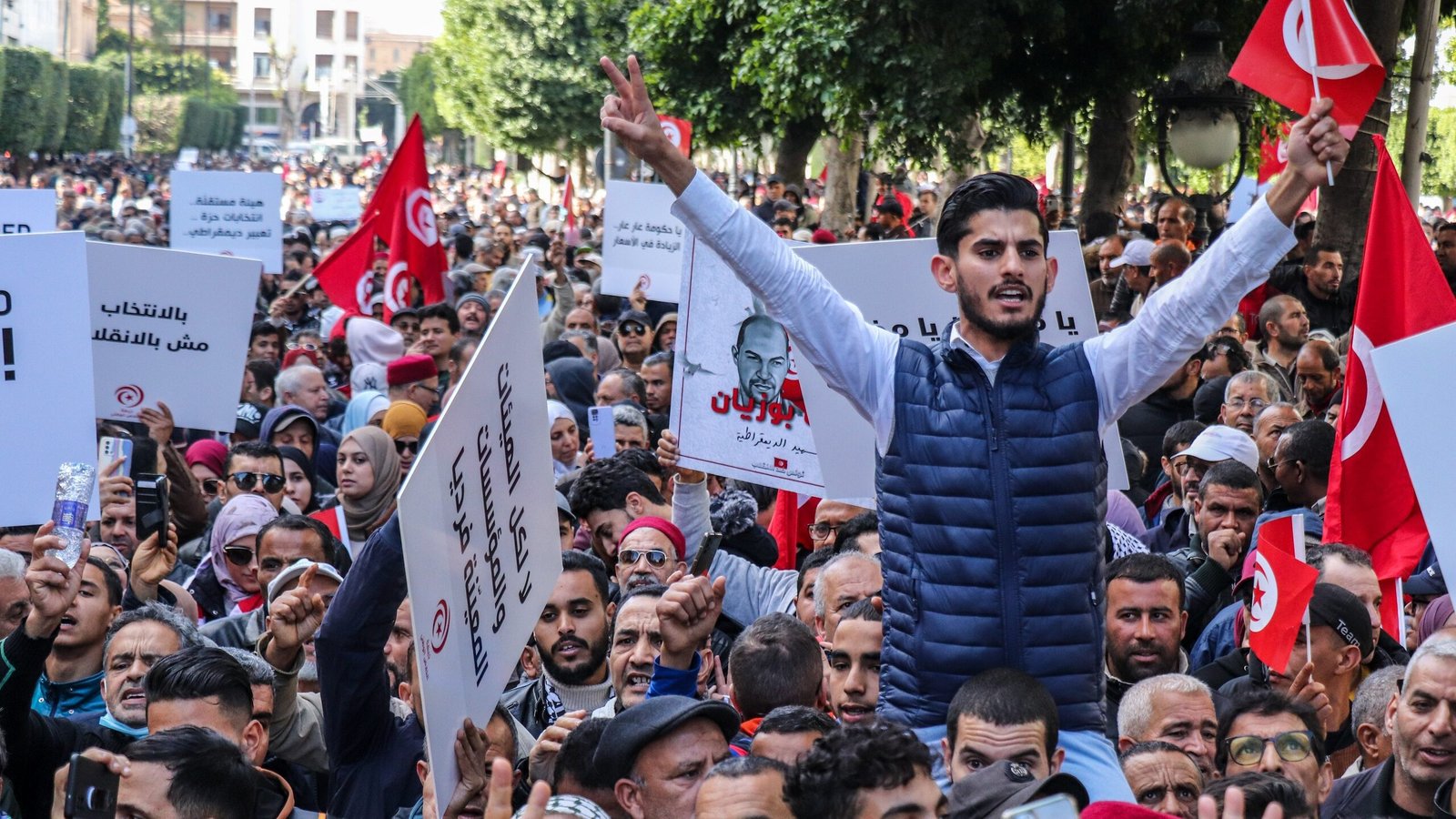
Hundreds of Tunisians demonstrated in the capital Thursday, demanding the departure of President Kais Saied as prolonged water and electricity cuts, medicine shortages, rising prices and restrictions on political freedoms intensified public anger against his government.
The newly established Nafas opposition movement organized the protest, seeking to unite political parties, independent figures and Tunisians who have not previously joined established opposition groups. Demonstrators marched through central Tunis and called for the release of imprisoned politicians, journalists and activists.
Public frustration has grown during a summer in which temperatures reached nearly 50°C (122°F) in some areas. Heavy demand strained the electricity network, while power failures disrupted water pumping, manufacturing and other services. Tunisia has also faced shortages of medicine and basic goods as its economic problems deepen.
“Today, the Tunisian people are living in humiliation,” former lawmaker Samir Ben Amor said. “There’s no water, no electricity, and no freedom.”
Saied, elected in 2019, dismissed the prime minister and suspended parliament in July 2021 before dissolving the legislature. He later expanded presidential authority through a new constitution, dissolved the Supreme Judicial Council and dismissed dozens of judges.
The president says the measures were legal and necessary to combat corruption and rescue the state from a political system that had failed to address Tunisia’s problems. Opposition groups and international rights organizations describe his actions as a dismantling of the democratic institutions established after the 2011 revolution.
Tunisia continues to struggle with weak economic growth, unemployment, debt and deteriorating public services. Saied rejected conditions attached to a proposed $1.9 billion International Monetary Fund program, saying they could increase hardship and threaten social stability.
Thursday’s demonstration followed larger protests on July 25, the fifth anniversary of Saied’s assumption of emergency powers. Rights groups say authorities have increasingly used prosecutions and security measures against political opponents, lawyers, journalists and civil society organizations.