There are generally two schools of thought in the Western space community when it comes to the prospect of China landing humans on the Moon in the next few years and very possibly beating NASA and the United States in its efforts to return astronauts there.
Many people will ask what the big deal is. After all, NASA won the space race to the Moon nearly six decades ago, when Apollo 11 landed there. That it took so long for anyone else to follow speaks to the magnitude of the US achievement, they might say.
But others have a starkly different opinion. A dominant storyline of the 21st century has been the economic and geopolitical rise of China, and what was once a unipolar world now has two large nations vying for supremacy across a number of fronts. One is space. If China can land humans on the Moon before the United States returns, it will represent a huge geopolitical win. From a propaganda standpoint, it will allow China to declare that it has not just caught up to the United States but surpassed it as this century’s superpower.
An important test of whether you believe the former or latter could come as soon as this month.
Chang’e 7 is coming
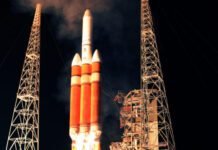
As soon as this Sunday, a Long March 5 rocket will launch from a coastal seaport in China, carrying the Chang’e 7 lunar exploration mission. This is the latest and most sophisticated mission in China’s successful lunar exploration program, which dates back nearly two decades.
The mission will pack a punch: It contains a lunar orbiter with high-resolution cameras and other sophisticated tools, a lunar lander, a lunar rover, and a mini-hopper of a probe. Although the lander’s mass has not been disclosed publicly, it is several times larger than the NASA-backed probes that have recently landed on the Moon, such as Firefly’s Blue Ghost.
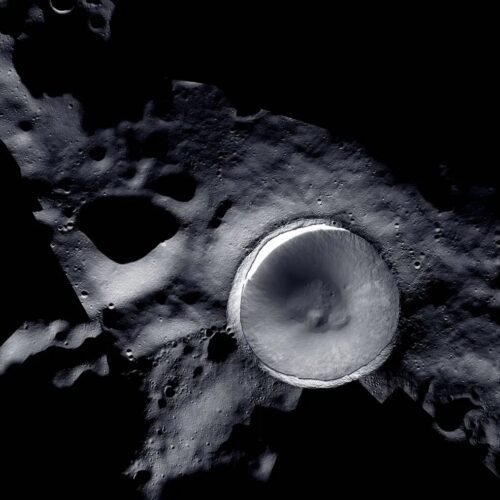
But what is most notable about Chang’e 7 is where the probe is going. It will land near one of the most compelling regions of the Moon, Shackleton Crater, very nearly at the South Pole. Much of the lunar surface is pretty barren, but the South Pole, and Shackleton Crater in particular, offers some of the most coveted real estate there.
This is because the high rims of the crater create permanently shadowed regions known as “cold traps,” where it’s thought that water (in the form of ice, of course) and other useful materials may have accumulated over billions of years. In all of NASA’s and China’s plans for long-term settlement on the Moon, relatively few square miles at the South Pole of the Moon matter the most.
The impact of all this
Humans have been flying missions to the Moon since 1959, when the Soviet Union’s Luna 1 spacecraft passed within several thousand kilometers of the lunar surface. But in all that time, across more than 100 successes and failures, no spacecraft has ever landed at the South Pole of the Moon.
So we’re faced with the prospect of a Chinese rover rolling around this most interesting but heretofore unexplored region of the Moon. Undoubtedly, there will be stunning images and videos. And the rover and hopper, if successful, will provide the best available data on the presence and prevalence of water there.
This will likely serve as a wake-up call to those not paying attention to the US-China space race—which, to be clear, is the vast majority of Americans. They might ask, why is China doing this and NASA is not? What are the implications for human missions?
The US Congress, to its credit, has already largely awoken to the situation. Early this year, it gave new NASA Administrator Jared Isaacman the latitude to make sweeping changes to the space agency’s lunar programs, including ending the development of the Lunar Gateway space station and an unnecessary upper stage for the Space Launch System rocket. These were major concessions from Congress that NASA, under previous leaders, was often more interested in jobs and programs than results. Isaacman’s task remains considerable: to get the Artemis Program on track and counter Chinese ambitions on the Moon.
What to watch for
It’s unclear how China will use the win that would come from a successful Chang’e 7 mission, namely the visuals from its vehicles traversing the Moon’s South Pole. It has several options, one of the most intriguing being to claim that the territory explored by its rovers—establishing a keep-out zone for NASA.
That would be a clear provocation, but it could also further galvanize efforts in the United States to invest in Artemis and take the hard steps to accelerate its rollout. It would give Isaacman even more capital in his efforts to reform NASA.
One also suspects it may prompt people who do not view China’s efforts to “beat” NASA back to the Moon as a big deal to reconsider their position.