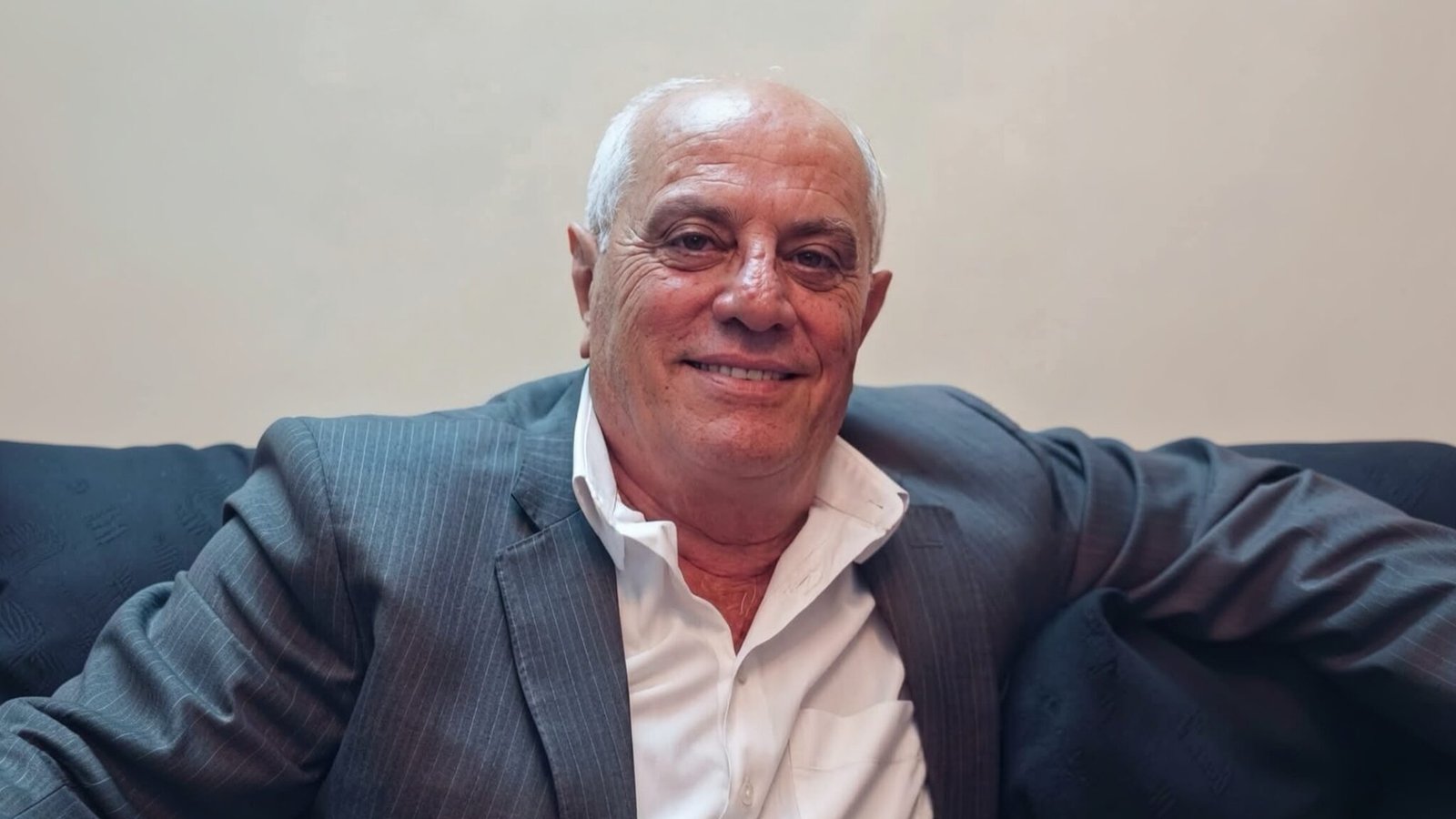
Adel Issa’s detention under a Syrian warrant puts judicial cooperation between Beirut and Damascus to the test, as a Syrian source says Damascus has sought the handover of more than 200 former officers believed to be in Lebanon
[DAMASCUS] The detention by Lebanese authorities of former Syrian Maj. Gen. Adel Issa, who is sought by the Syrian judiciary, has opened a broader debate over the fate of former security and military officials who fled to Lebanon after the fall of Bashar Assad’s government, and whether Beirut is moving toward a new phase of cooperation with the Syrian authorities that could include their arrest and extradition.
A well-informed Syrian source told The Media Line that Syrian authorities had asked Lebanese security agencies several months ago to hand over more than 200 senior security and military officers who fled to Lebanon following the collapse of the Assad government in late 2024.
The reported request has taken on added significance following Issa’s detention. Issa, the former commander of the Syrian army’s 17th Division, is now in Lebanese judicial custody under an arrest warrant issued in absentia by the Syrian judiciary.
It remains unclear whether Issa was among the names Damascus had asked Beirut to hand over. Neither the Lebanese nor Syrian authorities have publicly released a formal list of wanted individuals or disclosed the number of extradition requests currently being handled.
Issa, 67, went to the Syrian Embassy in Beirut on Friday to complete an administrative procedure before it emerged that he was wanted by the Syrian judiciary.
After the Lebanese judiciary was notified, security forces detained him and placed him in Lebanese judicial custody. The Lebanese judiciary said Issa is accused in Syria of murder and crimes against humanity, allegedly committed during his military service.
Lebanon’s public prosecutor at the Court of Cassation, Ahmad Rami al-Hajj, asked his Syrian counterpart to provide Issa’s extradition file and documents related to the accusations against him before reviewing the request and deciding whether he can be handed over to Damascus.
Issa’s detention therefore does not mean that a decision to extradite him has already been made, as the Lebanese judiciary is still awaiting the Syrian file before ruling on the matter.
In response, Issa’s family issued a statement calling on human rights organizations to intervene for his release. The family said he had retired around six years before the fall of the former Syrian government and had been living a regular life in the coastal city of Tartus.
The family added that he had previously testified before a Syrian court in a financial case without facing prosecution and said he left Syria after his home was raided by an unidentified armed group.
According to the family’s account, Issa went to the Syrian Embassy in Beirut to arrange a legal power of attorney. His driver lost contact with him after he entered the building, and it later emerged that he had been taken into Lebanese custody.
Issa is from the Duraykish area of Tartus province and held several senior military positions during the Syrian conflict, most notably commanding the 17th Division in Raqqa, in addition to military responsibilities in Deir ez-Zor and at the Tabqa military air base.
His name has been linked to allegations of violations committed during his military service, but Syrian authorities have not yet made public the details of the judicial file or the evidence supporting the accusations against him.
If the Lebanese proceedings ultimately result in his extradition, his case could become an important test of how Beirut handles other Syrian requests involving former Assad-era officials.
A Lebanese judge directly familiar with the case told The Media Line, speaking on condition of anonymity due to the matter’s sensitivity and because judges are currently not authorized to speak to the media about it, that receiving an extradition request from Damascus does not automatically oblige Lebanon to surrender the wanted person.
The judge explained that the process begins with a formal extradition request submitted by the Syrian Justice Ministry or Public Prosecution to the Lebanese authorities. The request must include the identity of the wanted individual, the crimes attributed to him, the reasons for seeking his extradition, and the relevant arrest warrants and judicial documents.
Once the file is formally received, the Lebanese public prosecutor at the Court of Cassation reviews whether the legal conditions have been met, the judge said. This includes confirming that the alleged crimes occurred on Syrian territory, that the wanted person is a Syrian national, and that the alleged acts harmed Syrian citizens, the Syrian state, or Syrian national security.
The judge said the public prosecutor may question the wanted individual and issue an arrest warrant before referring the file to Lebanon’s justice minister together with a report setting out the prosecutor’s legal assessment of the extradition request.
The final extradition decision, however, is not made by the judiciary alone.
According to the judge, the handover ultimately requires a decree issued by the Lebanese state on the recommendation of the justice minister and signed by the president, prime minister, and justice minister.
The judge said several legal grounds could prevent extradition. These include cases in which the alleged act is not punishable under Lebanese law, where the prescribed penalty does not meet the required legal threshold, or where the person has already received a final judgment in Lebanon for the same offenses.
Extradition may also be refused if the request is found to be politically motivated or if the penalties the person could face after extradition raise concerns under Lebanon’s legal system, he said.
The judge noted that the possibility of the death penalty in Syria may become a point of legal debate in Lebanon. However, in Issa’s case, he said that, in his assessment, extradition remains likely if the Syrian file meets the required conditions, particularly in light of the current climate in relations between Beirut and Damascus.
Lebanese legal expert Amine Bashir told The Media Line that Issa’s case is currently governed by Lebanese criminal procedure and that, at this stage, the Lebanese judiciary is not deciding whether Issa actually committed the crimes attributed to him.
Rather, Bashir said, it is examining the identity of the wanted person, the nature of the alleged crimes, the legality of the procedures, and whether the extradition request is consistent with Lebanese law and Lebanon’s obligations regarding human rights and public freedoms.
“If the Lebanese judiciary determines that there are no legal obstacles, and that the arrest warrant does not conflict with human rights standards and public freedoms, the wanted person can then be handed over to the Syrian authorities to continue his trial,” Bashir said.
But the reported Syrian request involving more than 200 Syrian officers raises a more complicated legal question.
Criminal responsibility is personal, so there cannot be a collective request to extradite 200 officers or more
“Criminal responsibility is personal, so there cannot be a collective request to extradite 200 officers or more,” Bashir said. “Each officer must have an independent file, and the Lebanese judiciary must know what crimes are attributed to him. The arrest warrant and evidence related to each individual case must be presented separately.”
The Lebanese judge who spoke to The Media Line made a similar point, saying that the presence of more than 200 names within one broader political or security file does not allow the authorities to issue a blanket decision handing them all over.
Each individual, the judge said, requires a separate warrant, file, and body of evidence, and must go through the same legal stages as Issa’s case.
Thus, even if Syrian authorities have asked for the extradition of more than 200 former officers, handling those names through the Lebanese judiciary would require a case-by-case review, beginning with the nature of the accusations and ending with the final extradition decision.
Bashir said the issue becomes more complicated when the focus shifts from Issa, who is already in judicial custody, to other former Syrian officers believed to be in Lebanon.
“In Adel Issa’s case, the process is primarily legal,” he said. “But when we talk about the other Syrian officers in Lebanon, we inevitably enter the political dimension.”
When we talk about the other Syrian officers in Lebanon, we inevitably enter the political dimension
Bashir said the failure to detain some officers who have reportedly been present in Lebanon may, in his view, be linked either to the absence of a political decision to pursue them or to difficulties faced by state institutions in reaching their locations.
He also linked cooperation with Syria’s new authorities to political changes inside Lebanon, arguing that a decline in Hezbollah’s influence within state institutions gives the Lebanese government greater room to expand security and judicial cooperation with Damascus.
Bashir’s political analysis remains speculative, as there has been no official Lebanese statement linking the handling of former Syrian officers’ cases to the positions of domestic political forces.
Issa’s detention comes as Beirut and Damascus seek to expand security and judicial cooperation.
On Aug. 5, just days before Issa’s detention, a delegation from Syria’s Interior Ministry visited Beirut, headed by Assistant Interior Minister for Security Affairs Brig. Gen. Mulham al-Shantout, and met Lebanese Interior and Municipalities Minister Ahmad al-Hajjar.
The Syrian Interior Ministry said the meeting addressed issues of common concern and ways to strengthen security cooperation between the two countries.
Issa’s case and the Syrian request described by the source raise questions about the next phase, including whether Damascus has already provided Beirut with separate judicial files for the individuals it wants extradited, how many of those individuals Lebanese authorities have been able to locate, and whether proceedings have begun in cases other than Issa’s.
If the request involving more than 200 officers moves from the level of a broad security demand to individual judicial extradition files, Lebanese institutions could face a lengthy and legally and politically complex process, as each case would have to be reviewed separately before any handover decision is made.
If Issa’s case progresses from detention to the first extradition of a prominent Assad-era official to Syria’s new authorities, it could set a precedent for how Lebanon handles a much broader file: hundreds of former officers and officials whom Damascus says are in Lebanon and whom it wants returned to face the Syrian judiciary.