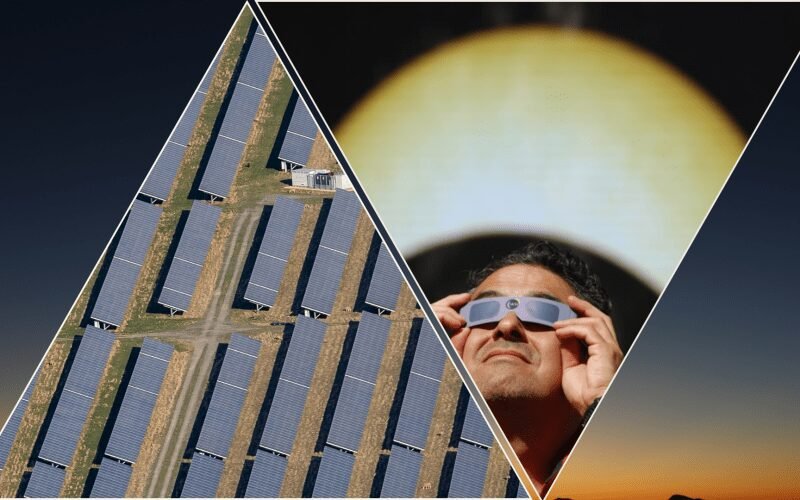
Europe’s electricity network operators have prepared backup generation and grid-balancing measures to compensate for an expected drop in solar power output during Wednesday’s solar eclipse, operators said ahead of the event.
The eclipse is expected to occur between 1715 GMT and 1930 GMT on Wednesday, when the moon will partially block the sun and temporarily reduce electricity generation from solar panels across Europe.
Data from the European Network of Transmission System Operators for Electricity (ENTSO-E) and Spanish grid operator Red Eléctrica indicate that solar generation across Europe could fall by as much as 9.7 gigawatts, with about 5 GW of the reduction expected in Spain and Portugal.
ENTSO-E told Reuters that grid operators in affected countries, including Germany, France, Ireland and Northern Ireland, have measures in place to maintain electricity supplies during the eclipse.
Those measures include temporarily increasing output from gas- and coal-fired power plants and adjusting the automatic Frequency Restoration Reserve, a system designed to rapidly change power production in order to keep electricity frequency stable across the network.
Solar power accounts for roughly 13% of the European Union’s total electricity generation and has become increasingly important during the summer months, when electricity demand rises because of air-conditioning use, particularly in southern Europe.
Europe’s power system has already faced additional pressure this summer from heatwaves and low river levels, conditions that have recently forced nuclear power plant shutdowns in Romania and Hungary.
Several grid operators have been preparing for the eclipse for more than a year by modelling how changing light and shadow conditions could affect solar generation.
Operators in France, Spain and Britain told Reuters they do not expect disruptions, partly because the eclipse will occur in the evening, when solar generation is already lower than during midday hours.
In France, for example, the eclipse is expected to reduce solar output by up to 1.8 GW, equivalent to about 6% of the country’s 30-GW solar capacity.
Source: Reuters