This story is published through the Indigenous News Alliance.
When the chief of the Okanagan Indian Band looked down on his community from a helicopter last week, much of what he had known all his life was gone.
Homes had burned. Photographs, memorabilia, and Salish baskets had disappeared with them. More than 30 band members had lost their homes, naspəpʕásəs Dan Wilson said, along with around 200 homes and other structures belonging to non-band members.
“Our loss is measured in the family histories that have been lost — especially the Elders who have lost their homes,” he said.
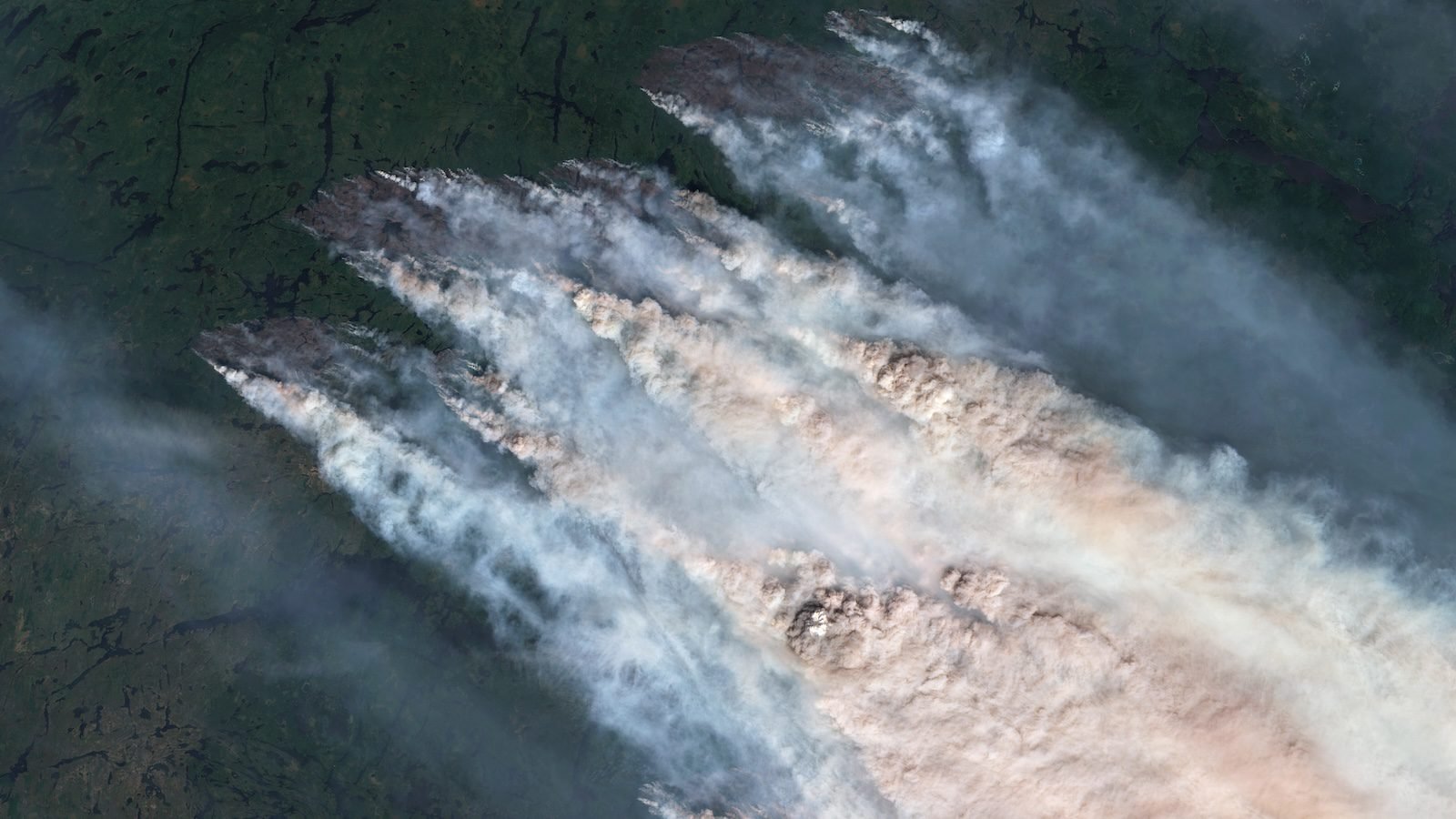
The destruction left by the Bradley Creek wildfire at nk̓maplqs (the head of Okanagan Lake) comes amid a wildfire season that has repeatedly forced Indigenous peoples across Canada from their homes. As of Tuesday, 601 wildfires were burning across the country, including 113 classified as out of control and another 371 that remained out of control but were being monitored rather than actively suppressed.
Those numbers have translated into a summer of evacuations, displacement, and, in some communities, devastating losses for First Nations. Wildfires have affected at least 81 First Nations and forced 9,131 people from their communities since April 1; 2,524 people remained evacuated as of Tuesday. As fires have threatened communities from British Columbia to Ontario, Indigenous leaders have raised concerns about inadequate firefighting equipment, delays in emergency assistance, and the information used to make evacuation decisions.
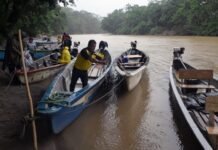
In Ontario, a fast-moving fire devastated Namaygoosisagagun First Nation in July as residents fled by boat. At least 12 First Nations in the province have been fully or partially evacuated because of wildfires this summer, according to Chiefs of Ontario. The organization is demanding an independent public inquiry into what Ontario Regional Chief Abram Benedict called a “catastrophic and systemic failure” in the response.
And last week, leaders of Kiashke Zaaging Anishinaabek were still fighting an Ontario government decision to withdraw wildfire implementation and evacuation orders while massive fires remained out of control nearby.
For the Okanagan Indian Band, the immediate danger has eased. The wildfire, which started July 31 on reserve lands near Vernon, British Columbia, had burned about 6,550 acres as of Monday. It was classified as being held over the weekend, meaning it was expected to remain within its existing boundaries under prevailing and forecast conditions. Some evacuation orders have since been rescinded or downgraded.
Although the community faces a long recovery, it “is getting stronger every day,” Wilson said last week. “We’re holding up. We’re very resilient. We have a long history — we’ve been here for 10,000 years.”
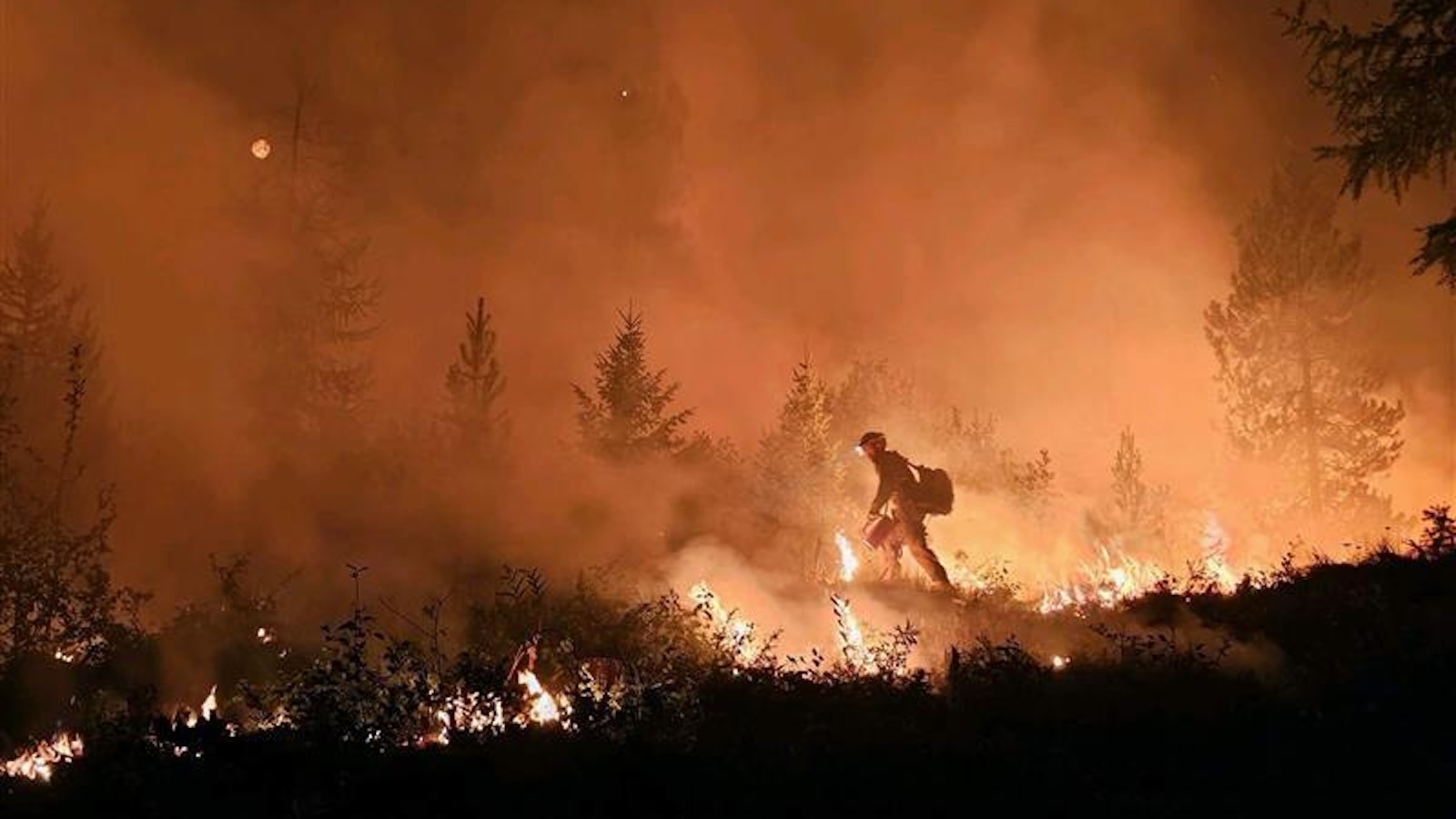
Wilson praised the band’s firefighters, who were first on the scene and worked alongside provincial wildfire crews. “They went above and beyond. I can’t say enough,” he said.
Wilson said the band’s fire department, which consists of around 30 trained firefighters, was equipped only with a fire truck designed to tackle structural fires. “If we had a proper wildland firefighting truck that’s able to access rough terrain … I’m told that if we had that equipment, our first responders would’ve been able to put that fire out immediately,” he said.
He said that concern was relayed to Mandy Gull-Masty, the federal minister of Indigenous Services.
Wilson noted that the one bright spot from the helicopter tour was seeing the Komasket powwow arbour grounds — as well as the nearby daycare and Nk̓maplqs Iʔ Snm̓am̓ay̓aʔtn Iʔ K̓l Sqilxʷtət Cultural Immersion School — unscathed by the fire.
The disaster comes five years after the Whiterock Lake wildfire destroyed 10 homes belonging to Okanagan Indian Band members and displaced the community for weeks.
For communities facing this summer’s fires, the challenges have extended beyond escaping the flames. The devastation of Namaygoosisagagun, also known as Collins First Nation, has raised questions about whether the remote community will receive federal recovery and rebuilding assistance. Although its residents are recognized as First Nations people under the Indian Act, Namaygoosisagagun is not recognized as a First Nation. A lawyer representing the community wrote to Gull-Masty that denying it the emergency and rebuilding assistance available to recognized First Nations could threaten its ability to rebuild.
Ontario Regional Chief Abram Benedict also criticized bureaucratic obstacles First Nations encountered while trying to access emergency assistance. On July 30, Chiefs of Ontario called for an independent public inquiry into the province’s response, saying at least 12 First Nations had been fully or partially evacuated during the wildfire season.
“There has been a catastrophic and systemic failure at nearly every level and at nearly every step of this process,” Benedict said in a statement. “We need to know how and why this happened. But most importantly, we need to learn from it so it never happens again.”
Communication has emerged as another concern. When an out-of-control wildfire threatened Xeni Gwet’in First Nation in British Columbia in April, authorities did not provide emergency alerts in Tŝilhqot’in — the only language spoken by many Elders in the community — leaving the Nation’s own forestry crew to alert them directly.
Sara Wilson, a communications researcher at Simon Fraser University, has described such shortcomings as part of a broader “crisis communication gap,” pointing to language barriers, underfunding, and the exclusion of Indigenous communities from decision-making during emergencies.
Those concerns extend beyond how emergency information is communicated to questions about who decides when a First Nation is safe. That question remained at the center of a dispute last week at Kiashke Zaaging Anishinaabek, also known as Gull Bay First Nation, in northwestern Ontario. The Nation’s leaders objected to the government decision to withdraw wildfire implementation and evacuation orders around the community. “Our members are still at risk and our infrastructure is at risk,” Chief Wilfred King told CBC Thunder Bay.
Several large fires remained near the community, and King said one of the community’s greatest concerns was that one of them could block its only road out, leaving residents trying to flee across Lake Nipigon. “The only escape would be jumping on boats and crossing Lake Nipigon, and that’s not an alternative,” he said.
King said the community was also concerned about delays in receiving information about changing fire conditions. Before residents return, he said, the Nation also must ensure its water treatment and sewage systems are functioning safely.
Ontario’s Ministry of Natural Resources told CBC that changes to evacuation orders would be made only when fires no longer posed a risk, based on advice from fire behavior experts. But King said the provincial order should have remained in place until the community was confident it was safe. He told CBC that Indigenous Services Canada supported the Nation’s decision to maintain its own evacuation order.
At Okanagan Indian Band, support came from other First Nations and Indigenous leaders. Penticton Indian Band and Westbank First Nation opened their communities to evacuees, while leaders from across the syilx Okanagan Nation Alliance reached out.
At an emotional community meeting in Vernon, drummers Bruce Manuel and his sister Trish Manuel, sent by Upper Nicola Band Chief Dan Manuel, performed a closing drum song. Wilson said the response was “really bolstering our spirits here.”
“We say our prayers,” he said. “We have a strong faith in kʷuləncútn, the Creator.”
This story was originally published by IndigiNews and updated with additional information by Grist.