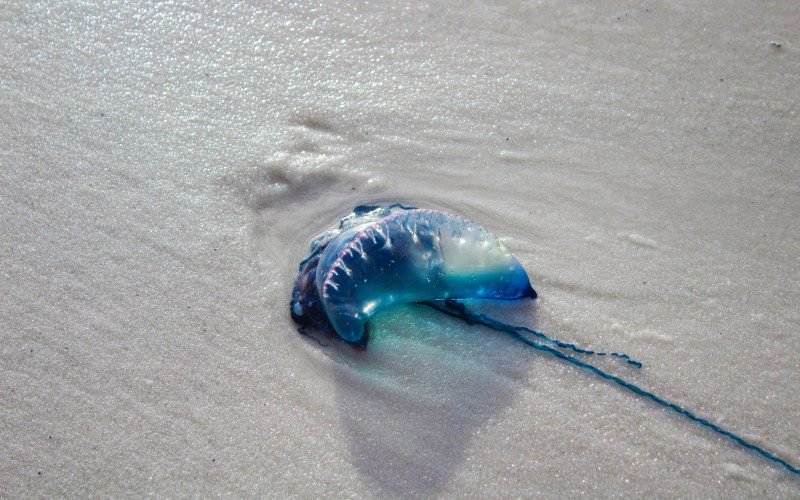
Spanish authorities have issued warnings after an increase in sightings of Portuguese man o’ war along parts of the country’s coastline, prompting temporary beach closures and renewed public health advice for swimmers.
The Portuguese man o’ war, often mistaken for a jellyfish, is a colonial marine organism whose tentacles can deliver painful stings and remain hazardous even after the animal has washed ashore.
Local officials have reported sightings in several coastal areas during the summer season. In some cases, beaches were temporarily closed as a precaution while lifeguards and emergency personnel monitored the affected waters.
Health authorities advised beachgoers not to touch the organisms, whether they are floating in the water or stranded on the sand. Contact with the tentacles can cause intense pain, redness, swelling and, in some cases, more serious reactions requiring medical attention.
If stung, experts recommend leaving the water immediately and seeking assistance from lifeguards or medical personnel. The affected area should be rinsed with seawater rather than fresh water, which can trigger additional venom release. Visible tentacle fragments should be removed carefully, preferably with tweezers or another object rather than bare hands.
Authorities also advised against rubbing the affected area and said medical care should be sought if symptoms become severe, spread beyond the sting site, or are accompanied by difficulty breathing, dizziness or other signs of a serious allergic reaction.
Marine specialists say Portuguese man o’ war sightings can increase during periods of favorable winds, currents and warm-water conditions that carry the organisms toward coastal areas. Officials are continuing to monitor conditions and update beach safety information as necessary.
Spain’s beach warning system relies heavily on local lifeguard services and municipal authorities, who can temporarily restrict access to affected areas when potentially dangerous marine life is detected.