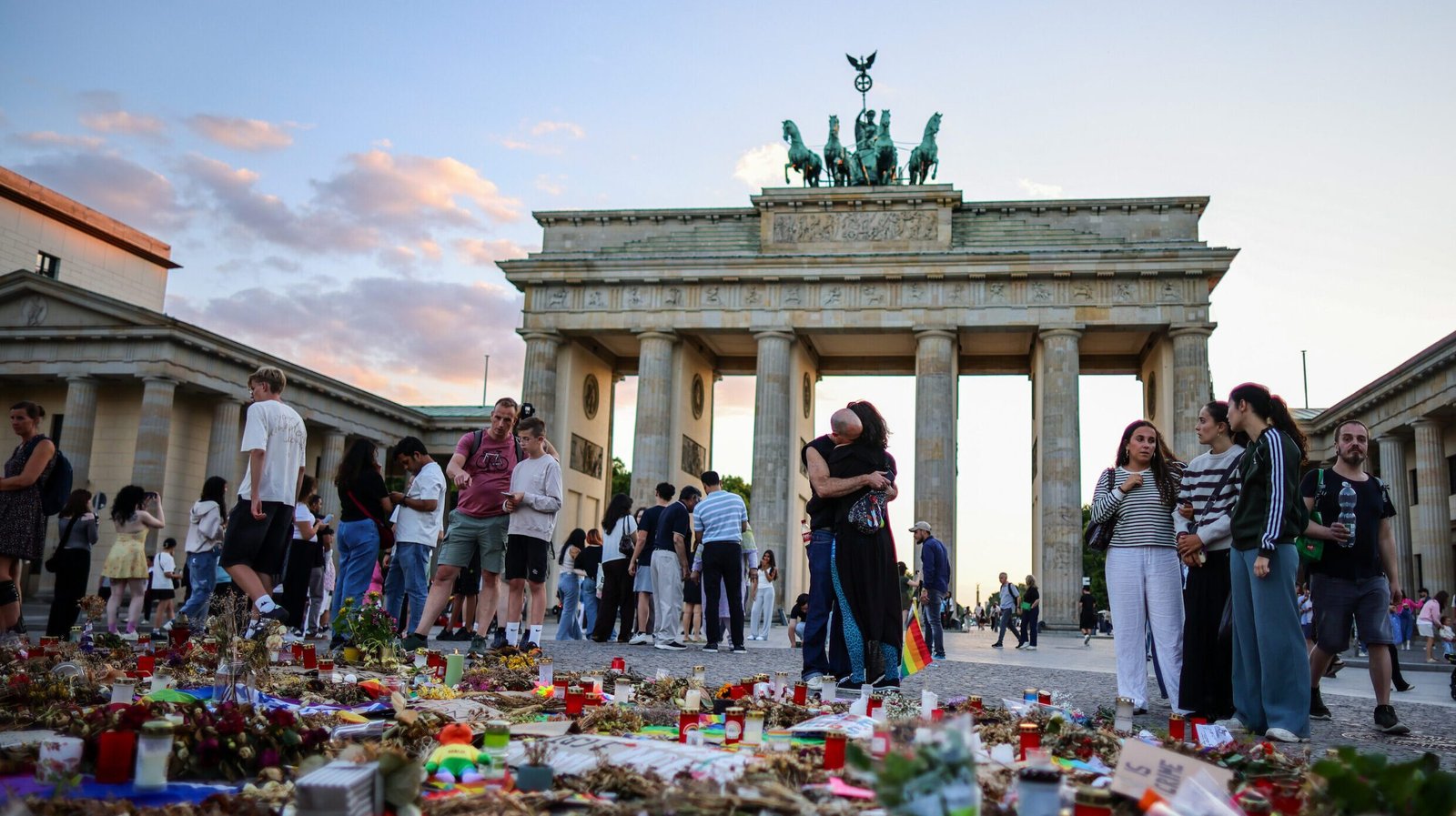
The deadly vehicle attack at a parade in Berlin last week has renewed debate over whether European authorities are adapting quickly enough to an evolving terrorist threat increasingly shaped by online radicalization, lone-actor violence, and overlapping security challenges.
In Berlin Pride Attack Exposes Europe’s Changing Terrorism Threat, The Media Line’s Giorgia Valente examines the difficulty of identifying when extremist online activity crosses the line into operational intent. Investigators say 21-year-old Abdul Ballout drove a van into a crowd before continuing on foot with a machete, killing a Polish woman and injuring at least 29 others. German prosecutors later said they recovered a video in which a masked individual believed to be Ballout pledged allegiance to the Islamic State (ISIS).
Security experts argue the case reflects a broader shift away from centrally directed terrorist operations toward self-radicalized individuals inspired by online propaganda. Ballout had previously been convicted of offenses related to ISIS propaganda and preparing a serious act of violence but was released under judicial supervision while prosecutors sought a tougher sentence. Experts say the case illustrates the challenge of determining how much weight courts and investigators should place on sustained online extremist activity when no specific attack plan has yet emerged.
The report also notes that Europe now faces multiple security pressures simultaneously. While the Berlin attack has not been linked to Iran, Europol has separately warned that tensions involving Iran, Israel and the United States could increase risks from Iran-linked networks alongside persistent ISIS-inspired extremism, forcing European security agencies to confront several distinct threat environments at once.