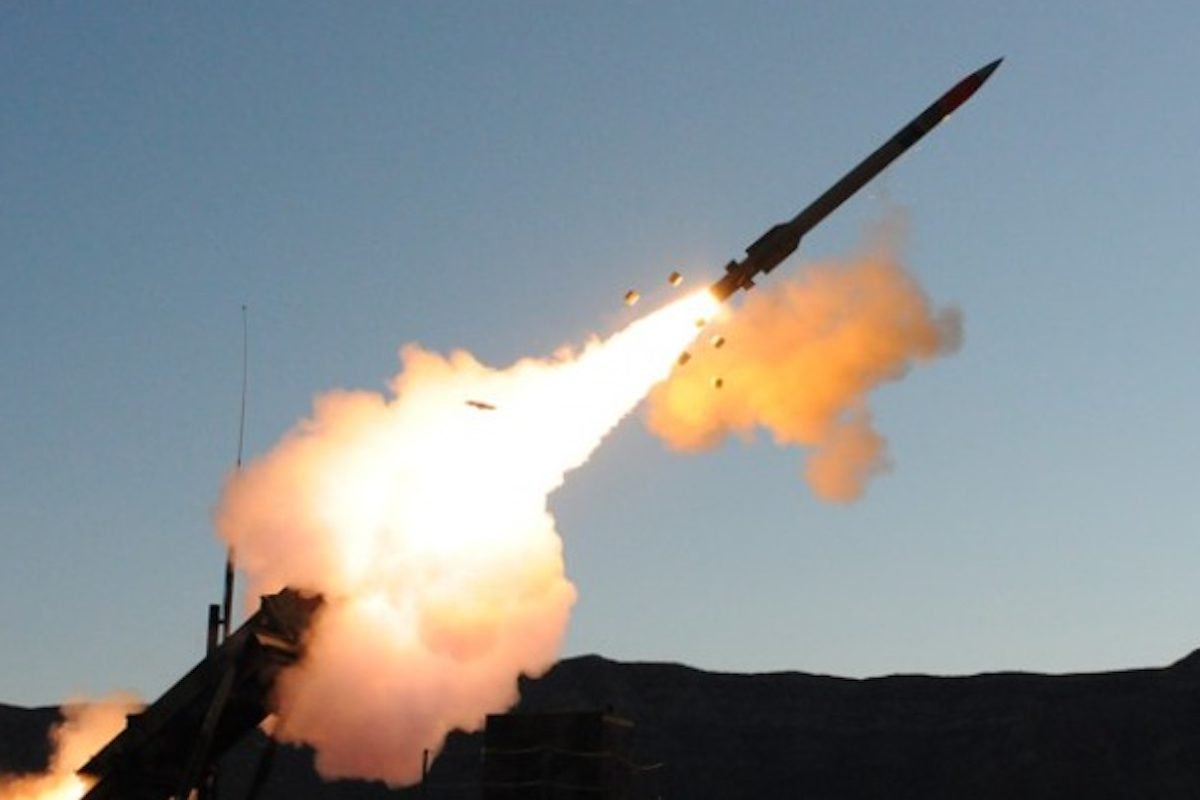
The US’s multibillion-dollar push to expand interceptor missile production could begin rebuilding depleted stocks, but long manufacturing lead times, industrial bottlenecks and cost imbalances mean the benefits will depend on how quickly new capacity translates into deployable missiles.
The US Department of Defense (DoD) signed framework agreements worth over US$3 billion with defense contractors Lockheed Martin and Northrop Grumman to expand production of Patriot and Terminal High Altitude Area Defense (THAAD) missile interceptor components, multiple media outlets reported.
The initiative aims to triple manufacturing capacity for Patriot Advanced Capability-3 (PAC-3) interceptors and quadruple output for THAAD systems, aligning with a long-term US DoD objective to procure nearly 14,000 interceptors.
The action addresses severe stockpile depletion caused by high operational tempo in conflicts across Ukraine and Iran, where estimates indicate the US military has expended up to two-thirds of its Patriot inventory and roughly half of its THAAD reserves.
To accelerate manufacturing, the US DoD is engaging directly with component suppliers rather than relying solely on prime contractors, establishing a secondary source for PAC-3 solid rocket motors, expanding ignition safety device production, and increasing output of THAAD mid-body shells, muzzle covers, and rail car assemblies.
By offering sustained demand signals and funding workforce and facility modernization, officials intend to reinforce supply chain resilience, correct lopsided economic expenditure—such as firing $4 million interceptors against $50,000 attack drones—and restore critical US air defense stockpiles.
The buildup’s real test, however, is whether US industry can replenish advanced interceptors fast enough to meet mounting demands across multiple theaters. The depletion of US interceptor stocks may also be driving renewed procurement of older, less capable models.
The War Zone (TWZ) reported in July 2026 that the US Army awarded Raytheon a $441.6 million contract modification to procure new-production PAC-2 Guidance Enhanced Missile-Tactical (GEM-T) Patriot interceptors, marking the military’s first domestic PAC-2 order in over three decades.
However, these older model interceptors may not be as effective as newer ones. For instance, the Kyiv Independent reported in May 2025 that PAC-2 missiles sent by Germany under US authorization to replenish depleted Ukrainian interceptor stocks are less effective against Russian ballistic missiles than the newer PAC-3 variant, citing an anonymous European diplomat.
A senior Ukrainian intelligence official, cited by the Kyiv Independent, speaking anonymously, said that even the PAC-3 cannot intercept Russia’s Oreshnik intermediate-range ballistic missile (IRBM).
According to the report, the PAC-3s are designed with “hit-to-kill” capability, meaning they destroy incoming missiles through direct physical collision rather than using an explosive warhead. It adds that PAC-3 interceptors are smaller, lighter, and more maneuverable, and a standard Patriot launcher can hold 16 PAC-3 interceptors, compared to just four PAC-2 rounds.
Declining interception rates over Ukraine illustrate how depleted stocks, larger salvos and increasingly sophisticated missiles are straining existing defenses. Benjamin Jensen and Yasir Atalan note in a July 2026 Center for Strategic and International Studies (CSIS) report that Ukraine’s interception rate against Russian ballistic missiles fell to just 10.6% in early 2026.
Jensen and Atalan note that despite Ukraine maintaining an 85% interception rate against one-way attack drones such as the Shahed, Russian ballistic missile salvos increased by 700% between 2023 and 2025, while Ukrainian interception success dropped by 36% in the same period. They warn that Russia may be poised to launch 840 ballistic missiles against Ukraine in 2026, leaving hundreds of targets vulnerable.
The situation may be similarly precarious in the Middle East, with the Wall Street Journal (WSJ) reporting in July 2026 that US President Donald Trump paused a planned two-week US air campaign against Iran to pursue diplomatic negotiations over the Strait of Hormuz and address dwindling air defense inventories, according to US officials.
According to WSJ, White House discussions highlighted severe stockpile depletion, with estimates indicating that over 1,500 Patriot interceptors have been expended, leaving fewer than 1,000 in US reserves.
The report cites General Dan Caine, US Joint Chiefs of Staff Chairman, who warned that the shortage increases operational risk, though Trump publicly denied munitions deficits. Beyond the Gulf states taking on increased risk, the threat may be felt even more acutely in Israel.
This month, The Telegraph reported that a leaked memo from General Alexus Grynkewich, US European Command (EUCOM) Commander, warned that the US risks being unable to defend Israel against Iranian missile attacks due to dwindling interceptor stockpiles and naval resource constraints.
Similar to Ukraine, Israel may be facing declining interception rates against Iranian drone and missile threats. Citing an anonymous Israeli intelligence official, TRT World reported this month that Israel’s air defense effectiveness against Iranian missile strikes fell sharply from nearly 90% to 65% over 24 hours.
The report highlights mounting strain on Israeli air defenses, driven by Iran deploying faster, high-precision projectiles — including multi-warhead missiles and heavy warheads carrying over a ton of explosives — that cut Israeli early warning times from ten minutes to six. It also adds that sustained Iranian retaliatory salvos challenge interception geometry and severely deplete critical interceptor stockpiles.
Beyond Eastern Europe and the Middle East, shortages of US interceptors could also impact the Pacific region. David Axe points out in a March 2026 article for The Strategist that China poses a much more significant missile threat than Iran.
He emphasizes that interceptors like THAAD and the SM-6 are among the best, and sometimes the only, defenses available against China’s advanced ballistic missiles.
Axe notes that before Operation Epic Fury, the US already had too few of its best interceptors to defend against a determined Chinese attack; now there are even fewer. He warns that Chinese leaders may attempt to seize Taiwan by force during the three- to four-year US replenishment period, when the gap between China’s offensive missile arsenal and US defensive interceptor stocks could be at its greatest.
But expanding US interceptor production will require far more than announcing higher output targets. Looking at the challenges in scaling up Patriot interceptor production, Macdonald Amoah and other authors mention in a May 2026 Foreign Policy Research Institute (FPRI) report that PAC-3 Missile Segment Enhancement (MSE) interceptors require long lead times — 24 months for missile assembly and 30 months for solid rocket motor curing — delaying emergency contract deliveries by years.
Amoah and others add that production throughput is further constrained by single-point sub-tier choke points, including Boeing’s solitary seeker plant in Huntsville and limited rocket motor production at L3Harris Aerojet Rocketdyne.
They also point out that erratic purchasing demand and complex supplier qualification processes have discouraged long-term capital investments in specialized tooling and workforce expansion, leaving manufacturers unable to scale assembly rapidly.
Unless the US can resolve its industrial bottlenecks faster than adversaries expand their missile arsenals, the coming replenishment gap will increasingly force it to ration air defense among Ukraine, Israel and the Indo-Pacific — turning interceptor scarcity into a strategic constraint on when and where it can intervene.