就让岁月开成一朵花,
等一场春风温柔抵达,
带着知足上路,
带着晚霞回家,
爱在时光中轻轻发芽。
– 吴忧
And so it begins.
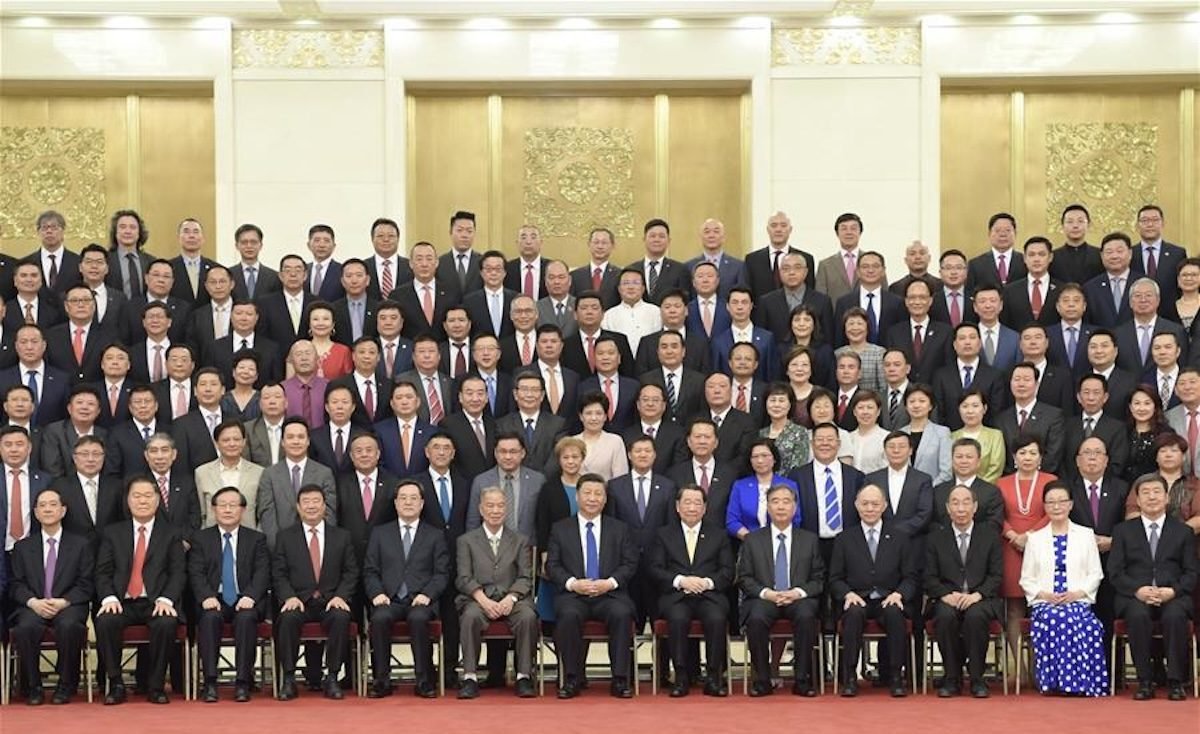
President Xi Jinping of China has summoned overseas Chinese to pool strengths and contribute to the rejuvenation of the Chinese nation. This is not new. The People’s Republic of China has frequently called on the 60 million-strong Chinese diaspora to help the motherland, with periodic pronouncements seeking cultural ties, technical expertise and commercial opportunities all couched in aiding the rejuvenation of the Chinese nation.
Most famously, 600,000 overseas Chinese heeded the call and returned from Southeast Asia after the People’s Republic was established in 1949. The grandfather of yours truly was among them, founding schools in Fujian province.
At the National Committee of the People’s Political Consultative Conference (NCPPCC) meeting in Beijing on July 27 and 28, a session on overseas Chinese affairs was held for the first time since party and state institutions were overhauled in 2018 – a point that was specifically highlighted by the pronouncement.
The pronouncement, released on July 29, includes one stunning element: President Xi Jinping has called on overseas Chinese “to leverage their unique strengths in support of the cause of national reunification.”
“National reunification,” said the Global Times (a nationalist newspaper). I had to reread it a couple times. Was it a typo? Surely they meant “national rejuvenation,” right? Who’s against rejuvenation?
In the official Chinese language announcement on the NCPPCC website, President Xi urged “sons and daughters of China at home and abroad to unite and strive (海内外中华儿女团结奋斗)” to achieve a “united and unified Chinese nation, the ‘root’ of Chinese people at home and abroad.”
President Xi Jinping of China has indeed requested the Chinese diaspora to lend our unique strengths towards national reunification. Overseas Chinese will do rejuvenation all day long, but, c’mon, reunification? What is President Xi asking, exactly?
National reunification with Taiwan under the People’s Republic of China is politically anathema in the West, especially the US – ignorantly so, but still. Many, if not most, long established overseas Chinese in America would just as well kick this can down the road for as many decades as possible, hoping events do not outrun their IBGYBG strategy (I’ll be gone, you’ll be gone).
These overseas Chinese have it good in America – respectable careers, spacious homes, children in elite schools, citizenship and excellent fishing. This is the American dream as promised, is it not?
Of late, however, we all sense things have gone awry. This, of course, is not a concern unique to overseas Chinese. It is a common lament in America. As public discourse is captured by deranged culture wars, politics has become gratuitously divisive and the media have become a free-for-all of disinformation and low-wattage slop.
Many overseas China wonder, often secretly, whether they (or their parents) made the right decision decades ago after jumping for joy on receiving US graduate school acceptances. They were at the top of their TPFSZUN (Tsinghua, Peking, Fudan, Shanghai Jiaotong, Zhejiang, USTC and Nanjing) class in physics, chemistry and engineering. A PhD program in America was the obvious next step, one which nobody turned down.
And now they can’t help but wonder. Many are professors or middle managers in the research departments of Fortune 500 companies. It’s fine, they tell themselves. They achieved the American dream. It’s all for the next generation, anyway, and the next generation has clocked +1550 on the SATs, plays the oboe, started a bogus charity, took up a ridiculous sport like squash and is on track to the Ivy League.
Some of them, at least. A few crashed out spectacularly after getting sucked in by some bizarro American subculture – skater, stoner, hip-hop, goth, non-binary. Of course, these are the odd cases. Much more common is the +1550 SAT, cellist, bogus charity founder and fencing medalist who had to settle for Michigan, Illinois or UW while quietly resenting the legacies and underrepresented minorities admitted despite inferior credentials to better schools.
Our hypothetical overseas Chinese material science professor at the University of Rochester cannot help but wonder. On his recent visit to China, the good professor’s rural roommate, whom he had once lent a modest sum of money to help cover a family emergency, now put him up in a swanky hotel suite well outside the professor’s normal budget. The once impoverished classmate also had his driver chauffer the professor around in a NIO ET9 – the most blinged out car our professor had ever sat in.
A dozen classmates came to the reunion banquet, many high-speed railing from distant cities, each eager to toast the top material science graduate of their University of Science and Technology China (USTC) class. These banquets were much more tolerable fifteen years ago when an American professorship meant something. Now, a roommate ran a massive research department at BYD and party member classmates had been promoted to significant central government positions. Our professor’s two post-doc four PhD student research team suddenly felt like the minor leagues.
And these guys were not even A-players. They were most definitely the B-team. Benchwarmers in university days. The classmates not bright enough to go overseas for graduate school. China’s dramatic rise over the last three decades was carried largely on the shoulders of the B-team as the A-players took their talents abroad – where they often stagnated in the research departments of General Motors or as associate professors in middling universities.
The children of many classmates appeared to be doing exceptionally well – many were attending TPFSZUN while one even made it to the Ivy League (hey, Cornell counts). Our professor was not going to explain how scandalous it was that his salutatorian 1570 SAT son was now attending the University of Illinois (computer science, which is a very big deal for an Asian male). He definitely did bring up the even bigger scandal of his daughter, still in junior high school, who had multiple piercings and a shaved head and who insisted she was non-binary.
Where did it all go wrong? Our professor loved America. Or parts of it. In the beginning. Graduate school was everything he had imagined. Professors were collegial, patient and supportive. Lab facilities were state of the art. The research was cutting edge. Upstate New York’s air was clean and energizing. The autumn foliage was ravishing. Fishing on Lake Ontario was a revelation. Our professor loved bringing visitors from China out on his 25-foot boat to troll for summer salmon – it blew every Chinese man’s mind. In America, middle class people can do such things?
But the decades passed. The Iraq war was a fiasco. The global financial crisis was an embarrassment. Obama turned out to be a historic disappointment. How did that freak Donald Trump become president? How was Joe Biden even worse? How was anyone expected to take last-minute Kamala Harris seriously? And now America is stuck with Donald Trump again? Let’s not even get into Jeffrey Epstein, the war in Iran and the stench of corruption.
America is becoming increasingly unhinged and it is hitting our professor close to home. Scary stories had been circulating through the overseas Chinese academic grapevine. It was just stories until two FBI agents dropped by an old friend’s office unannounced and questioned him for hours about his recent trip to China – whom he met, what materials he left behind, what compensation was given and what he talked about at his Harbin Institute of Technology guest lecture.
To be on the safe side, our professor, long since an American citizen, refrained from seeking funding from the Department of Defense and the Department of Energy and refused invitations from Chinese universities. This was infuriating. Just a few years ago, academic exchanges with China were no big deal if not actively encouraged.
Less fortunate academics who ran afoul of the new rules had their careers destroyed and were bankrupted by legal fees, before being exonerated for lack of evidence. Some, like Harvard chemistry professor Charles Lieber, served jail time and house arrest for bogus charges like making false statements and failure to report foreign income.
Our professor kept abreast of these cases through the internet, contributed to legal defense funds and worked up a steamy head of indignation at not only the injustice but the ingratitude of it all – who were these meathead FBI agents who couldn’t tell the difference between a mundane guest lecture and offering up America’s nuclear secrets to the Ministry of State Security? He also thanked his lucky stars – there but for being overlooked by overzealous rednecked FBI agents would be I.
This new Cold War was leaving a sour McCarthyish taste in our professor’s mouth. He had been a loyal American. He had believed in democracy, freedom and liberal values. And now, he had to listen to pebble-brained politicians attribute China’s economic performance to Uyghur slave labor and IP theft. Who are these imbeciles? Most of his children’s schoolmates can barely do eighth grade math.
Classmates on raucous WeChat groups who bandied about anti-American conspiracy theories suddenly began to make a lot of sense. “America has no bottom line,” they had said for years, “No act of depravity is geopolitically off limits to Americans.”
“No, no, you don’t understand,” our professor had pushed back in the past. What is there to say today? Nobody will believe any defense of America. Our professor is having a hard time convincing himself.
These days, our professor muted notifications on the WeChat groups dominated by aggressive anti-American classmates. More off-putting than nationalist classmates endlessly posting anti-America videos are MAGA Chinese and their confused defend-America-at-all-costs agenda. What is wrong with these people? Who gave these knuckleheads PhDs? Many had long ago washed out of academic research and now worked as code monkeys or in completely unrelated industries like real estate.
Our professor knew full well why they are like that. They are stuck, just as he is. Twenty-five years ago, they missed the window of opportunity after grad school to participate in China’s miraculous rise. Their scientific careers had not panned out as they had once imagined. Universities in China are not rolling out the red carpet to invite them back as exceptional overseas talent. They hung tight to their long ago decision because the possibility of it being a mistake is too painful to contemplate. Besides, their children are hopelessly American and wouldn’t survive two minutes in the gaokao curriculum. Our professor winced as he thought of his non-binary daughter in goth makeup.
Yes, MAGA Chinese are American through and through – no better and no worse than the rednecks who made Trump president (twice) and who believed every bit of media slander about China. Overseas Chinese come in all shapes and sizes. MAGA Chinese were transparently shifting resentment for their personal misfortunes onto Xi Jinping and the Communist Party as if China’s economic success were somehow responsible for their American failure.
Our professor, however, is determined to be rational. He is too smart to let pride and personal circumstances dictate his judgement. MAGA Chinese are wackos. Almost as crazy as Falun Gong cultists. Why are so many overseas Chinese so deranged? Because that’s how China gets rid of its crazies, he joked to himself. He was only half joking.
Every Chinese, from street sweeper to Politburo member, has a deeply (or not) buried ambition to be emperor. This is a vestige of Chinese history, which is replete with commoners who – through talent, charisma, cunning and ambition – overturned centuries-old orders, founded dynasties and became emperor.
The frustration of this ambition sets off dark impulses in the psychologically unstable. This can be highly destabilizing, like a penchant for triads and secret societies, or a minor nuisance, like troublemaking village idiots (e.g., Lu Xun’s Ah Q). Modern China appears to have found a solution to this millennia-old problem. These troublemakers are now shown the door and encouraged to indulge their dark impulses abroad.
In 1964, Richard Hofstadler wrote “The Paranoid Style of American politics.” Hofstadler explored the distinct emotional style of American politics characterized by suspicion, heated exaggeration and conspiratorial fantasy. America is fertile soil for China’s wackos.
Of course, none of this is healthy and all of it far from the American ideal – although, let’s not kid ourselves, it is clearly America’s current reality if not the norm. The paranoid style is in charge of American politics at the foothills of a Cold War with China and in the midst of a hot war in with Iran.
And now, China’s President Xi Jinping has called upon the diaspora to help “unite and unify the Chinese nation.” Nothing specific was asked and no timeline was given. But with Taiwan under the auspices of the PRC, America’s military position in Asia becomes untenable. With America as deranged as it is, a united and unified China could be the best thing for everyone involved – especially America itself, which is in Asia by not of Asia (see here) whose presence distorts societies on both sides of the Pacific.
America is, after all, a nation stupid enough to trap itself in another unwinnable Middle East war. The problem with hegemonic empires with forward-deployed militaries is that, over time, the temptation for mischief is irresistible. Term-limited Presidents are presented with a panoply of levers that make things go boom, each flashing “Pull me! Pull me! Pull me!”
This is everything the founding fathers from George Washington to John Qunicy Adams had hoped to avoid, warning the young nation against getting caught in foreign entanglements and searching for monsters to destroy.
Our professor understands much of this intuitively. He has observed “heritage Americans” up close and knows full well that they are constitutionally incapable of geopolitical empathy, totally lacking in theory of mind. What pea-brained halfwits manage to convince themselves that Iranians can be bombed into supporting American and Israeli hegemony?
President Xi Jinping has long impressed our professor and not just for enraging the wackos. Xi completely changed China’s path of travel – pointing the country in directions the professor had not considered necessar – as if perfectly anticipating a deranged America out to counter China’s rise.
President Xi’s greatest accomplishment, in our professor’s view, is the transformation of public citizenship. Littering, bickering, shoving has all but disappeared along with petty crime (see here). Today, far fewer TPFSZUN grads have starry eyed dreams on grad school overseas and many more return after their studies.
The professor wondered wistfully what might have been. Over half a lifetime had passed. He’d been too young to participate in the first leg of China’s rise and, having gone overseas, he missed the second leg. China is currently on its third leg, which promises technological dominance, civilizational renaissance and social harmony, a far cry from the deranged winner-take-all state of American affairs.
President Xi Jinping has laid down his chips, making a play for the hearts and minds of overseas Chinese:
To realize the great rejuvenation of the Chinese nation, it requires the unity and struggle of Chinese people at home and abroad. The opening year of the 15th Five-Year Plan is to maximize the motivation of overseas Chinese to contribute wisdom and strength to the great cause of national rejuvenation, guide them to participate in Chinese-style modernization on a larger scale, at a higher level and to a deeper extent, share the economic and social development achievements of the ancestral (home) country, and realize their own affairs.
There will be takers. There will definitely be takers. Will it be a symbolic handful or a mass exodus? An exodus would cripple what’s left of American technological leadership. Does America have the wisdom to make a counteroffer? Or, god forbid, will America double down on its paranoia and instigate the exodus.
President Xi is smart, thought our professor. Very smart.