Europe’s strategic environment is changing rapidly. Russia’s war in Ukraine, instability across the Middle East, growing insecurity in the Red Sea and renewed concerns over supply-chain resilience have prompted the European Union (EU) to reassess its external partnerships.
At the same time, competition between the EU’s Global Gateway initiative and China’s Belt and Road Initiative (BRI), coupled with Europe’s pursuit of greater strategic autonomy, has expanded the geopolitical significance of countries linking Europe with Asia and the Gulf.
Against this backdrop, Pakistan is becoming increasingly difficult to view primarily through the traditional lens of trade preferences, governance debates and human rights.
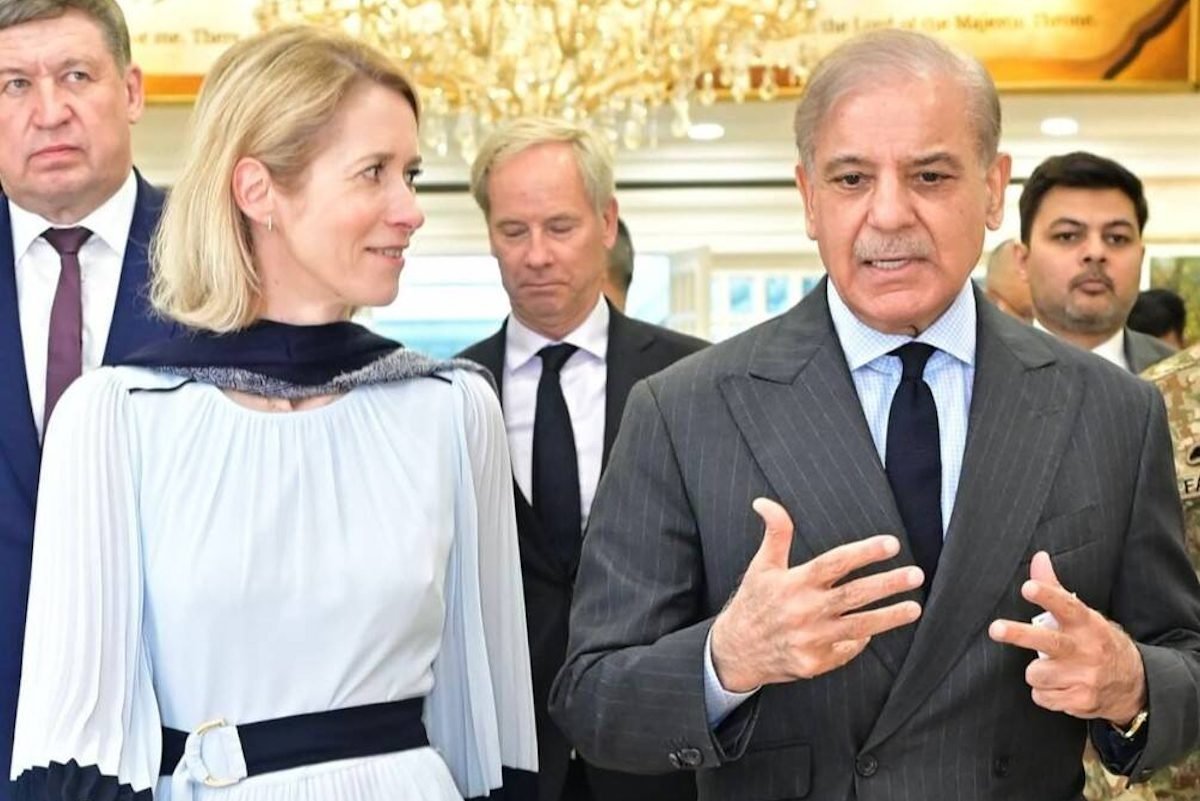
Recent meetings between Pakistan’s Deputy Prime Minister and Foreign Minister Ishaq Dar and the EU’s High Representative for Foreign Affairs and Security Policy, Kaja Kallas, together with the 8th Pakistan-EU Strategic Dialogue in Islamabad, suggest that the relationship is entering a more strategic phase.
Europe’s priorities are evolving faster than its policy toward Pakistan, and that gap is becoming increasingly difficult to sustain. The question is no longer whether Pakistan and the European Union should cooperate, but whether Brussels can move beyond a relationship centered on GSP+ and governance debates toward one that reflects today’s geopolitical realities.
Economic partner turned strategic stakeholder
The European Union remains Pakistan’s largest export destination, with the Generalized Scheme of Preferences Plus (GSP+) forming the foundation of bilateral economic relations.
Preferential access to European markets has strengthened Pakistan’s export industries, created employment and encouraged progress in implementing international conventions on labor rights, environmental protection and governance.
GSP+ remains an important pillar of the relationship, but it no longer defines it. As Europe diversifies supply chains, expands connectivity through Global Gateway and strengthens its engagement across the Indo-Pacific, South Asia and the Gulf, Pakistan’s strategic location has become increasingly relevant.
Positioned at the crossroads of South Asia, Central Asia, the Middle East and the Arabian Sea, Pakistan occupies a critical space for regional trade, energy corridors, maritime security and emerging connectivity networks.
Europe’s expanding partnership with India has become an important element of its Indo-Pacific strategy. At the same time, maintaining constructive engagement with Pakistan is equally important if Brussels seeks a balanced South Asia policy that supports regional stability, broadens diplomatic options and avoids viewing the region through a single strategic lens.
Recent Pakistan-EU engagements reflect this wider agenda. Discussions now extend beyond trade and investment to climate resilience, education, migration, digital cooperation and regional diplomacy.
Shared concerns over instability in the Middle East, maritime security in the Red Sea and resilient global supply chains have reinforced the importance of sustained political engagement.
Despite these expanding areas of cooperation, trust continues to be shaped by differing perspectives on democracy, governance, human rights and security. These differences often reflect contrasting political experiences and strategic priorities rather than fundamentally opposing interests.
Democracy, security and competing narratives
European foreign policy still places considerable emphasis on democracy, constitutional freedoms and human rights. Pakistan broadly shares these principles but maintains that its democratic development should also be understood within the context of its constitutional evolution, socioeconomic conditions and a demanding security environment.
Over the past two decades, Pakistan has experienced repeated constitutional transfers of power, competitive elections, an active judiciary, a vibrant media landscape and growing civil society participation. Like many developing democracies, it continues to pursue institutional reform while simultaneously confronting significant security challenges.
Those challenges remain central to Pakistan’s relationship with Europe. For more than two decades, Pakistan has conducted extensive counterterrorism operations at considerable human, economic and institutional cost.
The Taliban’s return to power in Afghanistan has renewed concerns over cross-border militancy, while continued instability there has implications for irregular migration, terrorism, organized crime and regional connectivity-issues that increasingly influence Europe’s own security agenda.
Islamabad therefore argues that assessments of governance and human rights should be considered alongside these security realities. European policymakers, meanwhile, maintain that democratic institutions and fundamental rights are indispensable for long-term stability.
The challenge is not to choose between security and democracy but to recognize that durable security ultimately depends on resilient democratic institutions, just as democratic progress requires a stable security environment.
Another issue requiring careful management concerns activities linked to separatist or extremist organizations operating within European jurisdictions. Pakistan has repeatedly raised concerns that some individuals or groups exploit democratic freedoms to disseminate disinformation, mobilize financial support or promote violent agendas.
European governments, for their part, remain committed to protecting lawful political activism and freedom of expression. The shared interest lies in ensuring that democratic freedoms are not misused to facilitate terrorist financing or incitement to violence-a distinction that depends on evidence-based investigations, judicial cooperation and due process.
New era, new partnership
The strategic logic for closer Pakistan-Europe cooperation is becoming increasingly compelling. Europe’s search for resilient supply chains, secure maritime routes and reliable regional partners has increased the value of countries capable of linking South Asia, Central Asia and the Gulf. Geography alone does not make a country strategically important.
What elevates Pakistan’s relevance today is the convergence of its location, counterterrorism experience, migration management, maritime access and growing role in regional connectivity. If European policy continues to view Pakistan primarily through the prism of GSP+ conditionality, it risks overlooking the broader geopolitical role the country can play.
Both partners also face similar challenges in the information domain. Disinformation, extremist propaganda and hybrid threats have become defining features of contemporary geopolitics.
Closer cooperation on strategic communication, digital resilience, intelligence sharing, judicial cooperation and disrupting terrorist financing would strengthen the security interests of both Pakistan and Europe.
Recent diplomatic engagement reflects this gradual shift. The Strategic Dialogue in Islamabad and the meeting between Ishaq Dar and Kaja Kallas in Manila demonstrated a willingness to broaden cooperation beyond trade into regional security, connectivity, climate action and geopolitical coordination.
That evolution reflects a wider strategic reality: developments in Afghanistan after NATO’s withdrawal, instability across the Middle East, maritime insecurity and intensifying competition in the Indo-Pacific have all increased Pakistan’s relevance to Europe’s external strategy.
As Europe adapts to an era of geopolitical competition, fragmented supply chains and persistent instability across its southern neighborhood, Pakistan’s strategic importance is likely to grow rather than diminish.
The future of Pakistan-Europe relations will be determined less by preferential tariffs than by whether both sides recognize that their strategic interests are converging faster than their policies.
If Brussels and Islamabad can translate that convergence into sustained political trust, the relationship can evolve from a successful trading partnership into one of the most consequential geopolitical bridges connecting Europe with South Asia in an increasingly multipolar world.
Saima Afzal is a researcher specializing in South Asian security, counterterrorism, and broader geopolitical dynamics across the Middle East, Afghanistan, and the Indo-Pacific. She is currently a Research Scholar at Justus Liebig University, Germany.