The People’s Republic of China has used its statecraft to weaponize its trade with other countries on several occasions in recent years. Such behavior usually arises when the PRC interprets another country’s actions as hostile to its political interests and resorts to nonofficial sanctions, tariffs, regulations, and consumer boycotts that damage a host nation’s economy.
These actions don’t follow market sentiments and can be revoked without a change in any underlying economic concerns the PRC initially used to justify its imposition. Many targeted countries use terms such as economic coercion to refer to trade decisions intended to alter a nation’s policies, behaviors or decisions.
Among the many advanced economies experiencing trade deficits with the PRC, Australia is a unique case. Australia possesses abundant natural resources, from iron ore to coking coal to barley and fisheries. Many of these products became major trading commodities between Australia and the PRC. However, during the 2010s, concerns arose due to foreign political influence, university funding dependence and Chinese state-linked investment with national security concerns.
Subsequent suspicion of the PRC grew, eventually culminating in Canberra’s call for an investigation into the origin of the Covid-19 virus in the PRC. Beijing responded with retaliatory tariffs against Australia’s exports. However, the PRC has failed to coerce Australia into changing its policies toward China. This, along with Australia’s economic resiliency, has policy implications.
Deteriorating relations
Beginning in 2015, suspicion spiked regarding Chinese state-linked campaigns to influence Australian elites and shape their perceptions of the PRC’s human rights issues, the US-Australia security alliance and the South China Sea. The Australian Security Intelligence Organization reportedly warned various elites and politicians of this issue in 2015.
The suspicion became public in 2016 with the Sam Dastyari case in which Dastyari, a Labor Party politician, made comments in opposition to the Labor Party’s support for Freedom of Navigation Operations (FONOP) in the South China Sea in exchange for donations from the PRC through a donor by the name of Huang Xiangmo. Dastyari reportedly helped Huang avoid the security intelligence apparatus of Australia.
This proved indicative of Chinese espionage tactics, since the United Front Work Department of the PRC prefers to blur the line between legitimate influence and illegal interference, taking advantage of legal gray zones in democratic states to advance Chinese state activities.
This led Australia to react with stricter legislation and a tougher stance on Chinese interference. Most important was the legal distinction between influence – which includes lobbying, diplomacy and advocacy – and interference, including covert, deceptive, coercive and other actions directed by a foreign state/proxy.
Australia later imposed anti-interference laws and investment screening on Chinese companies to enhance national security, followed by banning Chinese companies such as 5G telecommunication providers Huawei and ZTE from involvement in critical national infrastructures as well as becoming more vocal via diplomatic channels on issues regarding Xinjiang, Hong Kong, Taiwan and the South China Sea.
Origin of the clash
All of the abovementioned culminated in the announcement of an investigation into the origins of Covid-19 by the Australian government, focused on the PRC. In April 2020, Marise Payne, the foreign minister of Australia, called for an independent international investigation into the origin and the global handling of Covid. The call was backed by then-Prime Minister Scott Morrison of the Liberal Party.
Australia partially got what it wanted in May 2020, when the World Health Organization agreed to convene an investigation committee of more than 100 countries, including the PRC, to look into the global response efforts regarding Covid, rather than looking into the virus’s origin.
Despite claiming victory (with no origin inquiry, the findings were less substantial than expected), the PRC then retaliated by imposing and encouraging restrictions on numerous Australian imports, including barley, wine and coal. It also simultaneously claimed that Australia was no longer a suitable education and tourism destination.
In November 2020, the Chinese ambassador in Canberra provided journalists with 14 points of grievance against Australia, including blocking Chinese investments on national security grounds, banning Huawei and ZTE from Australia’s 5G network and issuing the calls for Covid origin investigation
The 14 points became significant because this was one of the rare occasions in which the PRC explicitly claimed political grievances tied to economic coercion. This essentially became the PRC’s “ask” of Australia. Saying trade relations had deteriorated because their policy was not to the PRC’s liking fits a textbook definition of economic coercion.
Australia’s response
Under Morrison, Australia found alternative destinations for its exports. The nominal damage to Australia’s GDP between 2020 and 2023 was less than 1%, though the toll was concentrated in specific sectors.
The Department of Agriculture, Fisheries and Forestry reported a 416% growth (A$251.6 million, or US$173.4 million) in barley exports to Latin American countries between 2022 and 2023, while overall barley exports rose to A$3.3 billion in 2023 despite exports to the PRC dropping to 0%. Australia’s agricultural and fisheries exports in general have also diversified to ASEAN countries, with ASEAN surpassing the PRC as the largest agricultural and fisheries importer during FY 2021-22(21% vs the PRC’s 20%).
Studies have also found that Japan was able to surpass the PRC as the largest importer of Australian coal, taking up 35% (vs the PRC’s 9%) of Australia’s coal export by 2023.
It is important to note that lobster fisheries and wineries weren’t able to diversify as successfully as other targeted industries, with wine exports falling by 30% and lobster exports by 64% between 2020 and 2023.
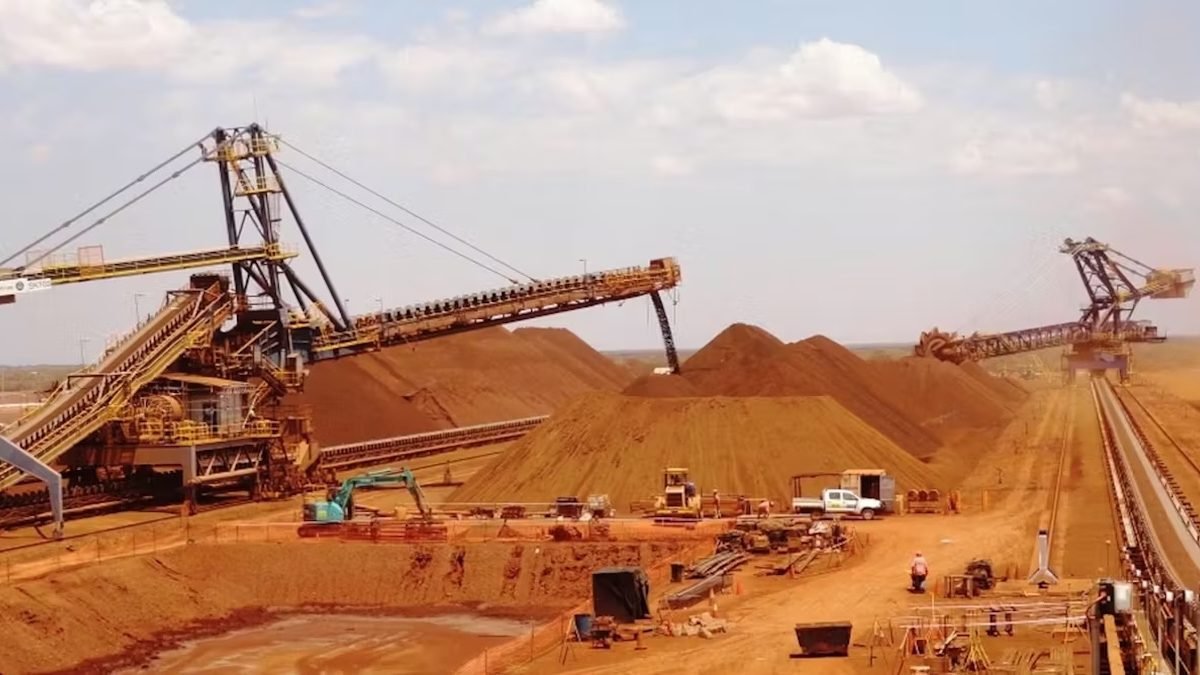
But it’s also noteworthy that the PRC couldn’t get around Australia’s iron ore export. So, despite restricting agricultural products, the PRC did not put an import restriction on Australian iron ore, which continued to generate significant income for Australia. In fact, one can argue that Australia weathered the storm despite massive tariffs from the PRC because of its rich iron ore export industry.
The economic resiliency of Australia paved the road for its political resiliency. Despite warmer diplomatic exchanges under Anthony Albanese, the current prime minister who has governed since his Labor Party’s victory over Morrison’s Liberal Party in 2022, Australia has not changed its strategy. It continued to supply other countries with the stated goods and at higher volume prior to Chinese sanctions.
Australia still doesn’t allow Huawei or ZTE to participate in its 5G network, similar to most developed countries; Australia didn’t revoke the foreign interference law, neither did it pause reviews of existing cases; Australia didn’t change its stance on Hong Kong, Taiwan or the South China Sea; nor did it further distance itself from the US – instead becoming part of the landmark AUKUS (Australia, UK, and US) alliance, whose main goal is to provide Australia with nuclear submarines as well as advanced deterrence capabilities in the Indo-Pacific.
Other actions from Australia include blocking a state agreement to the Belt and Road Initiative and increasing cybersecurity surveillance in cooperation with allies, something the Chinese ambassador explicitly mentioned in his 14 points and urged Australia not to do.
This is highlighted by how the PRC resumed imports and began gradually removing restrictions after Albanese’s meeting with President Xi Jinping of the PRC during the G20 summit. Despite rhetoric on expanding cooperation, the truth is that the PRC removed its import restrictions without Australia changing its political stance or economic model.
Even during the warming-up period between Australia and the PRC, Australia has pursued actions that are against Chinese interests such as promoting rugby league funding to Pacific Island neighbors contingent on their not having security or policy ties to the PRC, as well as criticizing the PRC for conducting military exercises in international waters between Australia and New Zealand.
Australia is a telling case because, unlike those countries that have to worry about whether their dependence on the PRC is mostly upstream or downstream, Australia is itself the upstream producer that exports raw materials to the PRC. This means that Australia’s economic methods during coercion are hard to replicate, since not many developed countries have trade surpluses with the PRC.
What can be learned from this case, and should act as a policy model, is the advantage of pursuing a de-risking strategy, aimed at diversifying a country’s supply chain to rely less on the PRC.
In the case of Australia, the PRC took great offense at being targeted internationally, and sought to punish Australia economically to extract political concessions. Yet, once there was no Australian concession, either economically or politically, the PRC was quick to realize the economic necessity of continued trade, so the meeting between Albanese and Xi became a staircase for the PRC to dial back on its coercion despite fundamentally changing nothing.
In order to reduce the economic damage of coercion, it is important to understand which part of the supply chain one stands upon instead of assuming, by looking at the PRC’s size, that it is indispensable. View economic leverage as inevitable in extrapolating political concessions. With the PRC’s economic coercion methods becoming more sophisticated, it’s imperative for countries to pursue de-risking strategies if they wish to avoid constant and random trade restrictions from the PRC.
Henry Xuan (henry@pacforum.org) is a research intern at the Pacific Forum and a master’s student in Asian Studies at Georgetown University. His area of research is international business and economics – in particular, in the Indo-Pacific, supply chain resiliency, economic policies and geopolitical risks’ impact on businesses.