Irish ministers have presented the priorities of Ireland’s presidency of the Council of the European Union to European Parliament committees, outlining an agenda centered on competitiveness, security, support for Ukraine, healthcare, agriculture, trade and negotiations on the bloc’s next long-term budget.
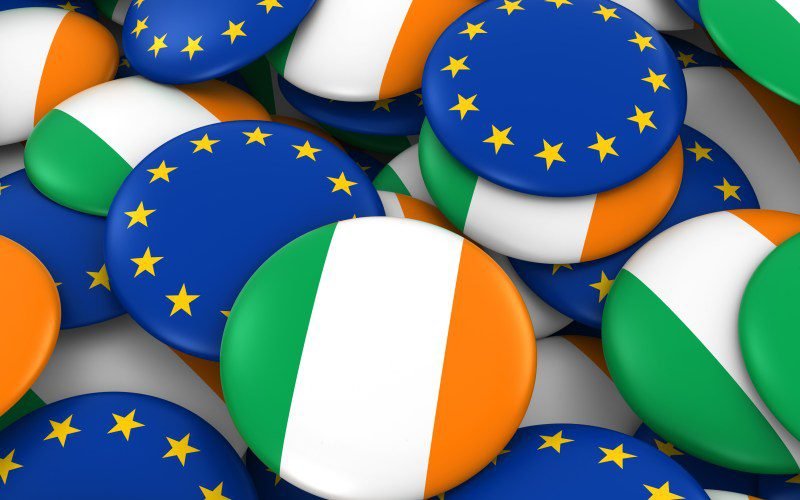
Ireland holds the rotating presidency of the Council until the end of 2026 and is appearing before parliamentary committees to present its objectives across a broad range of policy areas.
Opening the hearings before the Civil Liberties, Justice and Home Affairs Committee, Minister of State for European Affairs Thomas Byrne said the presidency would prioritize strengthening EU competitiveness, protecting citizens and safeguarding the bloc’s values. He identified regulatory simplification, support for Ukraine, EU enlargement, continued attention to the Article 7 procedure concerning Hungary and agreement on the next Multiannual Financial Framework (MFF) as key objectives.
MEPs raised questions on protecting children online, establishing a permanent framework to combat child sexual abuse, the rule of law, migration and returns, digital sovereignty, spyware misuse and support for the European Public Prosecutor’s Office.
Health Minister Jennifer Carroll MacNeill said the presidency aims to strengthen the EU’s resilience and autonomy to ensure access to healthcare while fostering innovation. She identified mental health, women’s health, the proposed Biotech Act, simplification of medical device legislation and the Clinical Trials Regulation among the main legislative priorities.
MEPs focused on healthcare funding under the 2027 EU budget and the next MFF, while highlighting unequal access to clinical trials, medicines and medical devices, as well as mental health support and funding for the European Health Data Space.
Education Minister Hildegarde Naughton said Ireland would prioritize educational mobility, skills development, artificial intelligence, STEM education and progress on the European Education Area. The presidency also plans to begin negotiations on the next Erasmus+ programme.
Lawmakers questioned proposed funding cuts for Erasmus+, expanding participation beyond higher education, support for vocational education and training, the European Solidarity Corps and policies on children’s access to smartphones.
Agriculture Minister Martin Heydon said Ireland would seek to advance negotiations on the next Common Agricultural Policy, arguing it should provide a common European framework while allowing member states flexibility to reflect regional and sectoral needs. MEPs supported simplifying rules for farmers but cautioned against excessive national discretion that could fragment the single market.
Foreign Affairs Minister Helen McEntee said support for Ukraine, efforts toward a two-state solution between Israel and Palestine, engagement on regional security involving Iran and continued EU enlargement would be among the presidency’s foreign policy priorities.
MEPs also questioned Ireland on relations with China and Turkey, trade involving Israeli settlements and the EU’s Global Europe instrument.
On trade, McEntee said the presidency would pursue an open, rules-based trade policy aimed at strengthening competitiveness, resilience and economic security while advancing World Trade Organization reform and negotiations on economic security measures. The Industrial Accelerator Act was identified as a legislative priority.
Addressing the Security and Defence Committee, McEntee said Ireland would support further sanctions against Russia, strengthen maritime security, advance military mobility, implement the AGILE regulation and reinforce the protection of critical infrastructure, including against drone and cyber threats.
MEPs highlighted concerns about hybrid threats, differing national positions on sanctions against Russia, European strategic autonomy and the creation of a stronger European defence market.
Across other committee hearings, ministers outlined plans to advance the EU gender equality strategy, support environmentally sustainable agriculture, improve transport connectivity and passenger rights, strengthen humanitarian assistance, pursue institutional reforms linked to EU enlargement and seek political agreement on the proposed Savings and Investments Union.
Additional priorities include implementing the Common Fisheries Policy, reinforcing regional cohesion, promoting workers’ rights, tackling social exclusion and improving lifelong learning, while MEPs repeatedly stressed the importance of safeguarding funding under the next long-term EU budget.