Lettuce and salad greens have become the prime suspects in an explosive outbreak of the diarrheal parasite Cyclospora, which is surging nationwide but erupting to extraordinary heights in Michigan.
In recent years, Michigan has typically reported around 50 cases of cyclosporiasis, which causes urgent bouts of watery diarrhea, abdominal cramps, and nausea. But, this year, as of July 14, the state has reported 3,309 cases of the food-borne pathogen. Of those 44 have been hospitalized.
Based on interviews with more than 1,000 people sickened in Michigan, the latest data is pointing to leafy greens as the source, according to the Michigan Department of Health and Human Services (MDHHS).
“Although we do not have a definite product identified as the source of the outbreak, we want to let Michiganders know what we have learned so far so they can take steps to protect their families,” Natasha Bagdasarian, Michigan’s chief medical executive, said in an announcement. “Early information has shown lettuce as a common product that regularly comes up during the investigation. We will continue to provide updates as we learn more.”
Taco Bell suspected
Separately, The Washington Post reported that state and federal officials are looking into whether Taco Bell restaurants may have been a source of food contaminated with the single-cell parasite.
According to local media sources in the Detroit area, Taco Bell restaurants put up signs reading, “We are currently unable to sell Lettuce, Cilantro, Onion, Pico de Gallo, and Guacamole due to a nationwide recall.”
It’s unclear what recall the restaurant is referring to; no nationwide recalls have been announced by Michigan or federal authorities related to cyclosporiasis cases. The Post reported that Taco Bell did not respond to multiple requests for comment on the signs or the decision to pull certain produce.
A source familiar with the investigation told the outlet that some sickened people interviewed reported having eaten at Taco Bells, while others did not, suggesting that there could be multiple sources of the contaminated food item.
Identifying the source of Cyclospora can be difficult because it can take up to two weeks between when a person eats contaminated food and when they develop symptoms, making recall of the possible food sources difficult, the MDHHS noted. They also pointed to the “complex food distribution networks” as complicating factors in tracking the source or sources.
National situation
While Michigan is seeing the highest numbers of cases, at least 33 other states are also reporting illnesses. New York has reported 470 cases. Ohio is seeing at least 397 cases. North Carolina has reported at least 240.
The Centers for Disease Control and Prevention is collecting data on cases, but has been slow in reporting them. After this story was published, representatives for the CDC and the Food and Drug Administration updated their data and held a press briefing on the cyclosporiasis situation. The CDC is now reporting 1,645 cases across 34 states as of July 13, with 141 of the cases being hospitalized. There have been zero deaths (this infection is rarely ever fatal).
Additionally, the CDC said it is aware of reports of more than 5,100 additional cases from state and local health departments. But these cases require follow-up to confirm the infections and whether they were domestically acquired, the CDC said.
The CDC and FDA believe that multiple clusters of disease are driving the large case count and wide distribution of illnesses across the country this year. The skyrocketing cases in Michigan, however, are thought to be part of a multi-state outbreak spanning Ohio, Virginia, and Western Virginia. In the briefing, Gwen Biggerstaff, deputy director of CDC’s Division of Foodborne, Waterborne, and Environmental Diseases, said it appears that the cases in this region may be from a single source, however a clear genetic or epidemiological link has not been confirmed. The CDC has created an outbreak investigation page for updates on this outbreak.
While both the CDC and the FDA representatives were aware of reports linking the cases to salad greens and Taco Bell, they would not confirm in the briefing that either are leading suspects in the eyes of the federal agencies.
Biggerstaff said the agency is pulling together data on what people ate and where, genetic data from the parasites, and trace-back data on food sources. “Right now we don’t have a specific source identified and we’re working very hard to continue collecting and analyzing those data,” she said in the briefing.
Donald Prater, FDA’s acting deputy commissioner for food, added only: “What I can say at this point is that we’re continuing our traceback investigation on multiple produce items, including the lettuce.”
Combining the CDC’s confirmed and probable cases, the US is already over 6,745 cases at this point in the summer, which is when cyclosporiasis cases peak. This tally is well above historical numbers; the US has typically reported between 2,000 and 5,000 cases a year.
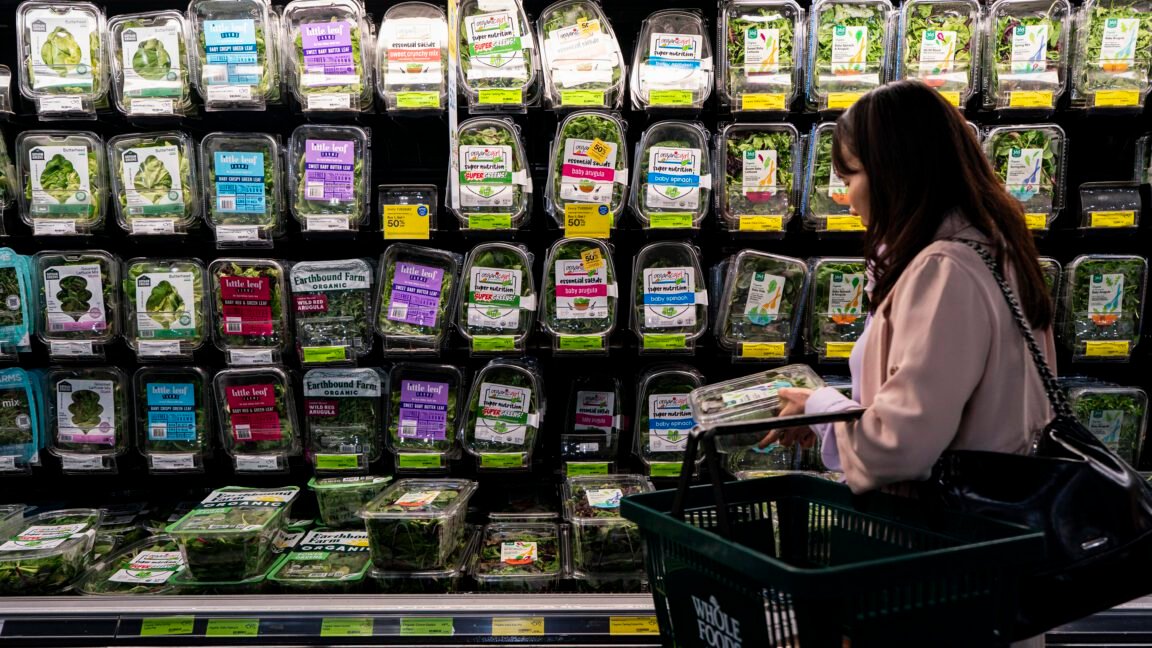
Amid the outbreak with no clear source as of yet, health officials are recommending that people be cautious about leafy greens, particularly bagged or boxed greens. It’s recommended to instead buy whole heads of lettuce, discard the outer two or three layers of leaves, and then wash the rest thoroughly. But, sticking with peel-able or smooth-surfaced produce is safer. The safest choice is cooking produce to at least 158° F (70° C), which will kill the parasite.
Past cyclosporiasis outbreaks have been linked to bagged salad mixes and kits, fresh cilantro, fresh basil, raspberries, snow peas, and green onions, MDHHS notes.
People who experience frequent watery diarrhea should consult with their healthcare provider. An antimicrobial treatment can treat the infection, along with rest and hydration.
This post was updated July 14, 2026 to include information provided in the CDC/FDA press briefing.