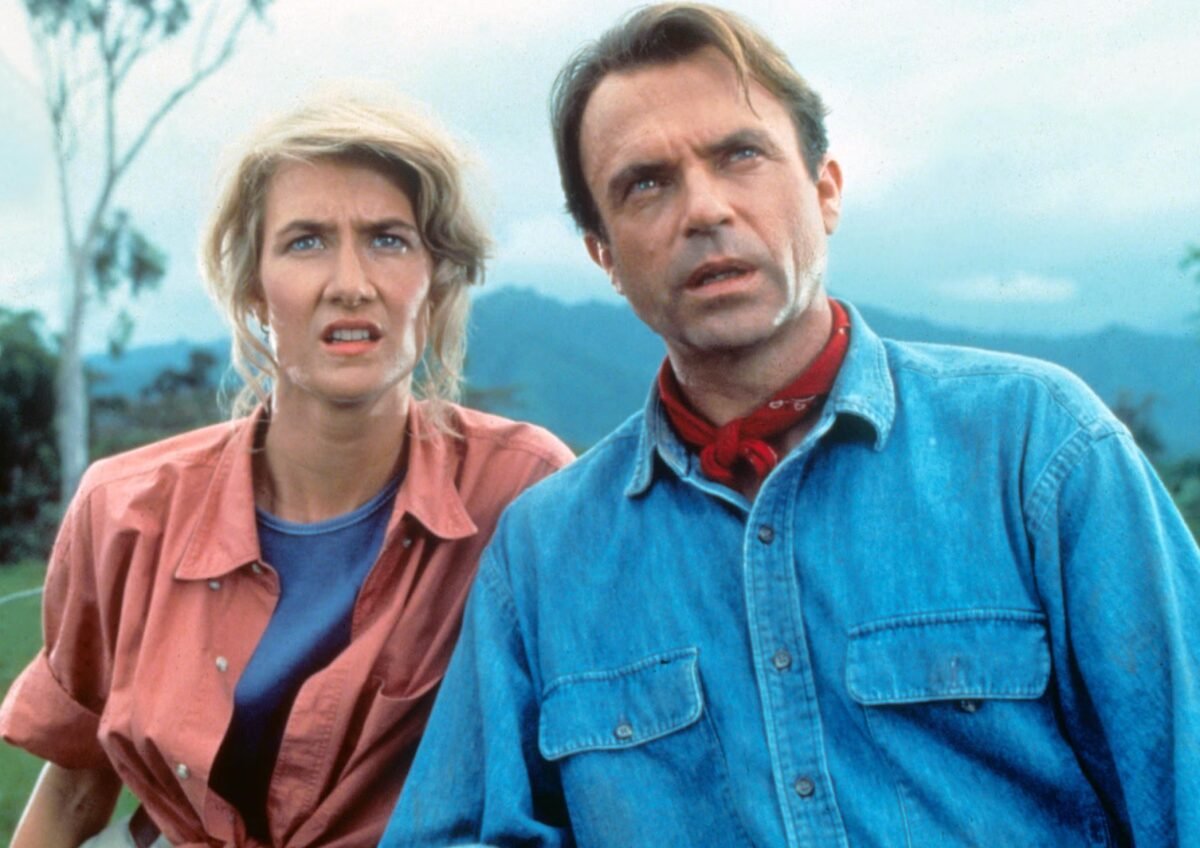
Sam Neill, the beloved actor known around the world for Jurassic Park, Peaky Blinders, and decades of memorable film and television roles, has died at 78.
His family announced that Neill passed away Monday, July 13, in Sydney, Australia. The news stunned fans, especially because the actor had recently been declared cancer-free after a long private battle with blood cancer.
In a statement shared on Instagram, Neill’s family said his death was “sudden and unexpected,” but added that he was surrounded by family and passed “with the dignity that has characterized his whole life.”
They also thanked the staff at St. Vincent’s Private Hospital for their care and asked for privacy as they grieve the “immeasurable loss.”
For fans who followed Neill’s health journey, the news felt especially heartbreaking. Just a few years before his death, the actor had spoken openly about mortality in a way that was classic Sam Neill: honest, calm, and touched with dry humor.
In an October 2023 interview with ABC, Neill said he was not afraid of dying.
“I’d be annoyed because there are things I still want to do,” he said.
At the time, Neill was already dealing with cancer, but he made it clear that fear was not what weighed on him.
Death, he said, had “never worried” him from the beginning. He was not “in any way frightened of dying.”
Still, Neill was not ready to leave. In a separate interview with The Guardian, he said he hoped for “another decade or two” because there was still more life he wanted to enjoy.
That makes his passing even more painful for longtime admirers. Neill had come through a frightening illness and was looking ahead again.
The actor was first diagnosed about five years ago with T-cell lymphoma, a rare and aggressive form of non-Hodgkin lymphoma. He kept much of his treatment private, but later opened up about how difficult the road had been.
In April, Neill told 7News that chemotherapy had stopped working.
“I was at a loss and it looked like I was on the way out, which wasn’t ideal obviously,” he said.
Neill then tried a different path. He entered a trial for CAR T-cell therapy, a treatment that trains a patient’s T-cells to attack cancer cells.
After the treatment, doctors performed a scan and found no trace of cancer in his body.
“That’s an extraordinary thing,” Neill said.
His family later confirmed that he was cancer-free at the time of his death.
Neill had also been thinking about returning to the screen. After years of illness and recovery, he sounded excited about acting again.
“I’m very, very excited that this can happen,” he said. “It’s time I did another movie.”
That kind of enthusiasm was no surprise to those who followed his career. Neill was never just one thing. He moved easily between blockbusters, thrillers, prestige dramas, horror, television, and independent film.
He began acting in university theater before landing his first screen role in the 1971 television film The City of No.
His major breakthrough came in 1977 with Sleeping Dogs, a New Zealand film that helped bring him attention outside Australia and New Zealand.
By 1981, Neill’s career had gone international. He appeared in Omen III: The Final Conflict and Possession, proving he could handle both commercial projects and intense, unsettling roles.
Over the years, he built one of the most varied careers in the business.
To millions of moviegoers, he will always be Dr. Alan Grant in Jurassic Park, the paleontologist who helped make movie history when Steven Spielberg’s dinosaur blockbuster took over the world in 1993.
But Neill’s career stretched far beyond that one role. He also appeared in films and shows including The Piano, Dead Calm, The Hunt for Red October, Event Horizon, Peaky Blinders, and The Twelve.
His final major performance came in the TV miniseries The Twelve.
Off screen, Neill was known for his warmth, wit, and self-deprecating charm. He became a fan favorite on social media, often sharing glimpses of his life, his animals, and his vineyard.
That made the news of his death feel personal to many fans. He was not just a familiar face from the movies. He came across as decent, funny, thoughtful, and deeply human.
In the end, Neill’s own words now carry a sad weight.
He was not afraid of dying. He was simply “annoyed” by the thought of leaving before he had done everything he still wanted to do.
For an actor whose career spanned more than five decades, that feels painfully fitting.
Sam Neill leaves behind a body of work that moved across countries, genres, and generations. He also leaves behind the memory of a man who faced illness with honesty, humor, and grace.