The European Parliament has given the green light for negotiations with the Council on plans to introduce a digital euro, marking a significant step towards creating an EU-backed digital payment option while insisting that cash will remain a fundamental part of the financial system.
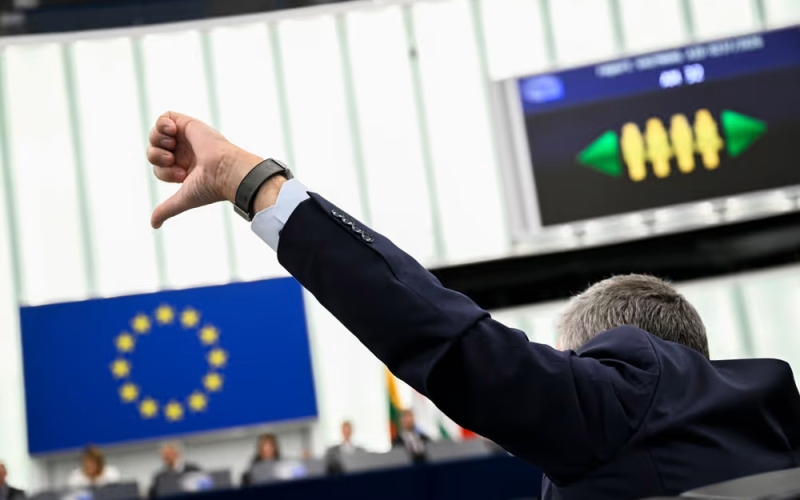
MEPs voted strongly to proceed with negotiations on legislation establishing a digital euro. Parliament also approved plans allowing payment service providers based in EU member states outside the euro area to distribute the digital currency. The vote paves the way for interinstitutional talks with the Council, representing member states, with the first round of negotiations expected to begin shortly under the Irish Presidency.
A separate proposal reinforcing the legal tender status of euro banknotes and coins was not challenged in Parliament, allowing negotiations on that file to move forward simultaneously.
Under Parliament’s negotiating position, the digital euro would be issued by the European Central Bank (ECB) as an electronic form of central bank money that could be used for both online and offline payments. The initiative aims to provide consumers with a secure European payment alternative while reducing dependence on payment providers based outside the European Union.
Speaking during a press briefing on Wednesday, Parliament’s rapporteur on the single currency package, centre-right MEP Fernando Navarrete, sought to reassure citizens that the new digital currency is intended to complement rather than replace physical cash.
“The digital euro will complement cash, not replace it. We strengthen access to and acceptance of cash while making central bank money available in digital form. That is what this package is about: protecting cash and enabling a digital euro. It is not about watching, judging, or restricting how citizens pay,” he said.
Navarrete also rejected claims that the digital euro could become a tool for monitoring citizens’ spending habits.
“There is a narrative going around describing a future where your digital payments are monitored and controlled. The digital euro expands freedom, choice, resilience and privacy. More privacy than with current digital means of payment; more resilience to face internet or power disruptions; more freedom to choose how to pay without anybody knowing what we do with our money, and free of geopolitical dependencies,” he stated.
Parliament’s position includes several safeguards designed to protect users and the wider financial system. Privacy protections would ensure transactions are verified without unnecessarily exposing personal data, with information processed only to the extent required for the system to operate.
Basic digital euro services, including opening an account, holding funds and access to at least one payment instrument, would be provided free of charge. To safeguard financial stability, a limit would also be placed on the amount of digital euros an individual can hold.
Most businesses would be required to accept digital euro payments, although exemptions would apply to self-employed individuals and small or micro enterprises that do not already accept other forms of digital payment.