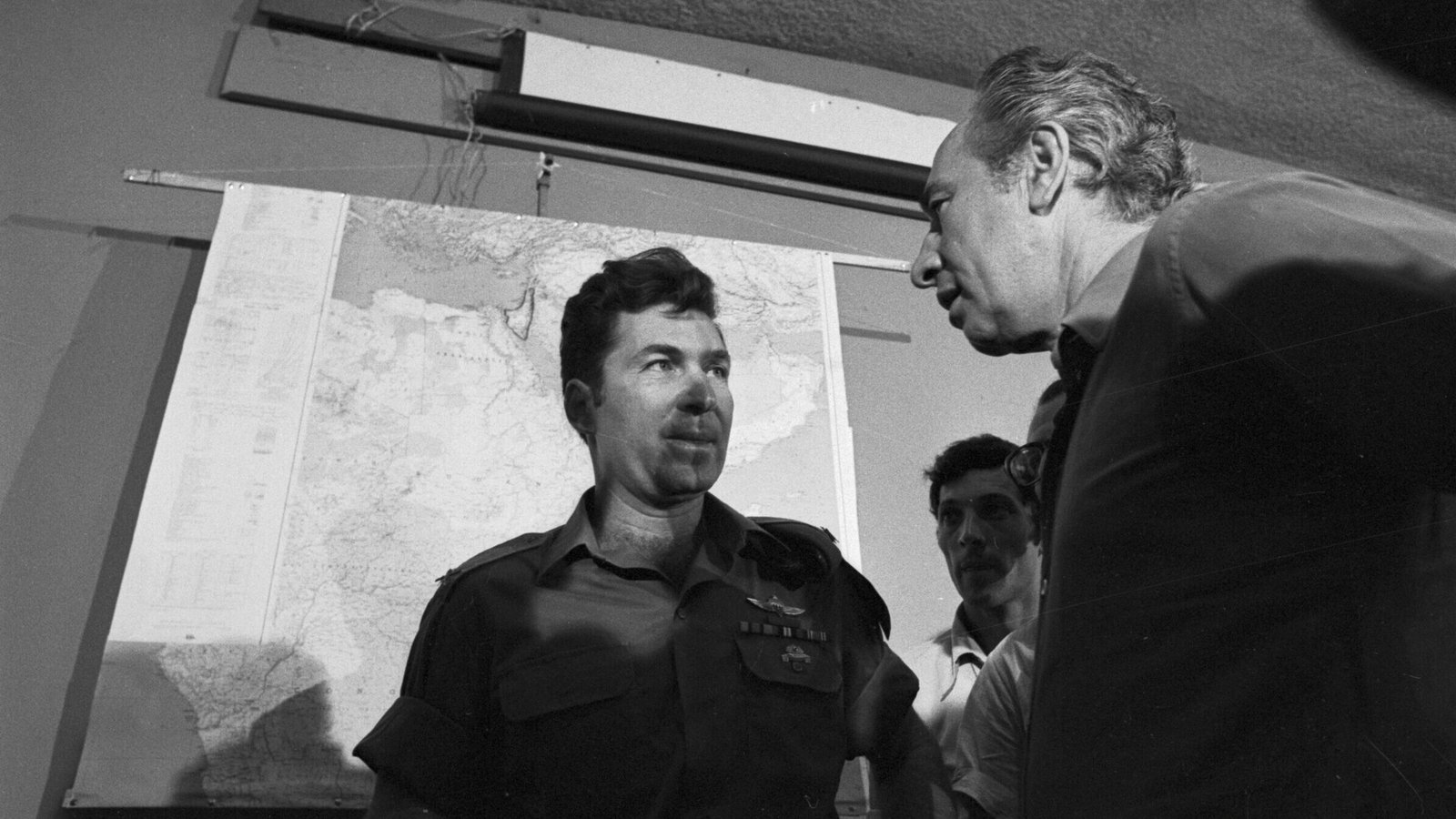
Prior to the 50th Anniversary of Operation Entebbe, Israel State Archives released thousands of pages of newly available government records documenting Israel’s response to the 1976 Air France hijacking, including complete transcripts of Cabinet and Security Cabinet meetings, records of a special security team established by Prime Minister Yitzhak Rabin, and additional files made public for the first time.
The release, issued by the Israel State Archives in the Prime Minister’s Office, also makes public all archive files relating to Operation Entebbe, including documents that had previously been released separately, presenting what the archives described as the full record of the government’s handling of the crisis.
The documents trace the government’s deliberations from the first reports that contact had been lost with the Air France flight after its stopover in Athens through the rescue mission carried out a week later.
Cabinet records show Rabin interrupting a government meeting to announce that the aircraft had apparently been hijacked. During the session, ministers were informed the plane had landed in Benghazi, Libya, although officials still did not know the hijackers’ identities, intentions, or final destination.
After Eli Mizrahi, Rabin’s chief of staff, suggested ministers remain available for updates later that day, Rabin responded: “There is no need whatsoever for that. My intention is to hold the government of France responsible for the fate of the Israelis flying on the Air France plane and not to absolve the government of France from this responsibility.”
The archive also includes, for the first time, recordings of 26 telephone conversations held by Eli Mizrahi with Rabin, the Foreign Ministry director general and other officials during the hostage crisis, as well as transcripts of five conversations between Col. Baruch Bar-Lev and Ugandan ruler Idi Amin.
Additional material includes diplomatic correspondence with France and other governments whose citizens were aboard the hijacked aircraft, records relating to UN Security Council deliberations after the operation, hundreds of letters sent to Rabin following the rescue, photographs whose copyrights have expired, files concerning films about Operation Entebbe, and documents related to the commemoration of Lt. Col. Yonatan Netanyahu, commander of the General Staff Reconnaissance Unit, who was killed during the raid.
Among the newly released documents is an interview with hostage Yitzhak David, who was wounded during the rescue operation and recalled that being separated from the non-Israeli hostages revived traumatic memories from his experience as a Holocaust survivor.