Investors have spent the last three years asking who will build artificial intelligence (AI).
Nvidia built the chips, Microsoft built the platforms, Amazon, Google and Meta built the infrastructure. Investors rewarded them accordingly, creating trillions of dollars in market value along the way.
This phase of the AI revolution is well understood; the next phase is not. And this is why I believe investors are focusing on the wrong story.
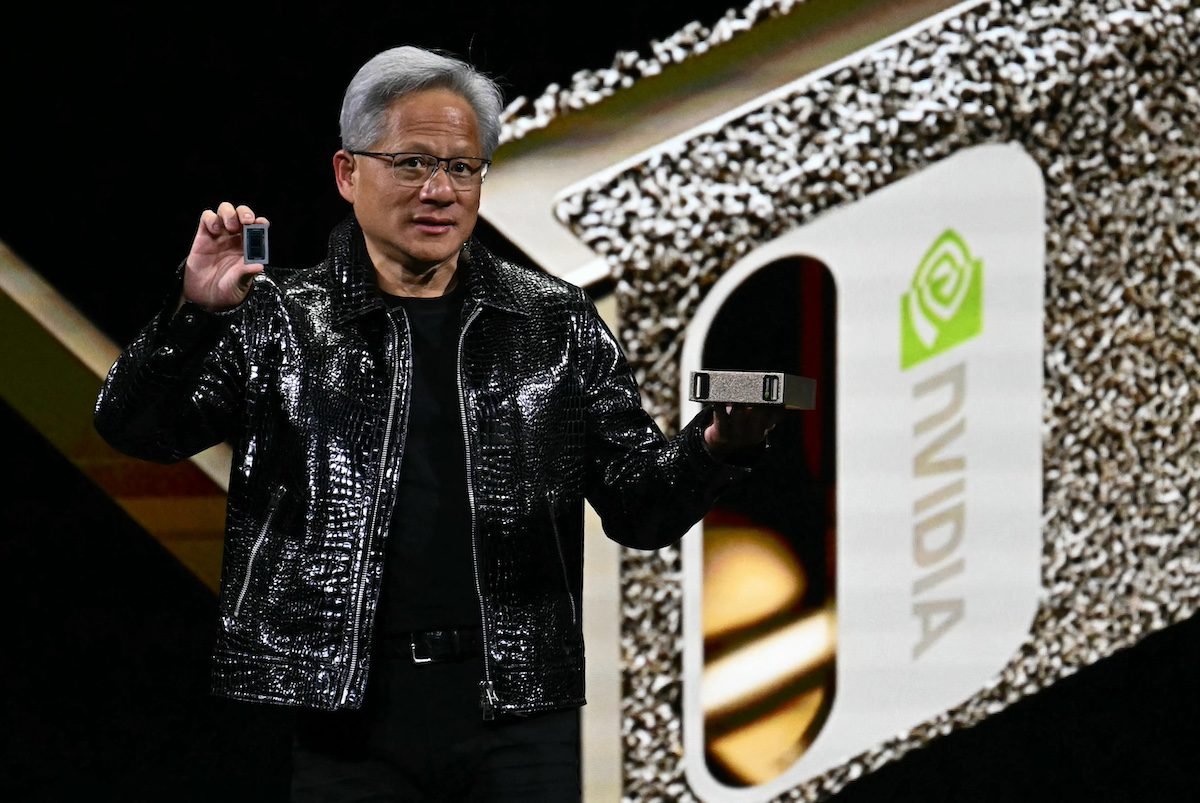
Nvidia’s announcement at Computex on Monday (June 1) generated headlines because of its push into AI-powered personal computers. Analysts immediately began debating what the move means for Intel, AMD, Qualcomm and Apple.
Those questions are understandable. They’re also secondary. The real story is not a new chip. It is that AI is beginning to trigger what could become the first major corporate hardware replacement cycle driven primarily by productivity gains rather than necessity.
That distinction matters. Historically, businesses replaced computers because they had to as machines became obsolete, operating systems changed, security requirements evolved, hardware failed and employees needed newer devices to perform existing tasks.
The coming cycle looks fundamentally different. Companies may upgrade because they believe better hardware can make workers materially more productive.
This has rarely happened at this scale before. The personal computer market has, for years, been treated as mature. Investors stopped expecting meaningful growth. Upgrade cycles stretched.
But AI changes that equation. Executives across every industry are under pressure to deploy AI. Boards are demanding AI strategies. Investors are asking management teams how AI will improve margins, reduce costs and drive growth.
Yet much of the discussion remains strangely disconnected from how productivity is actually generated. AI does not create value simply because a company subscribes to a software platform. It creates value when employees use it effectively.
That’s where the market’s thinking becomes incomplete. The AI boom has largely been analyzed through the lens of infrastructure spending. Investors have become obsessed with GPU demand, data-center capacity and hyperscaler capital expenditure.
Those are important metrics. But they measure the supply side of AI. The next stage will be about demand by putting AI into the hands of hundreds of millions of workers. This opportunity is vastly larger than many investors appreciate.
There are more than 1.5 billion PCs currently in use worldwide. Most were designed before generative AI entered the mainstream. Most were built before AI assistants became capable of writing reports, analyzing data, generating code and automating increasingly complex workflows.
The overwhelming majority of the world’s installed computing base belongs to a pre-AI era. Markets seem remarkably comfortable with that fact. I, for one, am not.
Nvidia plans to launch more than 30 AI-powered PC models. Jensen Huang has described the CPU opportunity as part of a market that could eventually reach $200 billion. Microsoft is embedding AI throughout Windows. Dell, HP, Lenovo, Asus and others are preparing entire product ranges built around AI-native computing.
Collectively, these companies are not preparing for a niche upgrade cycle. They’re preparing for a platform shift, meaning investors should consider the arithmetic. If only 20% of the global PC installed base is replaced due to AI-related capabilities over the next five years, that would represent roughly 300 million devices.
Very few markets offer that scale of potential demand. The implications become even more interesting inside large organizations.
Imagine a company employing 50,000 people. If AI-enabled tools save each employee just one hour per week, the organization effectively recovers more than 2.5 million working hours annually. This is equivalent to adding more than 1,200 full-time employees without increasing headcount.
Viewed through that lens, spending on upgraded hardware starts looking less like a technology expense and more like a productivity investment. This shift in mindset could unlock enormous amounts of capital.
Global productivity growth has remained stubbornly weak across many developed economies for years. Labor costs remain elevated. Management teams are searching relentlessly for efficiency gains. A credible path to higher productivity commands attention, and AI offers one.
Of course, the market consequences could extend far beyond Nvidia. One of the biggest mistakes investors make during tech revolutions is assuming that the most obvious winner remains the biggest winner.
The smartphone revolution created extraordinary wealth for Apple. Yet the broader ecosystem generated trillions more across semiconductors, payments, telecommunications, e-commerce, cloud computing and digital advertising.
The same pattern could emerge with AI.
Memory manufacturers such as Micron and SK Hynix stand to benefit from increasing memory requirements. Enterprise software providers are racing to embed AI into products used by millions of workers. Cybersecurity firms face growing demand as AI creates entirely new risks and attack surfaces.
PC manufacturers themselves may become some of the most surprising beneficiaries after years of being viewed as low-growth businesses. The biggest winners may not be visible or even exist yet.
History rarely reveals the most important beneficiaries of a platform shift at the beginning. Investors who looked at the first iPhone and saw only a mobile phone missed one of the greatest wealth-creation events in modern history.
A similar mistake may be unfolding today. Many investors are looking at Nvidia’s latest PC announcement and seeing another semiconductor story.
I see something much larger. I see the possibility that AI is moving from the server room to the workforce – and that changes everything. Markets have largely priced the first story. They’ve yet begun to price the second.
Nigel Green is CEO and founder of deVere Group.







. Nvidia built the chips, Microsoft built the platforms,)