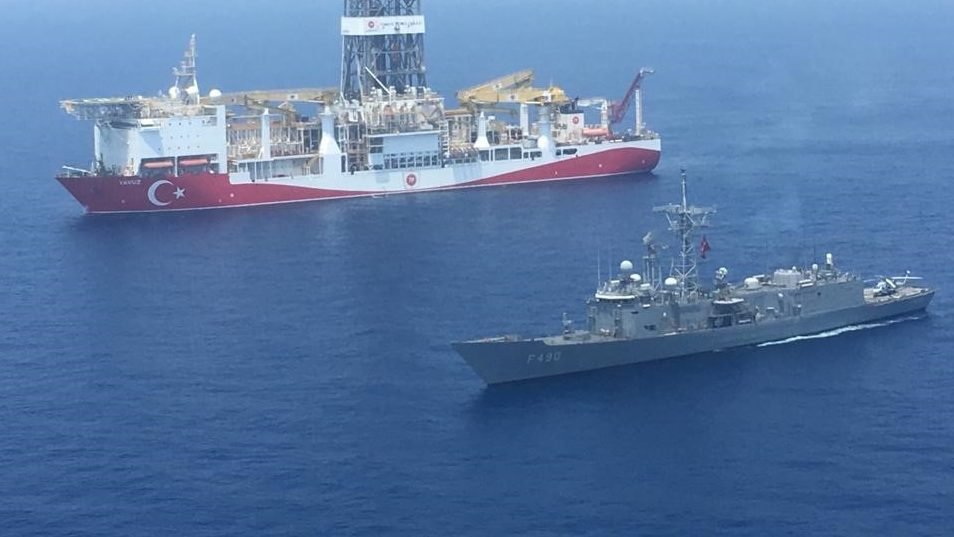
Proposed Turkish legislation based on the country’s “Blue Homeland” doctrine could complicate plans to connect Israel, Cyprus and mainland Europe through a major subsea electricity link by expanding Ankara’s maritime claims across large sections of the Eastern Mediterranean, according to a report by Globes.
The legislation would formally incorporate Turkey’s maritime claims into domestic law. Under the proposal, Ankara would assert jurisdiction over nearly half of the Aegean Sea and extensive areas of the Eastern Mediterranean.
According to Globes, the proposed boundaries overlap with maritime zones claimed by Greece and Cyprus and have drawn opposition from both governments. The legislation is also reported to conflict with principles established under the United Nations Convention on the Law of the Sea.
A central element of the doctrine is Turkey’s position that Greek islands are not entitled to their own full continental shelf or exclusive economic zone. Greece rejects that claim, and the position has also been rejected by the broader international community.
The dispute carries implications for regional energy and infrastructure projects. Turkey’s proposed maritime maps reportedly intersect with the planned route of the EuroAsia Interconnector, a 1,200-kilometer subsea electricity cable intended to connect the power grids of Israel, Cyprus and Greece.
Incorporating the claims into Turkish law could create legal and operational obstacles for projects that pass through waters contested by Ankara.
Greek officials have strongly opposed the initiative which treats any Greek move to extend territorial waters to 12 nautical miles as a “red line.”
Cyprus has also condemned the proposal, describing it as incompatible with international agreements and accusing Turkey of increasing tensions over maritime boundaries.
While Israel is not described as the primary target of the Blue Homeland doctrine, the report said the measure could affect Israeli interests in the Eastern Mediterranean. The proposed claims could complicate both offshore energy development and the construction of underwater infrastructure projects linking Israel with neighboring countries and European markets.