Within months, Mubadala Energy is expected to make a final investment decision on its Tangkulo development in Indonesia’s South Andaman block, where recent discoveries have revealed more than 2 trillion cubic feet of gas-in-place. Additional finds in the same basin could hold more than 6 trillion cubic feet. The project is being hailed as another milestone in Indonesia’s push to become a major regional gas supplier.
But the bigger story is not the gas beneath the Andaman Sea. It is the strategic choice facing the United Arab Emirates.
The UAE is now one of the world’s most influential energy investors. Through companies like Mubadala Energy and Masdar, Abu Dhabi is simultaneously financing two very different futures: one built on new fossil fuel extraction, the other on renewable energy systems designed for a decarbonizing global economy.
In Indonesia, the UAE should place its larger bet on the second.
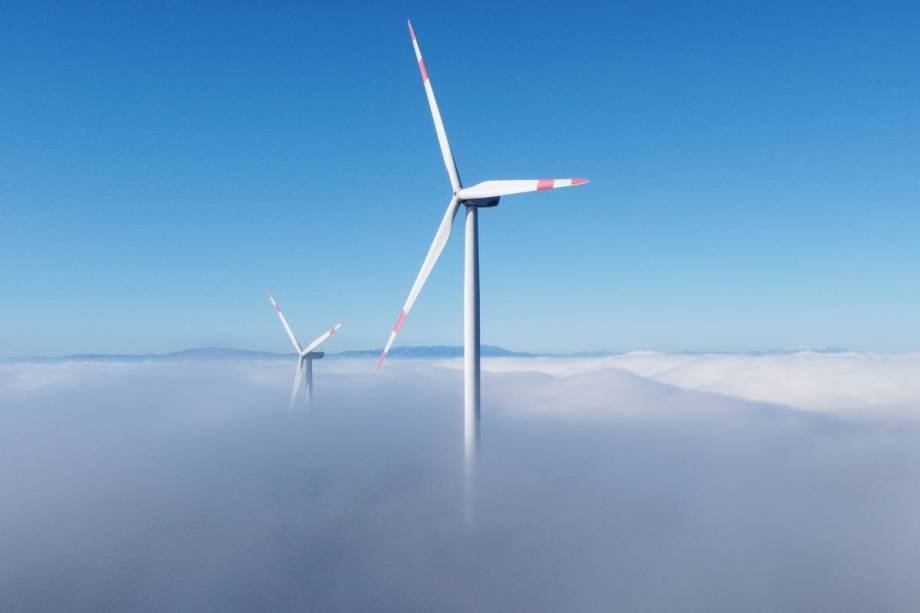
Rather than doubling down on offshore gas development, Abu Dhabi should accelerate support for a Masdar–State Electricity Company (PLN) joint venture focused on offshore wind in eastern Indonesia, particularly along the Sulawesi–Maluku corridor. A 2-gigawatt renewable pipeline there would do more to strengthen Indonesia’s long-term energy security and economic competitiveness than another decade of gas expansion.
At first glance, the logic behind South Andaman is compelling. Indonesia’s energy demand is rising rapidly. Domestic industries need reliable power. Gas is cleaner than coal and remains politically attractive as a “transition fuel.” For Jakarta, projects like Tangkulo promise investment, jobs and export revenues.
But the economics of energy are changing faster than many governments anticipated.
Large offshore gas developments are increasingly expensive and slow to monetize. They require billions in capital expenditure, years of technical development and long-term assumptions about global gas demand that are becoming less certain as major economies accelerate decarbonization. By the time Tangkulo reaches first gas — currently targeted for 2028 — global energy markets could look dramatically different.
Renewables, by contrast, are moving in the opposite direction. Costs are falling. Financing pools are growing. Technology is improving rapidly, especially in offshore wind and battery storage.
And Indonesia has enormous untapped potential.
The waters around Sulawesi and Maluku possess some of Southeast Asia’s strongest offshore wind resources, particularly for floating wind systems suited to deep-water environments. Unlike western Indonesia, where energy infrastructure is already concentrated, eastern Indonesia remains underserved by fragmented grids and expensive diesel-based generation. Offshore wind could fundamentally change that.
This is where the UAE’s renewable ambitions should become more strategic.
Masdar already has an established relationship with PLN. Their collaboration on the Cirata floating solar project demonstrated that large-scale renewable partnerships between the UAE and Indonesia are commercially viable and politically feasible.
An expanded Masdar–PLN offshore wind venture would build on that foundation while addressing some of Indonesia’s most persistent structural challenges.
First, it would diversify the country’s energy mix beyond coal and gas. Indonesia remains heavily dependent on fossil fuels, even as it publicly commits to ambitious climate targets. Offshore wind would provide a long-term source of domestic power without exposing the economy to fuel price volatility.
Second, it would support more balanced regional development. For decades, Indonesia’s energy infrastructure has been concentrated in Java and western Indonesia. Eastern provinces have often been treated as peripheral markets rather than strategic growth centers. A renewable corridor stretching across Sulawesi and Maluku could help reverse that imbalance by bringing industrial investment, grid upgrades and employment opportunities to regions long left behind.
Third, it would align the UAE with the direction global capital is already moving.
Abu Dhabi understands this reality better than most hydrocarbon exporters. The UAE has spent years positioning itself as both a major oil producer and a global renewable investor. Yet there is a contradiction in promoting clean energy leadership abroad while simultaneously expanding long-cycle gas developments that may become less competitive over time.
Indonesia presents the UAE with a chance to demonstrate what a genuine energy transition partnership looks like.
Critics will argue that offshore wind remains too expensive for emerging markets. But deepwater gas was once considered prohibitively expensive as well. Technology evolves quickly when capital and policy align behind it.
The more important question is not whether offshore wind is currently cheaper than gas on every metric. It is which infrastructure will still look economically strategic twenty years from now.
A new offshore gas basin may generate revenues in the near term. But a large-scale renewable system integrated with manufacturing, battery storage and regional transmission could shape Indonesia’s competitiveness for decades.
The UAE has the capital, technical expertise and geopolitical influence to help build that future.
What Indonesia needs now is not simply another fossil fuel discovery. It needs partners willing to invest in the next energy economy before the old one begins losing its strategic value.
The winds off Sulawesi and Maluku may never attract the same headlines as a major gas discovery in South Andaman. But in the long run, they could matter far more.
The views expressed in this article belong to the author and do not necessarily reflect the editorial policy of Middle East Monitor.