The most common worry expressed around the world concerning the summit meeting in Beijing on May 14-15 was the fear that the future of Taiwan and its 23 million residents might be traded off in a deal between the men leading the world’s two true superpowers, Xi Jinping and Donald Trump.
The American president might soften his country’s support for Taiwan in return for Chinese help in ending the war in Iran. He might get such spectacular promises from Xi of Chinese purchases of soybeans or Boeing aircraft that he would agree to reduce US sales of weapons to Taiwan.
As far as we can tell from this secretive summit from which few public statements emerged, no such deal was done.
The call between Prime Minister Sanae Takaichi and President Donald Trump that took place immediately after he had left Beijing would have been mostly to reassure her and the Japanese government that nothing had changed, especially given the tension between China and Japan since Takaichi’s remarks in the Diet last October concerning how Japan would respond to a military confrontation between China and Taiwan.
This won’t bring the worrying to an end, especially as Trump and Xi have agreed to meet again on September 24, this time in Washington, DC. What is notable, however, is that one place in Asia where the whole theatre of the Trump-Xi dialogue appeared to be taken calmly, without serious worries, was Taiwan itself.
Even Trump’s statement, made during his flight back to Washington, that he had not yet decided whether to give his approval to a proposed US$14 billion package of weapons sales to Taiwan seemed to cause few waves in Taipei. (Trump later also described the arms sales decision as “a good negotiating chip” with China as well as renewing old – and false – accusations that Taiwan had “stolen” the semiconductor business from America.)
There is no doubt that Taiwan ranks number one among all the potential flashpoints capable of causing a catastrophic conflict between the world’s nuclear superpowers and of creating an economic crisis that would make the current pain caused by the closure of the Straits of Hormuz look trivial.
Those are powerful reasons to do everything possible, diplomatically and militarily, to make such a conflict less likely to break out. The stakes in any conflict over Taiwan in terms of strategic control over the western Pacific and, arguably, in terms of global leadership would be so high as to make it terrifyingly likely that nuclear weapons would be used in such a war for the first time since the Hiroshima and Nagasaki bombs of 1945.
So it is worth asking why Taiwan itself seems comparatively relaxed about the potential implications of the Trump-Xi summits. This may help us separate the noise that inevitably surrounds these summits from the true strategic signals that both sides are conveying.
One reason why Taiwan is less concerned than others is a simple one: it has had to learn to live with its geopolitically anomalous status for nearly 80 years now. If it got nervous every time the Chinese and American leaders talked, even ones like Xi and Trump, it would soon have a nervous breakdown.
Moreover, while certainly the People’s Republic of China has become vastly stronger in economic, military and political terms, especially over the past two decades, so has Taiwan. The Taiwanese know that they could not defeat China in a head-on conflict but they also know that they are strong enough to impose huge costs and pose high risks for China.
Ukraine’s success in resisting Russia’s invasion since February 2022 serves as an inspiration for Taiwan but most of all as a warning to China.
What matters to Taiwan is that it can keep on strengthening its defenses sufficiently to help deter an invasion.
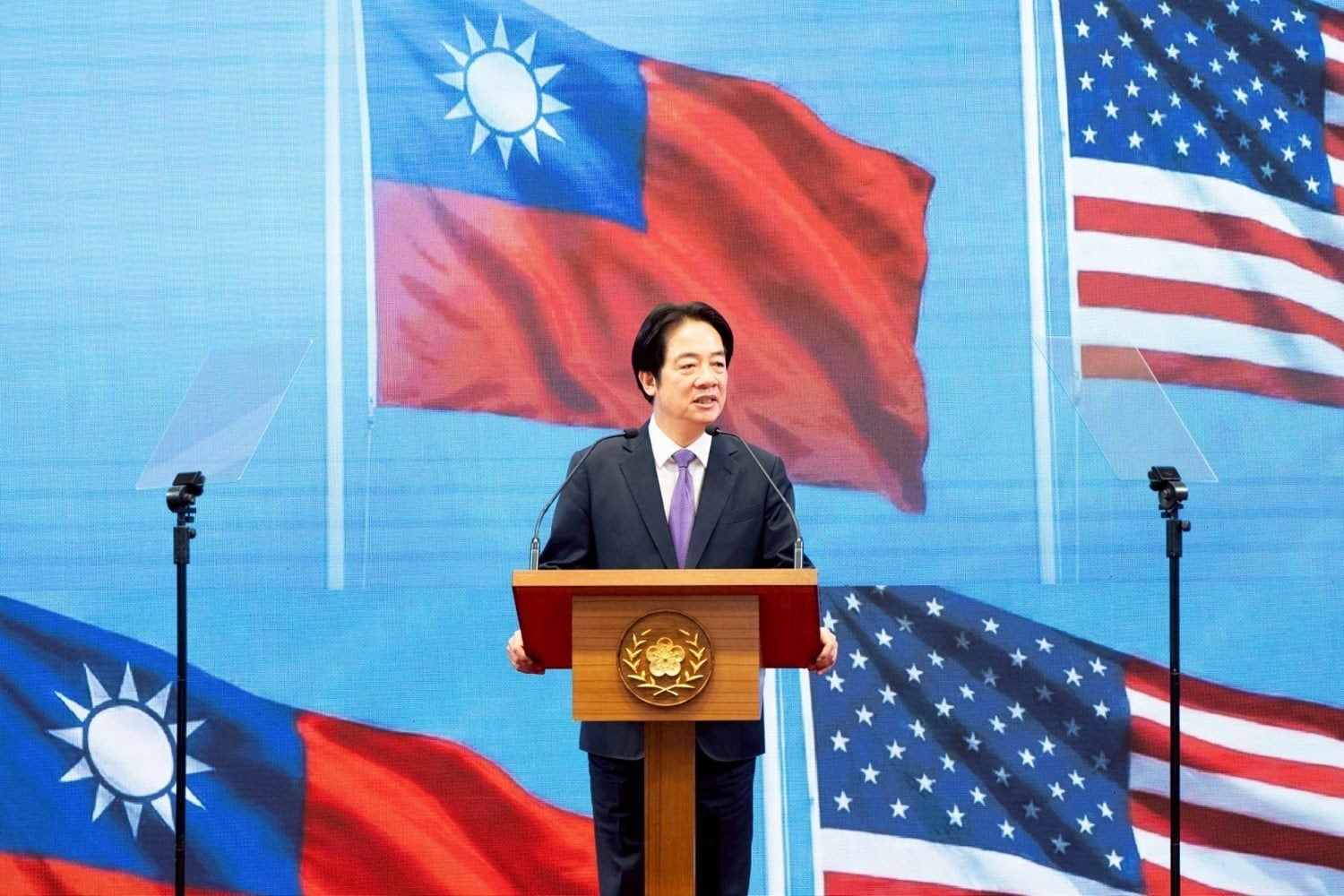
Taiwan’s government – led by President Lai Ching-te of the Democratic People’s Party (DPP), which has run the island since 2016 – has been trying to persuade the Legislative Yuan, Taiwan’s Parliament, to approve a big expansion in the defense budget, to be used both to buy more American weapons and to expand the island’s own defense production.
This has been a struggle as the DPP has not enjoyed a majority in the Yuan since a general election in January 2024. On May 8 the Yuan finally approved extra defense spending of US$25 billion, but that expansion was a lot smaller than the US$40 billion that the DPP government had asked for.
Among challenges to Taiwan and the deterrence it can present against Chinese forces, domestic politics have been more importan than Trump’s diplomacy with Xi over arms sales.
In any case, the impact of America’s war in Iran on US stockpiles and delivery schedules for the most advanced weapons and defense systems means that, whatever Trump decides about the US$14 billion package, it will be a long time before the weapons arrive.
Meanwhile, efforts are likely to be concentrated on expanding domestic manufacturing, especially of drones.
Taiwan certainly would be concerned if an American president were to pledge to end arms sales to the island or to drastically reduce them. But the Taiwanese also know two important things:
- In the US Congress there is a clear and consistent majority in favor of supplying weapons to Taiwan, one that will probably become stronger after the midterm congressional elections in November; and
- America will have a new president in 2029. The planning horizon for defense spending and investment is far longer than the American electoral cycle.
What will have been noted closely in Taipei will not have been the speculation and other noise surrounding the Beijing summit but rather the consistency of the lines taken by both leaders.
Xi sounded his usual warnings against foreign interference over the Taiwan question, warnings that are highly familiar to Takaichi and Japan, but he gave no indication of extra urgency.
Trump is not famous for sticking to official scripts, but he did appear to do so over Taiwan. He even emphasized America’s longstanding policy of “strategic ambiguity” over whether it would intervene militarily to protect Taiwan.
He will have felt politically pleased thereby to diverge from the relative clarity that his predecessor President Joe Biden had expressed in 2021-22 about his willingness to fight. But that period, during Russia’s invasion of Ukraine, was one of special uncertainty about the intentions of both Russia and China. A return to strategic ambiguity does not count in Taiwan’s eyes as a change of American policy.
The ultimate lesson is that the status of Taiwan is a long-term concern, not one that is liable to be affected by the kabuki drama of presidential summits.
China knows that its best hope lies not in presidential deals with Trump but in getting a president into office in Taiwan, after the next elections there in early 2028, who is more favorable towards China than Lai Ching-te. If that can be done, then the effort to cajole and if necessary coerce Taiwan towards absorption into China can begin.
It still won’t be easy, as Taiwanese public opinion remains strongly opposed to absorption. But that is the real strategic timetable, and it is not one that will be centered on the man in the White House, much though Trump likes to think he should be the center of everything.
This English original of an article published in Japanese and English by the Mainichi Shimbun is republished with kind permission. Along with many other articles it can also be found on Bill Emmott’s Global View.