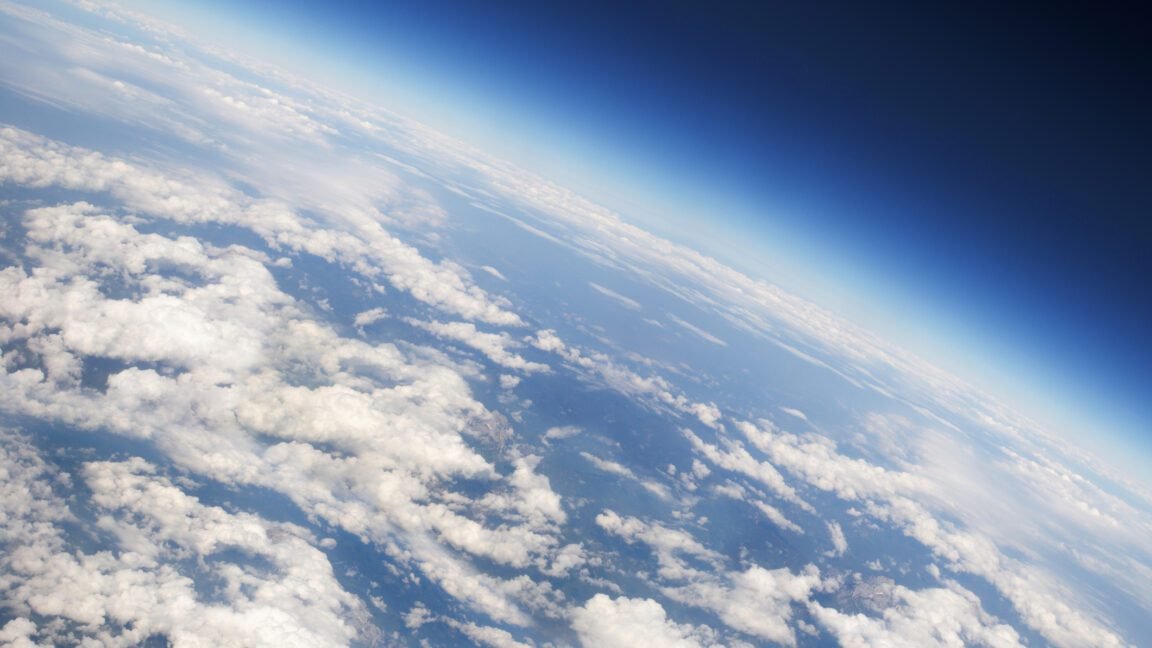
Planet Earth has some pretty great qualities going for it. (Negative reviews mostly revolve around the staff and clientele.) Pretty high on the list of positives is a richly oxygenated atmosphere. But that’s something that evolved and built up over a couple billion years, only eventually resulting in a world conducive to animal life like us.
Scientists have many ideas about what could have caused oxygen to increase, and it seems that a number of them are probably correct. No one thing in isolation seems to explain it. Life is part of the story, with photosynthetic life pumping out oxygen. The chemistry of the solid Earth also had a role to play, both through supporting photosynthetic life and through reactions that can shuttle oxygen between the atmosphere and rocks deep inside the Earth.
A new study led by Wei Shi of the Chengdu University of Technology suggests that evidence of changes in the subduction of tectonic plates—the process by which they disappear down into Earth’s interior—lines up with the timing of jumps in oxygen levels.
Cooling off
The Earth has gradually cooled over time, and the scant remnants of its earliest history show us that major geologic processes evolved quite a bit as a result. Early in its history, cold, dense surface rock would have sunk through hot mantle rock in ways that bear little resemblance to modern plate tectonics. And the continents around us are 4.5 billion-year-long construction projects, so imagination is required to picture what was present early on.
It wasn’t a smooth, linear evolution—there seem to be transition points in that geologic history. The oxygenation of Earth’s atmosphere wasn’t linear, either. It started with a jump during the Great Oxygenation Event about 2.4 to 2.0 billion years ago. But then it stalled out until resuming between 800 and 500 million years ago. A third increase between 450 and 250 million years ago brought us up to modern oxygen levels.
The research team’s idea was that changes in subduction might have influenced atmospheric oxygen by controlling how much carbon and sulfur—both of which love to bond with oxygen—were being carried into the deep interior of the Earth.
When the mantle is hotter, carbon and sulfur don’t make it very far down with the subducted rock. They’re released into the shallow mantle and can soon come back into the atmosphere via volcanoes, ready to scavenge any plucky molecules of oxygen present in the atmosphere. The converse is that a plate diving into cooler mantle will hang on to more of its sulfur and carbon.
At sites where rock that has been subducted finds its way back to the surface, the minerals and subtle chemistry inside them tell us about the temperatures and pressures they experienced along their journey. By comparing this temperature and pressure information, the team compiled a broad picture of the history of subduction. If the hypothesis holds, you would expect to see lower temperature subduction at the same time as the atmospheric oxygen increases.
The data does seem to line up. Lower-temperature subduction shows up between 2.2 and 1.8 billion years ago and then, after a break, dominates for the last 800 million years. That earlier period matches with the initial Great Oxygenation Event. The more recent period covers the second and third jumps in oxygen levels. (The time in between is known in geology as the “Boring Billion” because… not much seems to have been happening.)
Tectonic shifts
Running this history of subduction through a basic chemical model, the researchers found they could roughly reproduce the timeline of oxygenation.
The beginning of the story, they say, could be the assembly of an early “supercontinent” (think Pangaea) called Columbia. With an appreciable amount of land above sea level, erosion could deliver enough nutrients to the oceans to support a large amount of photosynthetic cyanobacteria. We can see the evidence of this in seafloor sedimentary rocks rich in organic carbon.
The breakup of Columbia aligns with the first signs of lower-temperature subduction. That would have enabled more of this organic carbon—and carbonate accumulating in shallow water around Columbia—to be subducted deep into the mantle.
Then comes the Boring Billion, when even mantle convection and tectonic plate movement seem to have been sluggish. But after that, the formation and breakup of the supercontinents Gondwana and Pangaea move us toward a map of tectonic plate boundaries that looks like our present world, with lots of low-temperature subduction.
The “Ring of Fire” around the Pacific Ocean today, for example, marks a huge zone of subduction that continuously carries carbon and sulfur-rich sediments deep into the mantle. Once this sort of subduction became common, the balance of Earth’s oxygen was able to tilt more toward the atmosphere.
There certainly is a lot more to the story, both in terms of biology and geology. Our oxygen-rich atmosphere is the product of a rich set of interactions. But, the researchers write, “These processes all operated on top of the baseline defined by the net flux of carbon (and sulfur) between Earth’s interior and exterior, which we argue was controlled by the evolving efficiency of cold subduction on a cooling Earth.”
PNAS, 2026. DOI: 10.1073/pnas.2534056123 (About DOIs).