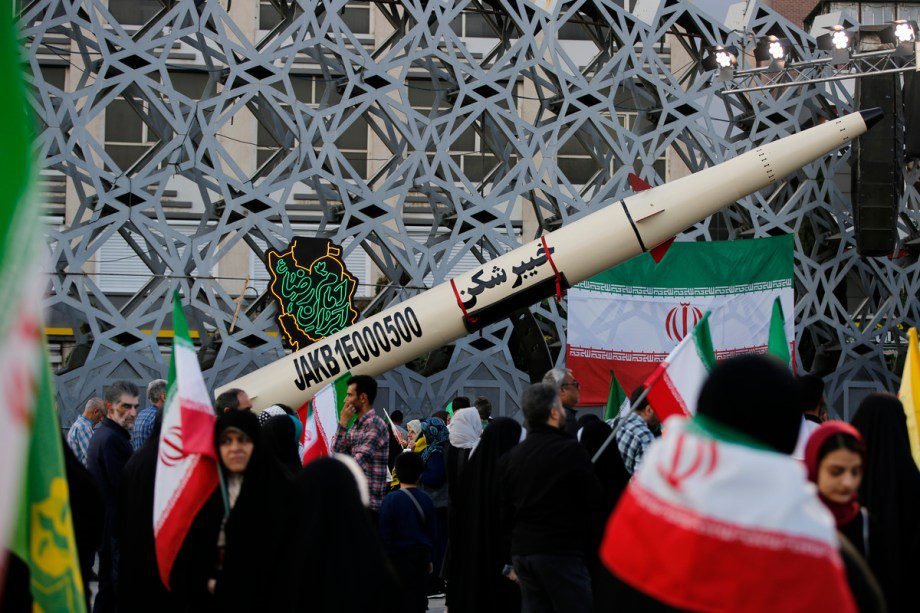
For months the world has remained fixated on a single number: 450 kilograms.
That figure — referring to Iran’s stockpile of highly enriched uranium — has become the center of international negotiations, military threats, and diplomatic deadlock between Tehran, Washington, and Israel. American officials continue to insist that Iran must surrender or remove the material. Iran continues to refuse. The result is a dangerous equilibrium where neither side appears willing to retreat and where every ceasefire feels temporary.
But the deeper crisis exposed by the recent war is not simply nuclear. It is structural.
The war revealed something many governments were unwilling to publicly acknowledge for years: Iran can no longer be treated merely as a containable regional actor operating outside the architecture of global power.
Whether one agrees with Tehran or not, the conflict demonstrated that Iran has become too strategically consequential to remain permanently excluded from the mechanisms that shape international order.
This is precisely why the current ceasefire remains fragile.
Inside Iran the debate is no longer centered only on ideology or even sanctions. Increasingly the argument revolves around deterrence survival and legitimacy. Israeli and American strikes targeted senior commanders infrastructure nuclear facilities and military assets. Yet Iran neither collapsed nor capitulated. Instead it demonstrated an ability to sustain confrontation absorb pressure retaliate across the region and impose costs on the global economy through instability around the Strait of Hormuz. Even temporary disruptions around Hormuz proved enough to trigger worldwide anxiety over shipping routes energy prices supply chains and insurance costs.
This matters because it reveals a deeper contradiction within the current international system.
The post-1945 global order was designed around the distribution of power that existed after World War II. The permanent members of the UN Security Council were not chosen because they represented humanity equally or because they embodied universal legitimacy. They were chosen because they emerged from the war as decisive military powers capable of shaping global stability.
READ: Report: Khamenei orders enriched uranium to remain in Iran as Putin proposes transfer to Russia
Nearly eighty years later however the structure remains largely frozen while the actual balance of geopolitical influence has dramatically evolved.
Germany and Japan became economic giants without permanent representation. India emerged as one of the world’s largest powers without a permanent seat. Brazil became indispensable to Latin America while remaining outside the core architecture of decision-making. Africa — a continent of more than a billion people — still lacks permanent representation entirely.
The Iran war may now be exposing a similar contradiction in the Middle East.
For decades the dominant assumption in Washington and parts of Europe was that Iran could eventually be weakened into strategic submission through sanctions diplomatic isolation covert operations or limited military pressure. But the war produced a far more uncomfortable outcome. Iran emerged economically damaged and militarily strained yet simultaneously more central to the global conversation about security order and deterrence.
The problem is no longer simply Iran’s nuclear program. The problem is that the existing international framework offers no meaningful mechanism for integrating a power that has already demonstrated irreversible regional influence.
This is why the uranium issue inside Iran is increasingly viewed through the lens of deterrence rather than purely nuclear ambition.
Contrary to many assumptions outside the country large parts of the Iranian political establishment do not necessarily view enriched uranium primarily as a pathway toward building a nuclear weapon. Rather many increasingly see it as part of a broader deterrence architecture in a world where they believe external military threats remain permanent.
From this perspective surrendering uranium without receiving structural security guarantees appears irrational. Iranian leaders look not only at sanctions but also at assassinations cyberattacks military strikes and repeated discussions of regime change in Western and Israeli political circles. Under such conditions deterrence becomes existential.
This explains why current negotiations appear trapped.
Washington continues to treat the uranium issue primarily as a technical proliferation problem. Tehran increasingly sees it as inseparable from sovereignty survival and long-term security guarantees.
Neither side is truly negotiating over centrifuges anymore. They are negotiating over the future balance of power in the Middle East.
And this is where the question of representation becomes unavoidable.
Throughout modern history political systems that failed to integrate rising powers eventually confronted instability crisis or war. The political philosophy underlying the modern West itself was built around this principle.
READ: Pakistan army chief heads to Tehran to discuss US-Iran talks
John Locke argued that peace could only emerge through a mutually recognized political contract rather than permanent confrontation. The American founding generation including Thomas Jefferson Benjamin Franklin and George Washington attempted to create a constitutional structure precisely because they believed unchecked conflict eventually destroys political order itself.
After World War II the victorious powers built a new international architecture for the same reason: to prevent endless cycles of great-power war through institutional integration and balance.
But today that structure increasingly appears unable to accommodate the actual distribution of twenty-first century power.
The crisis surrounding Iran may therefore reflect something much larger than the Islamic Republic itself. It may reflect the growing inability of the postwar order to absorb influential non-Western powers without resorting to permanent containment sanctions military pressure and recurring confrontation.
Ironically the more excluded Iran becomes from recognized structures of global influence the more valuable unconventional leverage becomes strategically.
In Iran’s case that leverage increasingly revolves around the Strait of Hormuz asymmetric military capability regional escalation potential and strategic disruption of global energy flows.
This is why the current situation has become so dangerous. As long as Iran remains outside the structure of globally recognized power its deterrence mechanisms will continue developing outside that structure as well.
This is also why recent regional developments matter.
The Saudi-backed proposal for a regional non-aggression framework — regardless of whether it ultimately succeeds — signals that parts of the Muslim world may already be moving toward a different strategic logic.
For years many Gulf states focused primarily on isolating Iran. Today however discussions increasingly revolve around coexistence de-escalation and regional balancing.
This shift matters because it suggests that even some of Iran’s traditional rivals may now recognize that permanent confrontation is becoming unsustainable.
At the same time China and Russia would likely view any structural increase in Iran’s international legitimacy favorably. The current Security Council configuration effectively leaves the Western bloc with three permanent powers — the United States Britain and France — while China and Russia remain comparatively isolated within the structure itself.
The broader issue therefore is no longer merely whether Iran should or should not possess enriched uranium. The real issue is whether the international system can continue managing emerging regional powers through exclusion alone while expecting long-term stability.
READ: Trump says US opposes Strait of Hormuz tolls, vows to get uranium from Iran
Recent events have already exposed the limits of that approach.
The United States launched military strikes against Iran without a clear Security Council mandate. Meanwhile the same international system that once endorsed the nuclear agreement later watched one of its principal signatories unilaterally withdraw from it. Such contradictions have increasingly weakened perceptions of institutional legitimacy across large parts of the Global South.
Whether Western governments wish to admit it or not the world is already entering a new geopolitical era.
From the growing alignment between China and Russia to the emergence of alternative regional structures and the increasing assertiveness of powers like Iran the international system is gradually moving away from the unipolar assumptions that defined the post-Cold War era.
The question now is whether that transition can occur politically — through adaptation reform and integration — or whether it will continue unfolding through recurring crises military escalation and economic disruption.
This does not mean Iran will suddenly receive a permanent seat on the UN Security Council tomorrow. Such a transformation would require historic restructuring unlikely to happen quickly.
But the conversation itself now matters.
Because for the first time in years the Iran war is forcing policymakers to confront a question once considered unthinkable: Can the post-1945 order continue functioning while refusing to adapt to the actual distribution of power in the twenty-first century?
The answer increasingly appears uncertain.
And unless the international system finds ways to politically integrate rising powers rather than merely contain them the world may discover that perpetual brinkmanship has become the new normal.
OPINION: War beyond the battlefield: How the Iran conflict Is reshaping global power and the world economy
The views expressed in this article belong to the author and do not necessarily reflect the editorial policy of Middle East Monitor.