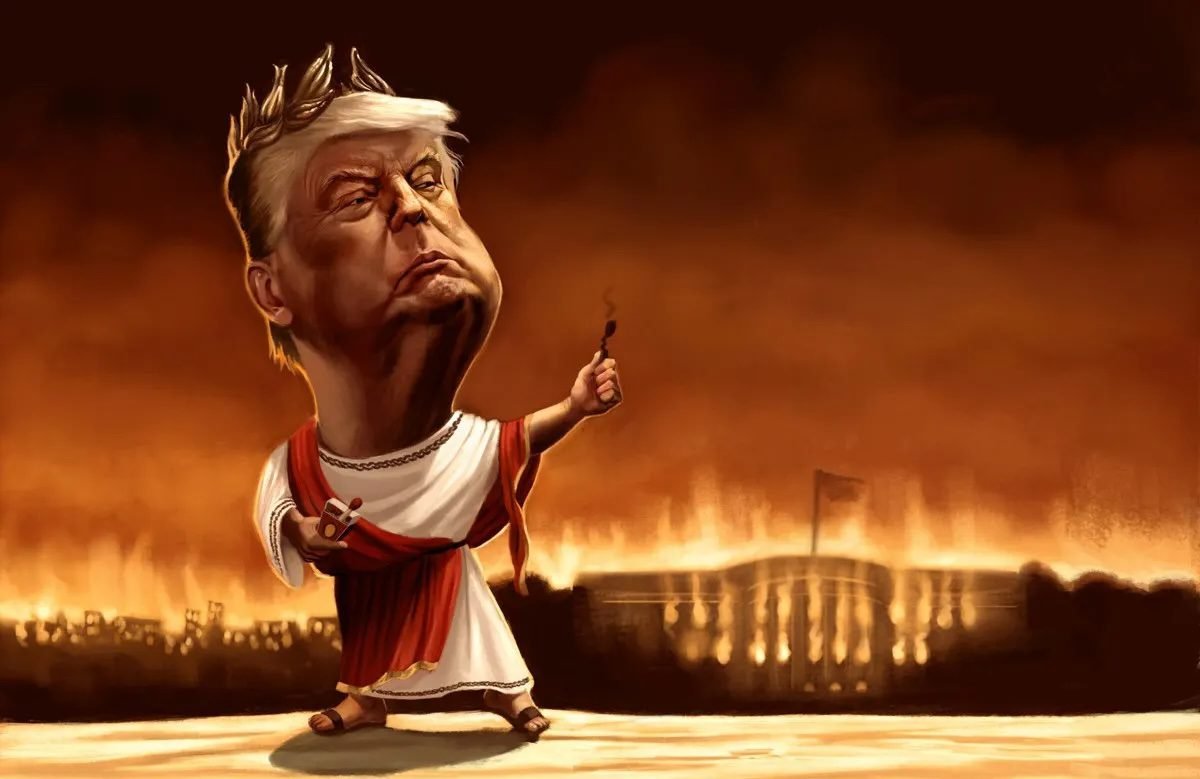
Tell me lies, tell me sweet little lies
Tell me lies
Tell me, tell me lies
Oh no-no, you can’t disguise
– Fleetwood Mac
Perfidy. There is no other word to describe the assassination of Iran’s leadership while negotiations were ongoing. It does not matter how evil they were, nor how juicy the window of opportunity was, nor how free the Iranian people will become – killing adversaries during negotiations is perfidy.
Perfidy, the war crime, has a specific definition under the Geneva Conventions. An act constitutes perfidy when two conditions are met:
1. Deception: Feigning protected status to gain an enemy’s trust.
2. Hostile act: Using the established trust to kill, injure or capture the adversary.
False surrender, faking wounds, dishonest use of protected emblems (e.g. Red Cross, Red Crescent, United Nations etc.) and feigning civilian status all constitute deception to gain an enemy’s trust. Deception, however, does not become perfidy unless it is used to commit a hostile act. Iran was negotiating in good faith when the United States and Israel launched attacks that killed a coterie of leaders including Supreme Leader Ali Khamenei. Deception and hostile act. Both conditions met.
One can interpret wartime rules against perfidy as the last vestiges of honor remaining while humans are slaughtering each other. Or one can be coldly rational, refraining from perfidy because to not do so would invite treachery from current and future adversaries.
Proscriptions against perfidy, however, do not survive cold rationalization. At some point, someone will do a ruthless cost benefit analysis and determine that strategic gains from an act of perfidy outweigh potential blowback. The strong do what they can and the weak suffer what they must.
Let us not over-moralize this choice. The United States (and Israel) did the cost benefit analysis and must now deal with the consequences. The Geneva Conventions were always naive. As if there can be rules in love and war. What is more interesting is why the United States of America commits perfidy and what that says about future American conflicts.
Perfidious Albion (Great Britain) was famously despised and begrudgingly respected for its skilled treachery. The island nation had an uncanny ability to best lesser states through betrayal and skullduggery in lieu of armed conflict.
The pejorative dates back to the Middle Ages, achieving high purchase in the 18th century. French bishop Jacques-Bénigne Bossuet delivered a 17th century sermon containing these lines:
‘L’Angleterre, ah, la perfide Angleterre,
que le rempart de ses mers rendoit
inaccessible aux Romains,
la foi du Sauveur y est abordée.
Translation:
England, oh perfidious England,
whose sea ramparts made her
unreachable to the Romans,
now receives the true faith.
Continental European states bled each other white chasing status, wealth and territory. England (later Great Britain and the United Kingdom) was never quite in the mix as it practiced its dark offshore statecraft – funding rebels in the Spanish Netherlands, sponsoring “privateers” (pirates) like Francis Drake and John Hawkins and hobbling Dutch shipping with the Navigation Acts.
The French had a special loathing for Perfidious Albion as the island nation enticed and manipulated France’s continental neighbors. In the 18th century, Great Britain skillfully used its banks, insurance companies, diplomats and navy to subdue Europe’s squabbling continental powers from afar.
During the War of the Spanish Succession, John Churchill, the Duke of Marlborough, paid Austria, Prussia and the Dutch Republic to mount campaigns against France. During the Seven Years’ War, British Prime Minister William Pitt the Elder stripped France of its colonial possessions, paying Germany to tie France down in a European land war while the Royal Navy seized Canada, Jamaica, Guadeloupe, Senegal and Gambia.
France’s final Wille zur Macht (will to power) under Napoleon was an attempt to create a continental system free from British economic dominance. Britain financed European resistance until Napoleon’s will to power was obliterated by Russian obstinacy. This was not going to be the last time that a European Wille zur Macht crashed out against Russian intransigence. It was also not going to be the last time that a perfidious empire swooped in to steal the trophy from the victors.
At the Congress of Vienna, Britain positioned itself as the arbiter of post-Napoleonic Europe while claiming global trade routes for British shipping, insurance and capital. By the late 19th century, London banks financed industry, infrastructure and narcotics plantations all over the world. The British East India Company drained India through taxation and China through opium sales.
Britain was able to exert influence because its shipyards produced naval ships at an unrivaled scale. By the early 20th century, the Royal Navy’s steam and iron warships dominated the world’s oceans, enforcing the doctrine of freedom of the seas when it suited Britain and conveniently forgetting the principle when it didn’t. Britannia ruled the waves and Britannia waived the rules.
All good things come to an end. Perfidious Albion, however, did not so much end as have its prerogatives wrested away by a player even more skilled in the dark arts of offshore statecraft. At the turn of the century, the United States of America was becoming a giant version of the United Kingdom, with the same language and legal tradition. The United States was also effectively an island with ineffectual states on its northern and southern borders.
In the European World Wars, Germany’s Wille zur Macht repeated Napoleon’s folly and crashed out against Russian blood and guts. History did not repeat. It did, however, rhyme. Instead of Perfidious Albion swooping in to steal the trophy from the victors, it was her much larger cousin from much further away. Hollywood notwithstanding, the United States of America sat on its hands in the European World Wars, coming in only at the last minute to tilt the balance or to conduct mop up operations. And, of course, to steal the trophy from the exhausted victor.
The strategy was repeated in the Pacific theater with notable nuances. The United States Navy deserves credit for destroying the Imperial Japanese Navy in the Pacific, winning dominion over the world’s oceans. But Japan itself, unlike Germany, was secure from invasion by the ill equipped Chinese and Soviet forces who had routed the Imperial Japanese Army on China’s mainland. Without the stomach for invasion and finding a negotiated peace unpalatable, the United States of America secured Japan’s unconditional surrender by nuking two of its cities.
The Western media have recently picked up on China’s darkened view of the United States of America. CIA veteran John Culver, in a Washington Post Interview, said, “[China has] a very dark portrait of the United States as a global hegemon that’s declining in power and becoming more violent as it tries to cling to its primacy.” Similarly, Ryan Hass of the Brookings Institute wrote in The Atlantic, “China’s leaders and their advisors often describe America as ‘declining but dangerous’ – a late-stage power prone to bursts of aggression in the hopes of arresting its slide.”
If Culver and Hass pushed back at all on this dark view, it was with mealy mouthed pabulum about America’s history of renewal and tiresome clichés on China’s unsustainable growth. Given recent military adventures in Venezuela and Iran, both Culver and Hass were sensible enough not to protest the notion that America is violent and dangerous.
“The US has no bottom line” (美国没有底线) is an idea long bandied about in Chinese geopolitical discourse, appearing in state media outlets ssuch as Xinhua and People’s Daily and in statements by the Ministry of Defense. This decades old trope is darker than France’s lament over Perfidious Albion. In this view, America prioritizes primacy above all else and will commit all manner of crimes – perfidy the least of them – in its maintenance.
Proving or disproving the legitimacy of this view is not constructive for the purposes of this piece. We will not go through the litany of atrocities that China accuses the US of committing – with its corresponding denials, rationalizations and whataboutisms from America’s defenders. Suffice it to say that many in China believe the US to be capable of egregious depravity to maintain hegemony.
A Harvard political scientist calls the United States of America under Trump a predatory hegemon that has abandoned pretenses of benevolence and mutual benefit to extract tribute and concessions from both allies and adversaries. Few are still trying to sell the world on America as the champion of democracy and liberal values. The key question we would like answered: Is America merely perfidious like Albion, or is America driven by der Wille zur Macht like Napoleonic France and Nazi Germany?
If the US is merely perfidious, a rising China can expect a declining America to go gently into the night like the British Empire after World War II. The United States of America did not have to defeat the British Empire; it just had to come to Britain’s rescue a little too late. The United States let the British Empire stand alone against Nazi Germany for twelve long months after the fall of France, plenty of time for imperial subjects to recognize British impotence.
“If the British Empire and its commonwealth last for 1,000 years, men will still say ‘This was their finest hour,’” Winston Churchill declared in June 1940. Britain survived the war but India declared independence in August 1947, just two years after Nazi Germany surrendered and seven years after Churchill delivered that rousing speech.
“I have not become the King’s first minister in order to preside over the liquidation of the British Empire”, Winston Churchill declared in November 1942, the height of World War II. Fortunately for Churchill, the British voted him out of office after the war, sparing him the indignity of Indian independence. In his second term as prime minister from 1951 to 1955, Churchill did indeed preside over the withering of the British Empire, moderating British suppression of African and Malayan insurgencies.
Efforts to maintain remnants of the British Empire were half-hearted. President Eisenhower put a stop to British-French-Israeli military operations to retake the Suez Canal from recently independent Egypt by merely threatening to sell British bonds. When the going gets tough, perfidious empires fold like a cheap tent.
The British Empire ultimately lacked der Wille zur Macht. It was, for all intents and purposes, a giant trading house funneling financial profits from colonial holdings to the city of London and English country estates. Britain was not going to sacrifice blood and treasure to keep its colonies once net present value calculations turned negative.
World War II killed tens of millions in Europe and Asia while America emerged largely unscathed. Russia lost 27 million people. China lost 20 million. The US lost 400,000. The most pernicious legacy of the war was that despite America’s minimal sacrifice in blood, Hollywood managed to convince generations of Americans that they are warriors, imprinting a will to power without the will to suffer casualties.
America’s military interventions in the last 70 years have been a series of humiliations against ill equipped adversaries precisely because American Wille zur Macht was undermined by its inability to stomach casualties. This contradiction has driven much of America’s foreign policy and military doctrine from financial sanctions to air dominance to shock-and-awe to, as we have recently seen, perfidy.
“To be an enemy of America can be dangerous, but to be a friend is fatal,” Richard Nixon did not exactly say. This paraphrased version is, of course, better than the more nuanced original. America may be able to inflict pain on its enemies but, not willing to suffer casualties, will cut losses and abandon allies when the chips are down (e.g. South Vietnam, Iran 1979, Iraq, Afghanistan, Ukraine etc).
America, ultimately, is a perfidious empire like its ancestor Great Britain. Pretenses of Wille zur Macht are just that, pretenses. The American empire, like the British one, is an offshore balancer. Offshore balancers are commercial enterprises which must exercise ruthless cost control. Unlike continental empires, offshore balancers are empires which can be done on the cheap through perfidy. And, given human nature, because it can be done on the cheap, it will be done on the cheap.
Fears of a dangerous America prone to violent outbursts as it tries to arrest decline are valid – witness Venezuela and Iran. But not for China. The United States of America only clubs baby seals. And somehow manages to get mauled by baby seals. Against peer and near peer powers like Russia and China, the United States Empire can only engage in the bag of perfidious tricks – economic sanctions, media slander and buck-passing military alliances. These tricks work. But only on the weak.