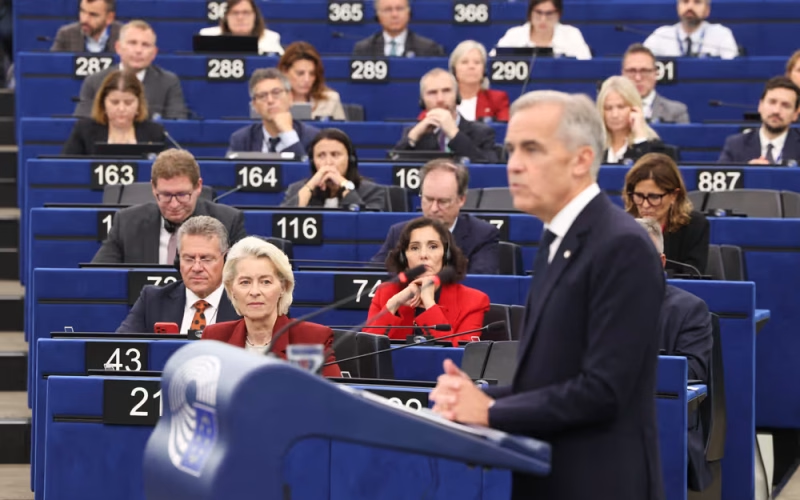
Divisions among EU member states over the supervision of capital markets are threatening to slow progress on the bloc’s wider competitiveness agenda. Despite pressure from Brussels to move towards a more integrated single market, countries remain reluctant to hand greater supervisory powers to EU-level authorities.
At the heart of the disagreement is a familiar tension: national control versus deeper integration. While the European Commission is advocating for more harmonised rules and an enhanced role for the European Securities and Markets Authority (ESMA), several member states are hesitant to cede authority over their domestic financial systems.
The push for reform forms part of a broader strategy to strengthen the EU’s global position and reduce reliance on major economies such as the United States and China. A fully integrated capital market would allow investments and savings to move more freely across borders, improving access to funding for businesses and creating more opportunities for investors.
However, the current system remains fragmented. Although some rules are aligned at EU level, differences in implementation and enforcement continue to create barriers. This patchwork approach increases costs and limits efficiency across the single market.
Talks among EU finance ministers have so far yielded little progress, raising concerns that key milestones may be missed. This is particularly significant given data highlighting the EU’s relative underperformance. In 2024, EU stock market capitalisation stood at 73% of GDP, far behind the 270% recorded in the United States.
Supporters of reform argue that without decisive action, Europe risks falling further behind in the global financial landscape.
via Euronews