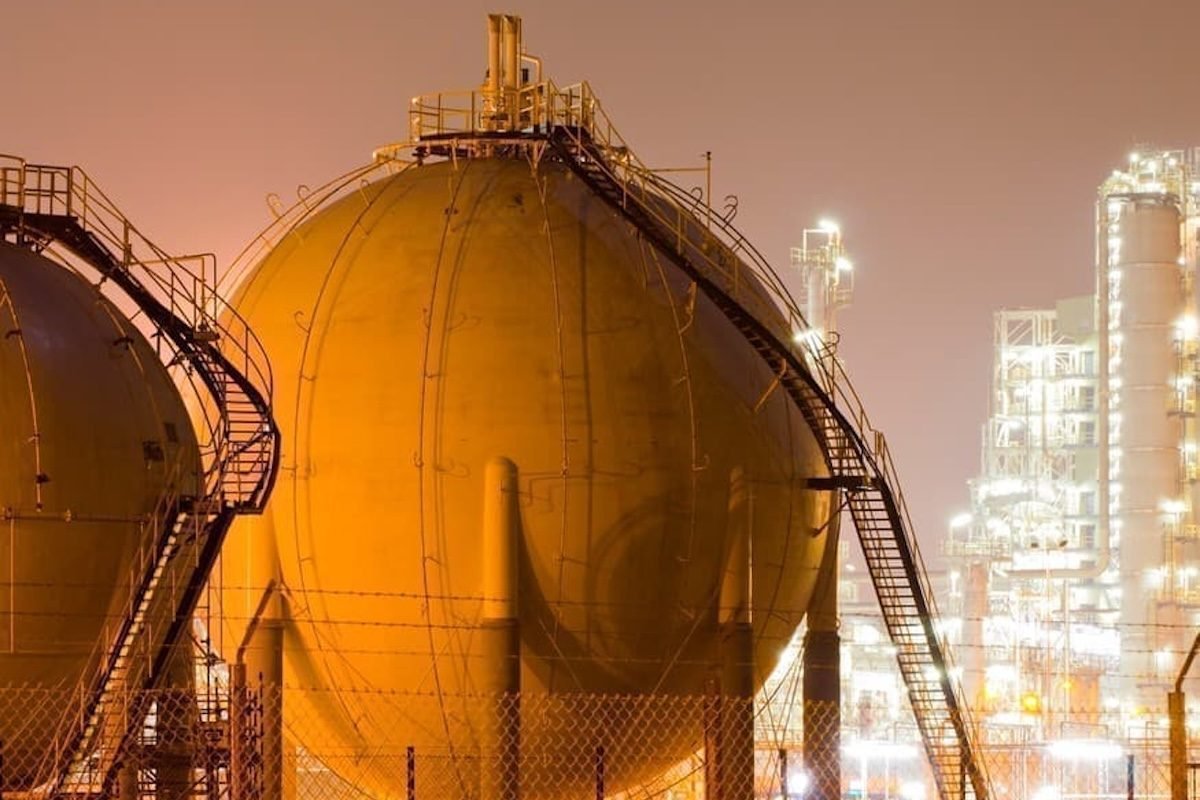
It is a pleasing paradox, a bright light at the end of a dark Middle Eastern tunnel. Just when the world is wondering how high the price of oil might go thanks to the stalemate between the United States and Iran, the United Arab Emirates – one of the biggest oil producers – has announced that it is quitting OPEC, the cartel that has tried to keep the price high for more than six decades.
This creates the prospect of much cheaper oil once the Strait of Hormuz reopens.
This decision was appropriate in a week in which the news was dominated by several real monarchs and one elected official who would like to be king. The collection of seven Emirs, based in Abu Dhabi, Dubai, Sharjah and four other smaller centers that make up the United Arab Emirates, is able to make decisions without the need for democratic consultation.
That, no doubt, is how Donald Trump also likes to see himself, but is not the way his guest last week on a state visit, Britain’s King Charles III, is able to operate since he is a non-decision-making figurehead. On his visit to Washington and in his speech to Congress the real constitutional monarch duly delivered some diplomatic and democratic lessons to his always undiplomatic and undemocratic host.
Nonetheless, President Trump will have been pleased by the decision by the absolute monarchs of the United Arab Emirates since it holds out the promise of cheaper gasoline for American motorists, even if America’s own oil producers may be less happy about that prospect.
This is not the first time a member country has quit OPEC – Qatar left the cartel in 2019, Ecuador in 2020 and Angola in 2024 – but it is potentially far more consequential because the Emirates have spare production capacity and a clear ambition to expand capacity further and to sell more oil.
The UAE, which is OPEC’s fourth biggest oil producer after Saudi Arabia, Iraq and Iran, has already said that it plans to increase its production from 3.4 million barrels per day now to 5 million by the end of next year. If it should succeed in carrying out that plan, the world could change quite rapidly from today’s acute shortage of oil – caused by America and Israel’s war on Iran – into one that might even have a surplus.
This is not inevitable, for it may not be in the Emiratis’ interest to cause a drastic oil price collapse. But by leaving the oil-producers’ association, in which it has been a member since 1967, the UAE will gain more freedom to choose its own production levels.
Other OPEC members have often accused the UAE of cheating by exceeding the production quotas that the cartel set collectively. The Emiratis’ defection nonetheless opens the way for the UAE to invest more in its production capacity without the need to justify it to OPEC.
The UAE’s cost of production is lower than that of Saudi Arabia, the other OPEC member that has spare capacity. The Emiratis and the Saudis have been engaged in something of a power struggle in recent years, supporting different sides in the wars in Yemen and Sudan.
This defection will not destroy OPEC but it will weaken it. The heyday of OPEC came in the 1970s, after many members had nationalized their domestic oil companies and thus taken them out of the hands of western oil firms.
After the 1973 Arab-Israeli war, the Arab oil producers first imposed an embargo on sales of oil to the United States and other countries that had supported Israel, and then through OPEC succeeded in restricting production sufficiently to keep the oil price high.
This produced a flood of income for the oil producers and caused inflation and recession in the West but in the longer term stimulated exploration and investment in other oilfields around the world, which ultimately reduced OPEC’s control over prices. At its peak, OPEC controlled more than half of world oil output, but its share is now down to less than one-third. The world’s two biggest oil producers are now America, thanks to its “fracking” technology, and Russia.
In the immediate future, everything in the market for oil, as for other commodities such as sulphur, helium and naphtha for which transport through the Strait of Hormuz is important, will depend on how and when the confrontation between the United States and Iran is resolved sufficiently to enable the two countries’ mutual blockades to be removed.
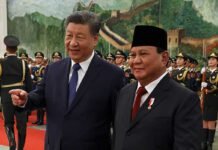
The key hope remains that the summit in Beijing on May 14-15 between Trump and China’s President Xi Jinping will provide the venue for such a resolution.
Currently, Pakistan is acting as a mediator between Iran and America, but it is widely assumed that it is doing so on China’s behalf. China and Pakistan have become close partners in recent years. Thus, as Beijing does not want to become directly involved in Trump’s war, it is convenient for China to try to exert an influence through its Pakistani friends.
This makes diplomatic as well as strategic sense: the best way to place Iran’s nuclear program under international control would be for China to take responsibility for securing the stock of enriched uranium believed to be buried in the rubble of Iran’s nuclear facilities, and for China to act as a guarantor that Iran will not again seek a nuclear weapon in the future.
The disadvantage of such a resolution would be that it would make Iran in effect a Chinese protectorate and a long-term Chinese strategic asset in the Middle East. But if it enables Trump to declare convincingly that Iran’s nuclear ambitions are over and to reopen the Strait of Hormuz, the American president may well think this a price worth paying.
If that happens, and traffic through Hormuz is resumed by the end of this month, the energy crisis would not be over but its limits would have been defined. It would not be over because it would take time for the damaged oil and petrochemical plants in the Gulf to be repaired and for available supplies to be restored to their prewar levels. But this would then open the way for the Emiratis to increase their oil production, which might stimulate other producers to follow them in order to avoid losing market share.
The price of oil at its current level, US$120 per barrel, is painful. A return during the summer to its prewar level of US$60-70 would ease a lot of the economic and inflationary pains being suffered in both Europe and America.
The Emiratis’ cost of production in times of peace is reckoned to be as low as US$40. A fall that low would hurt American shale-oil producers as well as the Saudis, whose production costs are higher. The Emiratis might not go that far. But the threat of doing so may well be giving the Emirs pleasure.
Another battle, this time for leadership of the Arab world, could be about to start.
This English original of a column first published by La Stampa in Italian can also be found on Bill Emmott’s Global View. Asia Times is repubishing it with permission.