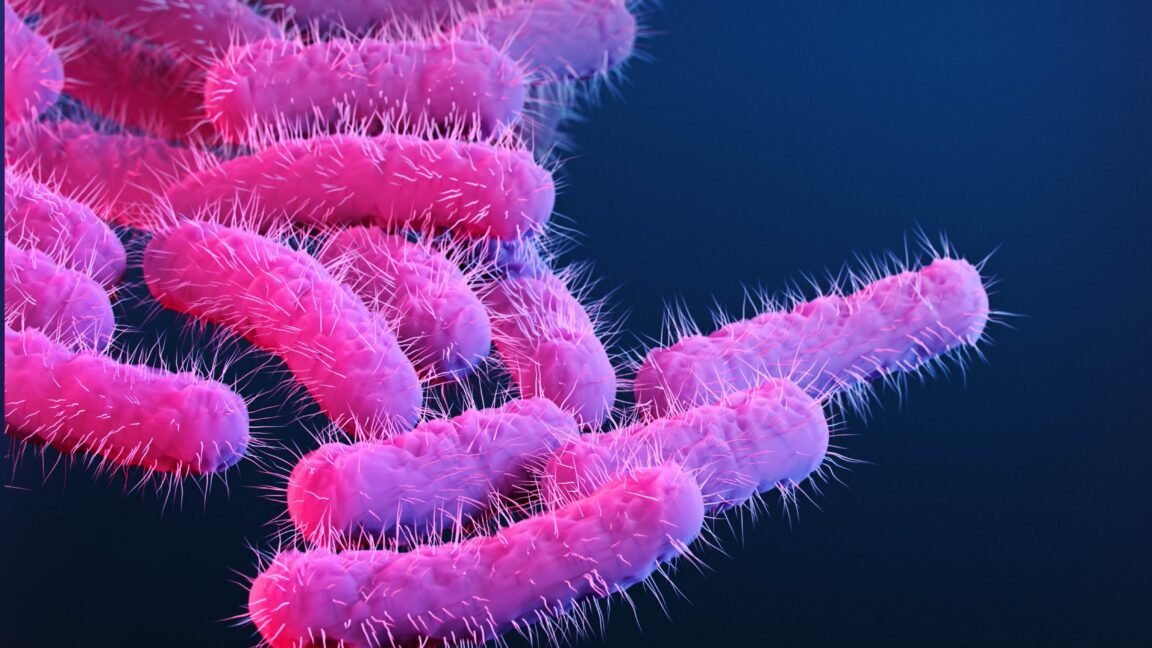
Having more than 150 non-human primates at a research center fall ill with diarrhea in a stomach-churning outbreak that flowed for over two years doesn’t sound much like good fortune. But for some scientists, it kind of was, providing a heaping pile of valuable data on how they might finally defeat a foul foe.
In a study published in the latest issue of Science Translational Medicine, scientist sifted through the dump of immunological data from the infections, logging new ways to train immune cells to defeat the bacteria behind the outbreak, a type of Shigella. Researchers were able to pluck out specific bits of the bacteria that the immune system could most effectively attack, linking specific target molecules to specific types of germ-busting immune responses. The researchers even precisely homed in on some of the tiny notches within those craggy target molecules where the most potent antibodies attached.
In all, the study “revealed unexpected features of the anti-Shigella antibody response in naturally infected [non-human primates] and represents a step toward the rational design of Shigella vaccine candidates,” the authors write.
Shigella is a gastrointestinal horror, striking more than 200 million people in the world each year and killing more than 200,000, mostly children. Those who survive typically develop some protective immune responses. But, given that there are a variety of species and serotypes of Shigella, protective immune responses tend to only work against a narrow range of the bacteria’s family. And, on top of that, Shigella strains are only becoming more resistant to antibiotics.
The need for a Shigella vaccine—one that can combat the whole cruddy clan—is clear. As such there are many vaccine development efforts underway. Still, scientists have been toiling without some of the detailed molecular and structural data needed to design a sophisticated vaccine. That’s where the outbreak came in.
Data deluge
The outbreak began in December 2022 at the Wisconsin National Primate Research Center in Madison. Non-human primates are natural hosts for Shigella, like humans, and it’s not uncommon for outbreaks to flare at such facilities now and then. But it is unusual for an outbreak to be so big and last so long. Even some of the people who worked at the facility fell ill.
In all, there were 169 microbiologically confirmed shigellosis cases among the non-human primates. Researchers collected 151 Shigella isolates for serotyping and did whole genome sequencing on 95 representative isolates. The outbreak was caused by two related clusters of Shigella flexneri, a species that commonly strikes captive non-human primates. (Human outbreaks are more often driven by Shigella sonnei, but both species can infect either type of primate.) Of the 90 isolates tested for antimicrobial resistance, more than half (63 percent) were multidrug resistant. Most of the cases caused only mild diarrheal symptoms, but there were some asymptomatic cases and some cases that led to severe symptoms. Infants were the hardest hit, similar to what’s seen in humans.
The researchers drew serum, plasma, and specific types of immune cells from 41 infected animals across their infections, taking samples at 1, 2, and between 4 to 6 weeks after an infection was detected. Then they went to work dissecting the immune responses.
The researchers started by looking for antibodies that attacked a known target on Shigella, the O-antigen. This is the outer-most component of a large molecule that juts out from the bacteria’s outer-most membrane. The molecule is called LPS, or lipopolysaccharide. LPS is found exclusively on bacteria, specifically Gram-negative bacteria, a group that includes E. coli and Salmonella, as well as Shigella. The molecule functions as a structural component of the outer membrane, among other things. But given its position on the rim of these bacterial cells, it—and specifically, the outer-most O-antigen component—is a common target of the immune system. However, in Shigella, it’s variable, so antibodies against one serotype’s O-antigen may not be helpful in fighting off other serotypes.
Key findings
The researchers found a variety of antibodies that bound to the Shigella’s O-antigen. But some seemed to have been honed from repeat exposures to the bacteria. And most interestingly, they seemed to develop the ability to attack O-antigen from many different Shigella serotypes—a feat that would be critical for the success of a vaccine. Moreover, they found that the antibodies that bound tightly to the O-antigen could trigger cascading reactions of plasma proteins that end with the bacterial cells being disintegrated—another useful feature.
Next, they looked at antibodies that attacked part of a type 3 secretion system, or T3SS for short. This is a common apparatus that bacteria assemble to attack their victims. When the components come together, a T3SS forms a syringe-like structure, complete with a needle that pokes out from the bacterial cell into a cell it’s trying to attack. The bacteria then pumps in a suite of proteins, called effectors. These can have a variety of specific functions but generally work to dampen the host cell’s defenses and promote a comfy environment for the invading bacteria.
At the very tip of Shigella’s T3SS, there are two proteins, IpaB and IpaD, that antibodies from the non-human primates attacked. These, the scientists found, were generally able to spur protective responses from immune cells, including T cells. Sorting through the antibodies, the scientists found some of them seemed to backfire, sparking reactions that helped Shigella burst blood cells. Others, however, prevented blood cell bursting. They found that these two types of antibodies bound to the tip proteins at different niches within the proteins. The researchers were able to identify the exact spot where the helpful antibodies bound, giving vaccine developers a precise mark to attack.
Together, the findings provide new insight and directions to develop an effective vaccine against Shigella. Though we’re still far from having one, the researchers are hopeful that the data from the outbreak can help overcome existing challenges and that their strategy of using such structural and immunological data will help researchers better design bacterial vaccines generally.