Over the years, YouTube has evolved from a source of Rickrolls and cat videos to a platform for some of the Internet’s most popular streaming content. Today, it costs more than ever to see that content, as YouTube has announced another price increase for its Premium service. Viewers who can’t stomach the cost of Premium will be greeted by increasingly lengthy ad breaks, but YouTube says some of that is due to a bug it’s now addressing.
YouTube has not posted a standalone blog announcing the change, but existing subscribers are getting email alerts. The higher pricing is also live for new sign-ups in the US as of this writing. Here’s the important part of YouTube’s email alerts:
To continue delivering great service and features, we’re increasing your price to $15.99/month. We don’t make these decisions lightly, but this update will allow us to continue to improve Premium and support the creators and artists you watch on YouTube.
You will see the change reflected on your June 7, 2026 billing date.
The new $15.99 monthly price is a $2 increase, but if you’re on the family plan, the email looks a bit different. For those folks, the price is now $26.99, which is $4 higher. There’s also the base Premium Lite subscription that removes most YouTube ads and used to cost $7.99 per month. It’s now $1 more.
YouTube’s subscription tier initially launched in 2015 as YouTube Red at $9.99 per month for the individual plan. In 2018, it morphed into YouTube Premium with a higher $11.99 cost. Then came the 2023 price hike to $13.99. This is the first US price increase for YouTube Premium since 2023, but many international viewers saw increases in 2024.
YouTube isn’t alone—streaming prices continue their inexorable climb across the board. Netflix seemingly can’t go a year without boosting prices, with the most recent increase coming just last month. Meanwhile, Amazon Prime Video is raising prices and removing features from its lower-tier plans. In unrelated news, Internet piracy rates are rising worldwide.
Pay with your wallet or your attention
Unlike with most streaming services, those who can’t stomach YouTube’s latest price increase have an option. Free users can browse and stream as many YouTube videos as they want, but they’ll have to contend with ads. After earning more than $40 billion in ad revenue in 2025, the site expanded the use of unskippable 30-second ads in the TV app this year. Previously, the longest you’d have to wait before getting back to your video was 15 seconds.
But viewers have increasingly pointed to even longer ad breaks. In recent days, reports of 90-second unskippable ads have proliferated. The company has responded to the kerfluffle, saying, “YouTube does not have a 90-second non-skippable ad format. This isn’t something we are testing right now.” The company’s post on X has since been “community noted” to reaffirm the existence of 90-second unskippable ads.
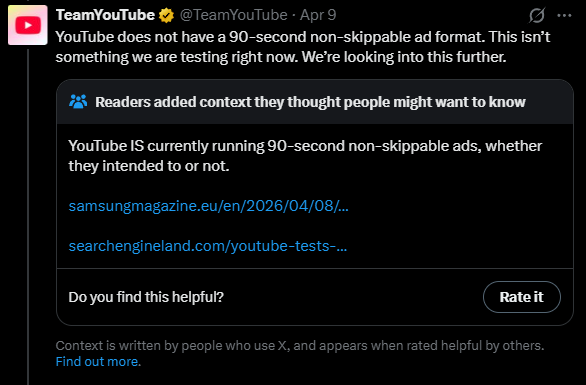
Despite YouTube’s assurances, many, many viewers report seeing these longer ads, and there are several images that appear to show unskippable 90-second ad breaks. YouTube users have accused the company of lying or using deceptive language in its denial.
Some viewers report that these extra-long breaks are a mix of ad types. They begin with a 30-second unskippable ad, and the player then rolls into a few shorter skippable ads. However, the interface only shows the standard “Skip in” text with a countdown until all the ads are over. The good news is that this is an error, and YouTube is working on it.
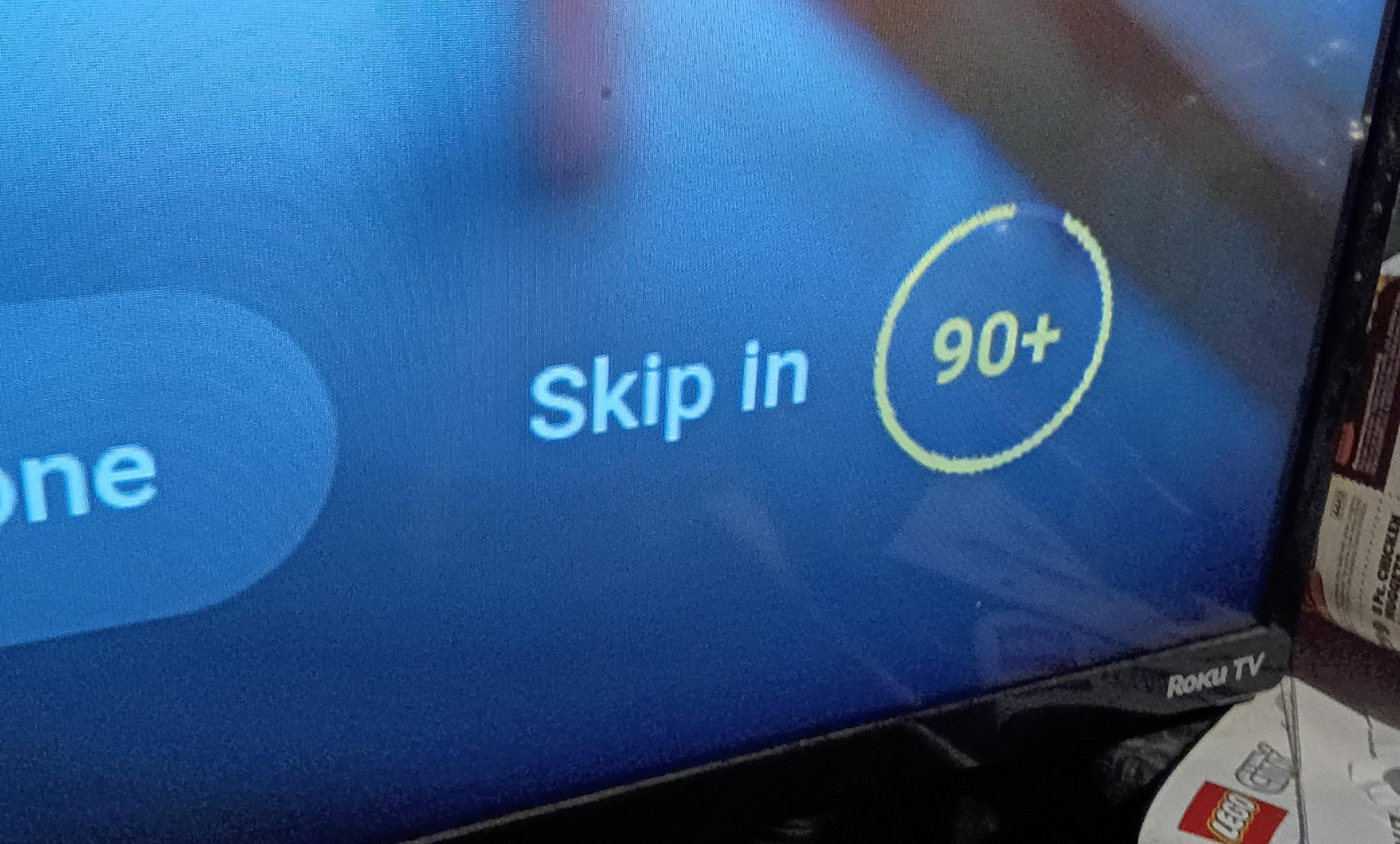
YouTube now says it has determined these longer unskippable ads are an interface bug. “We’ve determined this was a result of a bug, which resulted in higher, inaccurate timers being shown for shorter ads,” a company spokesperson said. “We’re rolling out a fix now. As we’ve said, we don’t have a 90 second non-skippable ad format and this was not a test.”
YouTube just isn’t the streaming video free-for-all it once was. You’ll have to pay in one way or another if you want to watch YouTube content. The site will either take an ever larger bite of your budget, or you’ll have to sit through more ads than ever before. There are alternative YouTube clients that can strip out ads, and ad-blockers can do the same on the web. However, it’s a cat-and-mouse game as YouTube works to block the blockers.